
Why Do We Remember the Smallest Moments While Travelling?
After travelling so much, I’ve realised something rather strange.
I don’t remember the names of the people who served me coffee in a tiny café in Costa Rica. I can’t recall the owner of the family-run restaurant where I stopped for lunch after driving through the Andes in Peru, nor do I remember the fisherman who proudly recommended the day’s catch on Portugal’s Atlantic coast. I have forgotten the bartender in a small neighbourhood bar in Bahamas and even the family who welcomed me into a roadside restaurant during my drive from Montenegro towards Bosnia.
Yet if you asked me about those places today, I could describe them almost perfectly. The names have faded with time, but the memories haven’t.
The more I travelled, the more I realised this wasn’t just happening to me. Speak to anyone who truly loves travelling and you’ll notice the same pattern. We rarely come home talking about the hotel room, the airport lounge or even the famous landmark we queued hours to see. Instead, we tell stories about the roadside café we stumbled upon by accident, the family-run restaurant tucked away in a quiet village, the scenic drive that took our breath away or the stranger who, for a brief moment, became part of our journey.
Those seemingly ordinary moments somehow become the highlights of our travels. Perhaps it’s because travel doesn’t just show us new places, it quietly changes the way we think. Every journey teaches us something we didn’t know before. It makes us more observant, more curious and a little more humble by reminding us how much there is still to learn about the world.
I still remember one such lesson from a small bar in Poland.
While sharing a drink with a group of locals, one of my new friends smiled as we clinked our glasses and said, “Do you know why we say cheers before we drink?”
Like most people, I had never really thought about it.
He explained that when we eat or drink, almost all of our senses are involved. We can see the drink, smell it, touch the glass and taste it. But what about our ears? They aren’t part of the experience until we gently clink our glasses together. That familiar sound brings our sense of hearing into the celebration, allowing all five senses to participate in the moment.
I don’t know whether that explanation is scientifically correct, but I have never forgotten it.
In fact, I’ve shared that little story with countless friends over the years. Not because it changed my life, but because it perfectly captures what travel does. It introduces us to ideas, traditions and perspectives we would probably never discover if we stayed within the comfort of our daily routine.
That’s what makes travel so extraordinary.
Sometimes the greatest souvenir isn’t something you buy. It’s a new way of seeing the world.
It made me wonder why.
Why do the smallest experiences during a road trip stay with us for years, while the expensive hotels, famous landmarks and carefully planned itineraries slowly fade into the background?
Why do we remember the smallest moments while travelling, yet forget some of life’s biggest moments back home?
The answer, I believe, lies somewhere between science and emotion. There is actually a scientific reason for this.
Researchers have found that new experiences stimulate the release of dopamine, a neurotransmitter that plays an important role in curiosity, motivation and long-term memory. When we travel, almost everything around us is unfamiliar. New landscapes, different languages, local food, changing weather, mountain roads and unexpected discoveries tell our brain that this experience is important.
Instead of switching to autopilot, as it often does during everyday life, the brain becomes fully engaged. It pays attention to details that would normally pass unnoticed, making those moments easier to remember years later.
But dopamine is only part of the story.
The bigger reason is that travel makes us completely present.
At home, even while sitting in a nice restaurant, our minds are often occupied with tomorrow’s meeting, unpaid bills, work deadlines or the endless list of things waiting for us. We may be physically there, but mentally we’re somewhere else.
On a road trip, that changes.
You’re watching the scenery unfold through the windshield. You’re looking for the next hidden stop instead of the next email. You notice the smell of fresh bread drifting from a village bakery, the aroma of grilled seafood beside the Atlantic, church bells echoing across an old town, the taste of strong coffee overlooking the Caucasus Mountains or the cool breeze flowing through the open window during a scenic drive.
All of your senses are awake.
Those sights, sounds, smells and emotions become woven together into a single memory. The roadside café isn’t memorable because of the coffee alone. It’s memorable because it arrived after hours of driving through beautiful landscapes, because the conversation inside the car made you laugh, because it rained just before you arrived or because that little stop unexpectedly became part of your journey.
That’s why road trips create such powerful travel memories.
And years later, it isn’t the luxury hotel or the famous attraction that comes back first. It’s the little roadside café, the family-run restaurant, the hidden village and the ordinary moment that quietly became unforgettable.
Curiosity Creates Memories That Last a Lifetime
People often assume that children are too young to remember family holidays. Our experience has been completely different.
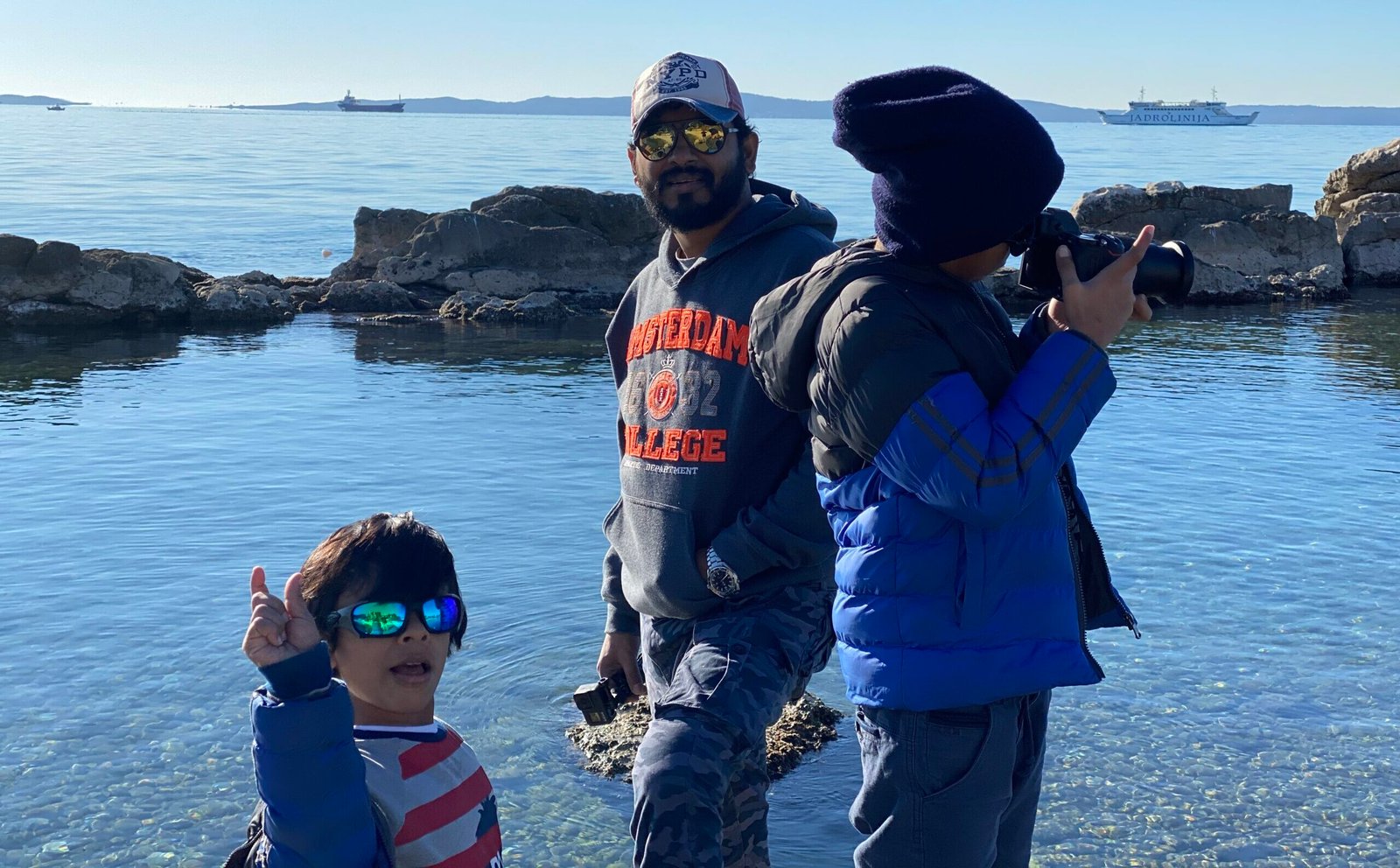
Today, one of the things I admire most about Julius and Jordan is their curiosity. Whether we’re exploring a medieval castle, walking through a museum, driving across a mountain pass or discovering a small village, they constantly ask questions. They want to know the history, the stories, the people and what happened there hundreds of years ago. Looking back, I don’t think that curiosity developed overnight. I genuinely believe years of family road trips helped shape it.
One trip always comes to mind.
In 2015, we drove from Scotland through England, stopping in beautiful places like the Scottish Highlands and Windermere in the Lake District. Jordan was barely three years old, and Julius was only five. Most people would probably say, “They’re too young. They won’t remember any of it.”
But they did.
Even today, they still talk about driving through the Highlands, walking forest trails, exploring castles and spotting places connected to the James Bond films. They remember the journey far more vividly than any hotel we stayed in.
One moment has become a permanent part of our family story.
As we drove through London, we passed the building famously used as the MI6 Headquarters in the James Bond movies. Both boys were fascinated by Bond, so I looked at them with a completely serious face and said,
“Boys… this is your dad’s HQ in Europe.”
For a few wonderful minutes, they believed every word.
Years later, they still remind me of it and laugh, asking, “Dad, why did you tell us that?”
That’s the beautiful thing about travel.
It doesn’t just celebrate the perfect moments. It celebrates our innocence, our mistakes, our silly stories and the little lies that become treasured family memories. Long after we’ve forgotten the hotels and itineraries, it’s those imperfect moments that still bring a smile to our faces.
Children don’t collect memories based on luxury. They collect them through curiosity, imagination, laughter and stories. Neuroscientists tell us that novel experiences release dopamine, making the brain more attentive and helping memories last longer. I think curiosity amplifies that effect even further. When a child is excited, asking questions and imagining possibilities, the experience becomes deeply personal rather than something they simply observed.
Perhaps adults aren’t so different.
The journeys we remember most aren’t the most expensive ones. They’re the ones that made us curious, made us laugh and gave us stories we’ll still be telling decades later.
Why Travel Matters More Today Than Ever
Perhaps this is one of the biggest reasons I believe travel is never an expense. It’s one of the greatest investments we can make in ourselves and our children. If anyone asks me why travel is important or why family road trips matter so much, my answer is simple: they don’t just show us the world; they shape the people we become.
We live in a world where our attention is constantly being pulled towards screens. Days are filled with notifications, routines and endless scrolling. Before we know it, weeks and even months pass by, yet very little stands out in our memory because every day begins to look remarkably similar.
Sadly, this isn’t just true for adults.
Many children today spend hours on phones, tablets and gaming consoles. Sometimes it’s convenience for parents. Sometimes it’s simply become the new normal. I’m not here to judge anyone, raising children has never been easy but I often wonder how we can expect them to put those devices down if we never take them beyond the comfort of what they already know.
That’s another reason I believe travel is important, especially family road trips.
The moment children step into a new country, drive through unknown places, their attention shifts naturally from a screen to the world around them. Curiosity replaces scrolling. Questions replace notifications. Conversations replace reels.
I’ve noticed something else during my travels.
I often see people visiting some of the world’s most incredible destinations, yet never truly experiencing them. Whether it’s in Europe, South America or even here in Dubai, many spend more time looking through a phone screen than with their own eyes. Tour buses drop them at a landmark, they take a few quick photos, tick another attraction off the list and move on to the next stop.
They return home with hundreds of photographs, but very few stories.
For me, that’s the difference between being a tourist and being a traveller.
The Lost Mumbaikar Says:
“Children don’t need less technology, they need more reasons to look up. Travel gives them those reasons naturally”.
Road trips naturally encourage that traveller’s mindset. They slow you down. They invite unexpected stops, conversations with locals, wrong turns that become stories and discoveries that no algorithm could ever recommend.
Perhaps that’s why the most valuable thing travel gives us isn’t another passport stamp. It’s our attention back.
And in a world constantly competing for our attention, that may be the greatest gift we can give ourselves and our children.
Looking back, the best investment Sunitha and I ever made wasn’t buying more toys or gadgets for Julius and Jordan. It was getting into the car and taking them on the road.
Our family road trips through Scotland, Scandinavian, Balkan or Alpine countries became classrooms without walls. They watched us deal with wrong turns, changing weather, language barriers and unexpected challenges. Without even realising it, they were learning resilience, patience, communication, adaptability and confidence.
Today, I can see the difference. They don’t just visit places, they want to understand them. They ask about history, politics, architecture and local culture. Travel didn’t just show them the world; it taught them to stay curious about it.
Let your children experience the small challenges and unexpected joys that every journey brings. Years from now, they probably won’t remember the toy you bought them.
But they’ll remember the road you travelled together. Because the greatest gift travel gives a family isn’t another destination. It’s curiosity, perspective and stories that stay with them for a lifetime.
Your Turn
- When you look back at your childhood, what do you remember most?
- Was it a toy you received… or a journey you took with your family?


Pingback: Living My James Bond Moments Across the World
September 4, 2026