

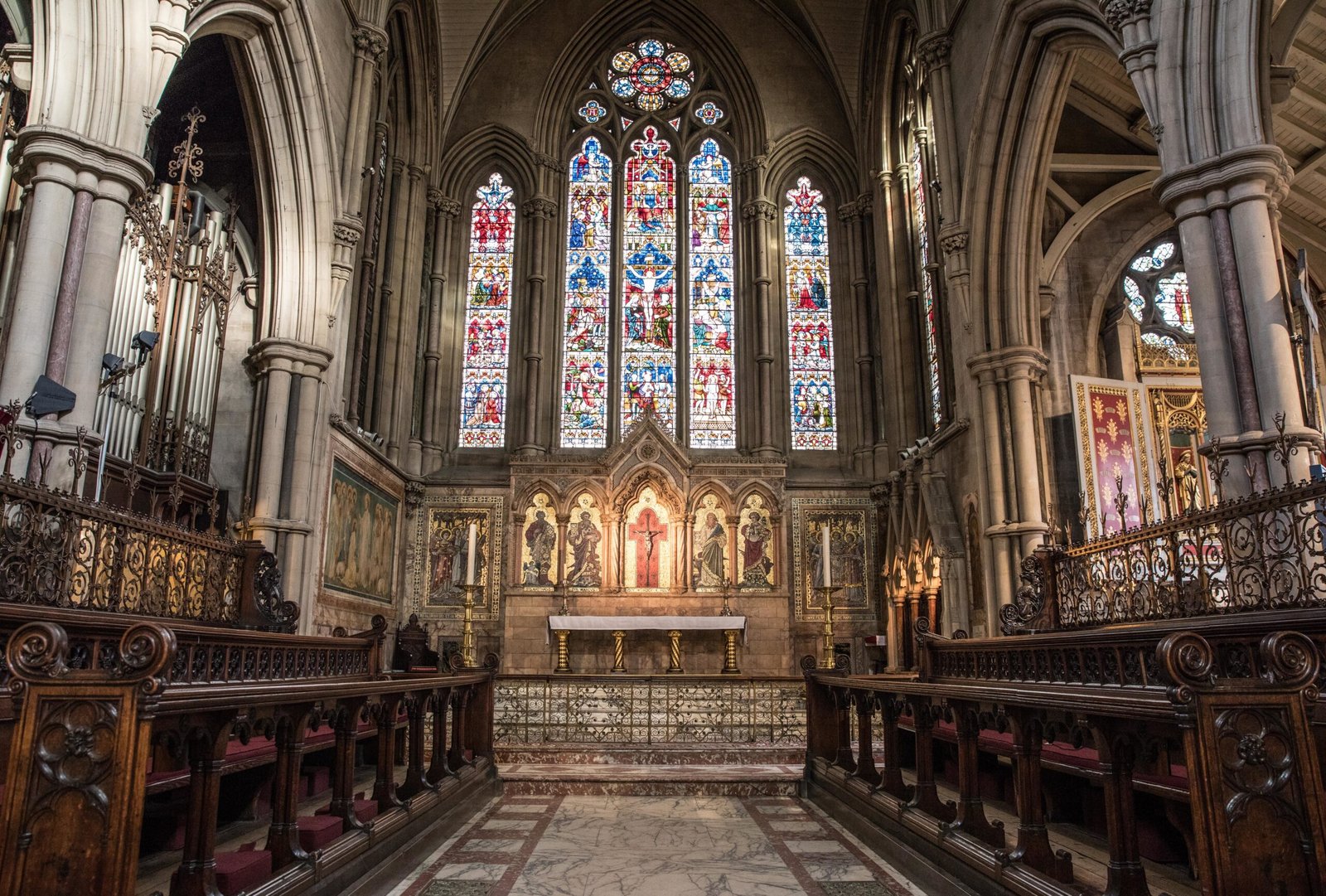
10 Most Beautiful Churches in Europe: Cathedrals & Architecture
10 Most Beautiful Churches in Europe: Cathedrals That Touched My Heart
Whenever I travel to a new country, my itinerary usually includes iconic landmarks, beautiful landscapes, scenic road trips, local food and those little hidden corners that make every destination special.
As The Lost Mumbaikar, I have always enjoyed the freedom of exploring unfamiliar roads, discovering new cultures and experiencing places beyond the usual tourist attractions.
But there is another side to my travels that I haven’t spoken about very often.
Churches have always held a special place in my journeys.
Whether I am travelling solo, enjoying a long road trip or exploring a new European city, I try to find time to visit a church. Sometimes it is a world-famous cathedral attracting thousands of visitors. Other times, it is a small, peaceful church tucked away along a quiet street.
And my reason for visiting goes far beyond architecture or photography.
10 Most Beautiful Churches in Europe Worth Visiting
No. | Church / Landmark | City | Country | Architectural identity |
|---|---|---|---|---|
1 | Sagrada Família | Barcelona | Spain | Catalan Modernisme |
2 | Duomo di Milano | Milan | Italy | Gothic |
3 | Hallgrímskirkja | Reykjavík | Iceland | Modernist, basalt-inspired |
4 | St. Vitus Cathedral | Prague | Czech Republic | Gothic |
5 | Cologne Cathedral | Cologne | Germany | Gothic |
6 | St. Peter’s Basilica | Vatican City | Vatican City | Renaissance and Baroque |
7 | Sainte-Chapelle | Paris | France | Rayonnant Gothic |
8 | Florence Cathedral | Florence | Italy | Gothic and Renaissance |
9 | Church of the Savior on Spilled Blood | St. Petersburg | Russia | Russian Revival |
10 | Westminster Abbey | London | United Kingdom | Gothic |
The Lost Mumbaikar Says:
“No matter how far I wander or how many roads I travel, I’ll always find a church to pause, pray and give thanks. For travelling is my dream, but living that dream is God’s grace.”
A Small Prayer of Gratitude, Wherever I Go
I have always believed that being able to travel, discover new countries and experience the beauty of this world is a blessing from the Almighty.
Every journey involves planning, saving, working hard and making sacrifices. But beyond all that, I believe it is God’s grace that has allowed me to experience so many wonderful places.
So whenever I step inside a church during my travels, I like to spend a few quiet moments thanking Him.
Not necessarily asking for anything.
Just saying, “Thank you, Lord, for bringing me this far.”
When travelling solo, these moments become even more personal. There is something comforting about stepping away from the busy streets, putting aside the camera and simply sitting in silence.
Even during my road trips, when the itinerary is packed and there are kilometres still to cover, I enjoy making time for these visits.
For me, it is a small gesture of gratitude for the opportunity to travel, the experiences I have been blessed with and the journeys that have brought me safely home.
Where Faith Meets Extraordinary Architecture
Europe has some of the most magnificent churches and cathedrals in the world.
I have always been fascinated by their architecture, intricate carvings, stained-glass windows, towering spires and the extraordinary dedication of the people who built them.
Imagine spending decades, sometimes centuries, creating a place of worship that future generations would continue to admire!
From the Gothic splendour of Milan Cathedral to Antoni Gaudí’s extraordinary vision in Barcelona, these buildings are not simply tourist attractions. They are masterpieces of faith, human creativity and perseverance.
And that is why I believe they deserve a place on every European travel itinerary, whether you visit for religious reasons, architectural appreciation or simply to experience their peaceful atmosphere.
10 Most Beautiful Churches in Europe Worth Visiting
I have been fortunate to visit many beautiful churches during my travels, but here I have handpicked just ten that stand out for their extraordinary architectural brilliance, history and craftsmanship.
Irrespective of your faith or beliefs, these magnificent churches deserve a place on your European travel bucket list. They are not just places of worship but timeless architectural masterpieces that leave you wondering how people managed to build such extraordinary structures centuries ago — long before artificial intelligence, modern cranes, advanced construction equipment or sophisticated transportation made moving enormous blocks of stone and marble easier.
Sometimes, I simply stand there in awe, wondering how human imagination, faith and sheer determination could create such wonders with the limited technology available at the time.
Here are my ten recommendations, each with a fascinating story and architectural beauty that deserves to be witnessed at least once in a lifetime.
1. Sagrada Família – Barcelona, Spain
Construction began: 1882 | Architect: Francisco de Paula del Villar, followed by Antoni Gaudí
The magnificent Sagrada Família is not just Barcelona’s most famous landmark; it is one of the most extraordinary architectural projects ever undertaken. Construction began in 1882, and Antoni Gaudí took over in 1883, transforming the original Gothic-inspired plans into a revolutionary design influenced by nature and Christian symbolism.
Gaudí believed that nature was a great source of architectural inspiration. Inside the basilica, towering columns resemble trees branching towards the ceiling, while colourful stained-glass windows create an almost magical forest of light.
What fascinates me most is that Gaudí devoted the final years of his life entirely to this project, knowing he would never see his dream fully realised. More than 140 years after construction began, work on the basilica has continued through generations.
Why visit? To witness a remarkable combination of faith, imagination, nature and architecture unlike anything else in Europe.
2. Duomo di Milano – Milan, Italy
Construction began: 1386 | Architects: Multiple generations, including Giovannino de’ Grassi and Giovanni Antonio Amadeo
Standing in Milan’s Piazza del Duomo, this magnificent cathedral looks almost too beautiful to be real. Its elaborate Gothic architecture, delicate marble carvings and 135 towering spires make it one of Europe’s most spectacular religious buildings.
Construction began in 1386 under Archbishop Antonio da Saluzzo, while Gian Galeazzo Visconti helped transform the project into an ambitious marble cathedral. Generations of architects, sculptors and craftsmen worked on it for nearly six centuries.
The cathedral is built from distinctive Candoglia marble, giving it an elegant appearance that changes beautifully with the sunlight. Its famous golden statue of the Virgin Mary, known as the Madonnina, watches over the city from the highest spire.
Why visit? Don’t just admire it from the square. The rooftop terraces allow you to walk among the Gothic spires and enjoy extraordinary views over Milan.
3. Hallgrímskirkja – Reykjavík, Iceland
Construction: 1945–1986 | Architect: Guðjón Samúelsson
Iceland is famous for volcanoes, glaciers, waterfalls and dramatic landscapes, but its most iconic church is equally fascinating.
Hallgrímskirkja stands proudly above Reykjavík with a design that looks nothing like Europe’s traditional Gothic cathedrals. Designed by Icelandic architect Guðjón Samúelsson, the church draws inspiration from the country’s natural formations, particularly its basalt columns, mountains and glaciers.
Construction began in 1945, and the church was completed in 1986. Its striking tower rises approximately 74.5 metres above the city, making it one of Reykjavík’s most recognisable landmarks.
Why visit? Its unusual architecture is a beautiful reflection of Iceland itself. The observation tower also offers spectacular panoramic views of Reykjavík and the surrounding landscape.
4. St. Vitus Cathedral – Prague, Czech Republic
Construction: 1344–1929 | Architects: Matthias of Arras, Peter Parler and later architects
Prague is often described as one of Europe’s most beautiful cities, and St. Vitus Cathedral is one of the reasons why.
Located within the magnificent Prague Castle complex, this Gothic cathedral is an architectural treasure filled with soaring arches, intricate stone carvings and spectacular stained-glass windows.
Construction began in 1344 under the patronage of Charles IV. Matthias of Arras was the first architect, followed by the talented Peter Parler. However, wars and political upheavals interrupted construction for centuries, and the cathedral was finally completed in 1929.
The cathedral also holds immense historical importance, having served as a coronation church and burial place for Bohemian kings.
Why visit? The combination of medieval history, Gothic architecture and Prague Castle’s magnificent surroundings makes this one of Europe’s most memorable cathedrals.
5. Cologne Cathedral – Cologne, Germany
Construction: 1248–1880 | Architects: Master Gerhard and successive cathedral architects
Few churches in Europe create such an overwhelming first impression as Cologne Cathedral.
Its enormous twin Gothic towers dominate the skyline, while the intricate stone façade reveals an astonishing level of craftsmanship. Construction began in 1248 under the direction of Master Gerhard, but the project was interrupted for centuries before finally being completed in 1880.
The cathedral was built to house the Shrine of the Three Kings, traditionally associated with the biblical Magi, making Cologne an important pilgrimage destination.
One of its most remarkable features is its extraordinary scale, with twin towers rising approximately 157 metres above the city.
Why visit? Stand beneath the cathedral’s enormous towers and admire the breathtaking Gothic architecture. The view from across the Rhine is equally impressive.
6. St. Peter’s Basilica – Vatican City
Construction: 1506–1626 | Architects: Bramante, Raphael, Michelangelo, Carlo Maderno and others
St. Peter’s Basilica is one of the most important religious landmarks in Christianity and among the greatest architectural achievements of the Renaissance.
Construction of the present basilica began in 1506 under Pope Julius II and continued for more than a century. Several legendary architects contributed to its design, including Donato Bramante, Raphael, Michelangelo and Carlo Maderno.
Michelangelo’s magnificent dome dominates the Vatican skyline, while the basilica’s interior is filled with extraordinary sculptures, mosaics and religious artworks. Among its greatest treasures is Michelangelo’s Pietà, depicting the Virgin Mary holding the body of Jesus.
The basilica stands above the traditional burial site of St. Peter, one of Jesus Christ’s apostles.
Why visit? Beyond its artistic beauty, St. Peter’s Basilica offers a deeply spiritual atmosphere. The magnificent interior and views from the dome make it an unforgettable experience.
7. Sainte-Chapelle – Paris, France
Construction: Approximately 1242–1248 | Commissioned by King Louis IX; original architect uncertain
Paris may be famous for Notre-Dame Cathedral, but hidden within the historic Île de la Cité is another extraordinary Gothic masterpiece — Sainte-Chapelle.
Built during the reign of King Louis IX in the 13th century, this royal chapel was designed to house precious Christian relics, including what was believed to be Christ’s Crown of Thorns.
Unlike enormous Gothic cathedrals, Sainte-Chapelle is relatively intimate in scale. Yet its interior is breathtaking, with fifteen towering stained-glass windows depicting more than a thousand biblical scenes.
When sunlight passes through the glass, the entire chapel becomes a dazzling display of red, blue, purple and gold.
Why visit? If you love stained-glass architecture, Sainte-Chapelle is one of Europe’s most extraordinary places to experience it. Visit on a bright day for the full effect.
8. Florence Cathedral – Florence, Italy
Construction began: 1296 | Architects: Arnolfo di Cambio, Francesco Talenti, Filippo Brunelleschi and others
Florence is often called the birthplace of the Renaissance, and its magnificent cathedral, Santa Maria del Fiore, is one of the city’s greatest architectural treasures.
Construction began in 1296 under architect Arnolfo di Cambio. Later generations expanded the design, but the cathedral’s most remarkable achievement came from Filippo Brunelleschi, who engineered its enormous dome in the 15th century.
At the time, building such a vast masonry dome without conventional supporting frameworks was an extraordinary engineering challenge.
The cathedral’s beautiful exterior, decorated in green, pink and white marble, makes it one of Italy’s most recognisable landmarks. Its dome was completed in 1436, while the elaborate façade visible today dates from the 19th century.
Why visit? Climb Brunelleschi’s dome for remarkable views over Florence’s terracotta rooftops and the surrounding Tuscan landscape.
9. Church of the Savior on Spilled Blood – St. Petersburg, Russia
Construction: 1883–1907 | Architect: Alfred Parland
One of the most breathtaking churches I came across during my travels was the magnificent Church of the Savior on Spilled Blood in St. Petersburg, Russia.
With its colourful onion-shaped domes, intricate mosaics and extraordinary Russian Revival architecture, this church looks as though it has stepped straight out of a fairy tale.
Built between 1883 and 1907, the church stands on the site where Emperor Alexander II was fatally wounded in an assassination in 1881. His son, Alexander III, commissioned the church as a memorial to his father.
What makes this church particularly remarkable is its interior, decorated with more than 7,000 square metres of stunning mosaics depicting biblical scenes, saints and religious figures. The level of craftsmanship is simply extraordinary.
Standing before this architectural masterpiece, I couldn’t help but admire the imagination, devotion and artistic brilliance that went into creating something so beautiful.
Why visit? Its spectacular domes, richly decorated interiors and fascinating history make it one of Russia’s most beautiful churches and an unforgettable landmark in St. Petersburg.
10. Westminster Abbey – London, United Kingdom
Present Gothic rebuilding began: 1245 | Master masons: Henry of Reyns, John of Gloucester and Robert of Beverley
Westminster Abbey is much more than a beautiful Gothic church. It is a remarkable symbol of British history, monarchy and religious tradition.
The present Gothic structure largely dates from the rebuilding commissioned by King Henry III in 1245, although an earlier church stood on the site. Inspired by the magnificent cathedrals of France, its architects introduced soaring pointed arches, ribbed vaults and elaborate stonework.
For centuries, Westminster Abbey has hosted royal coronations, weddings and funerals. It is also the final resting place of numerous monarchs, writers, scientists and other influential figures.
One of its most extraordinary architectural features is the Henry VII Lady Chapel, famous for its intricate fan-vaulted ceiling.
Why visit? Few places combine Gothic architecture, centuries of royal history and such an extraordinary collection of monuments under one roof.
Which European Countries Have the Most Beautiful Churches?
Country | Churches in this article | Main architectural interest |
|---|---|---|
Italy | Duomo di Milano, Florence Cathedral | Gothic, Renaissance and marble craftsmanship |
Spain | Sagrada Família | Catalan Modernisme |
Iceland | Hallgrímskirkja | Modern design inspired by nature |
Czech Republic | St. Vitus Cathedral | Gothic architecture |
Germany | Cologne Cathedral | High Gothic architecture |
Vatican City | St. Peter’s Basilica | Renaissance and Baroque |
France | Sainte-Chapelle | Rayonnant Gothic and stained glass |
Russia | Church of the Savior on Spilled Blood | Russian Revival and mosaics |
United Kingdom | Westminster Abbey | Gothic architecture and royal history |


Leave a Reply