
Italy
My Italian Beginning; The Journey Before The Lost Mumbaikar
TL;DR:
What began as a 2012 business trip to Rome with Page Europa became one of the most important journeys of my life. Italy introduced me to the joy of travel through its history, culture, food and timeless cities. Over the years, I returned several times, including an unforgettable 2019 family road trip where Milan and Venice convinced us to stay longer than planned. From walking through ancient Rome to watching Julius explain Venetian history to Jordan, Italy taught me that travel is more than sightseeing; it is about curiosity, learning and creating memories that last far beyond the journey itself.
The Lost Mumbaikar says:
“The Rome showed me history. Venice showed my children’s curiosity. Together they showed me the true purpose of travel.”
The Country That Turned My Business Trip Into a Lifelong Journey
Before I became The Lost Mumbaikar, before road trips across Iceland, camper vans in Scandinavia, and chasing sunrises across nearly 100 countries, there was Italy.
And it all started with a visa.
In February 2012, I made my first international trip. Looking back, I often credit Arif Bhai for installing the travel bug inside me. What started as a professional visit slowly became an obsession that would shape the next decade of my life.
The opportunity came through an Italian engineering company called Page Europa, headquartered in Rome. They were involved in the development of the KIZAD project in Abu Dhabi, and I was fortunate enough to visit their headquarters.
My Schengen visa was initially issued through Germany, so I first landed there and met the same partner I had met during my February trip. Once the business part was complete, I headed south towards two names that had been sitting high on my early wander list: Italy and Vatican City.
At that time, every new country felt like a major achievement. Vatican City fascinated me because it was a country within another country. Crossing into the world’s smallest sovereign nation felt surreal.
Little did I know then that Italy would become one of the countries I would return to over and over again.
Today, after six or seven visits, including an unforgettable family road trip before Covid in December 2019, I can confidently say this: Italy is not a country you visit once. Italy is a country you keep returning to.
My First Evening in Rome
My Italian adventure began at Leonardo da Vinci–Fiumicino Airport, Rome’s main international gateway.
Even the airport felt grand. Luxury Italian brands lined the terminals. Gucci. Prada. Armani. Dolce & Gabbana. Versace.
At the time, I could only admire them through the glass windows.
But travel teaches you something important. You don’t need to buy luxury to enjoy it. Sometimes seeing it is enough.
A taxi dropped me near the Colosseum.
It was July. Coming from Dubai, I wasn’t prepared for European summers. At almost 10 PM there was still light in the sky.
That evening I simply walked. No itinerary. No checklist. No social media.
Just me and Rome. The Colosseum glowed under golden lights. Ancient ruins stood silently between modern roads. The city felt like an open-air museum. For the first time in my life, I understood what people meant when they said history can be felt.
Rome wasn’t showing history. Rome was living history.
Business by Day, Exploring by Night
The meeting at Page Europa finished earlier than expected, and for the first time since arriving in Rome, I had an entire evening to myself.
Today when I travel, there is usually a plan. A rental car waiting at the airport, hotels booked months in advance, and a rough itinerary in my head. But this was 2012. I wasn’t The Lost Mumbaikar yet. I was simply a guy from Mumbai carrying a paper map and discovering Europe one city at a time.
What I remember most about that evening wasn’t a particular attraction. It was the feeling of freedom. My hotel was near the Colosseum, so naturally that became my starting point. Like most people, I had seen hundreds of photographs before arriving. Yet standing in front of it was completely different. It wasn’t just another monument. It was nearly two thousand years of history standing quietly in the middle of a modern city.
That is what struck me most about Rome. History isn’t locked away in museums. You walk through it.
A short stroll brought me to the Roman Forum, once the political heart of the Roman Empire. Broken columns and ancient pathways stretched before me, and for a moment it was easy to imagine senators, emperors and merchants walking the very same ground centuries earlier.
As daylight softened, I wandered through the city towards the Pantheon. Even today, after travelling across almost 100 countries, I still consider it one of the most remarkable buildings I have visited. The fact that a structure built nearly two millennia ago still inspires architects and engineers says everything about Italy’s legacy.
The next day, I finally made my way to the famous Trevi Fountain. Long before I saw it, I could hear the sound of flowing water echoing through Rome’s narrow streets. As I emerged into the square, the fountain appeared in all its grandeur, surrounded by visitors from every corner of the world. Many were tossing coins into the water, following the tradition that promises a return to Rome. I didn’t throw a coin that day. Yet by the grace of the Almighty, I have returned to Italy several times since. Travel has taught me that while traditions make for wonderful stories, it is often faith, hard work, and the opportunities life places before us that bring us back to the places we love.
The Lost Mumbaikar says:
“The Colosseum showed me history. Venice showed my children curiosity. Together they showed me the true purpose of travel.”
“Sometimes the journey is already written long before the coin is thrown. I smiled and threw one too”.
Looking back now, perhaps it worked. Because Italy kept calling me back.
After leaving the Trevi Fountain, I wandered towards the elegant Spanish Steps, where locals and tourists sat together enjoying the warm Roman evening. From there, I passed through Piazza Navona, one of Rome’s most beautiful squares, filled with artists, musicians and the energy that makes Italy feel so alive. A quick stop at the Pantheon reminded me once again that some structures survive not just centuries, but entire civilizations.
Dinner that night was simple. A freshly baked pizza, a glass of Italian wine and a table facing a busy Roman street. Nothing extravagant. Yet some of the best travel memories are created exactly like that.
As I sat there watching the city move around me, I had no idea that this business trip would become the beginning of something much bigger. I didn’t know that years later I would return with Sunitha, Julius and Jordan in 2019, exploring whole Italy together and creating a completely different set of memories.
Back then, I was simply enjoying a Roman evening. Looking back today, I realize I was unknowingly taking the first steps towards becoming The Lost Mumbaikar.
All I knew that evening was that Rome had awakened something inside me. A curiosity to see what existed beyond the familiar. And once that curiosity takes hold, there is no turning back.
The Last Day: Vatican City
I deliberately kept Vatican City for my final day. Even today, I think it was the perfect decision.
For Catholics around the world, Vatican City is more than a tourist attraction. It is the spiritual centre of over a billion Catholics.
Standing in St. Peter’s Square, surrounded by Bernini’s magnificent columns, was one of the most emotional moments of my early travels.
The Vatican officially became an independent state in 1929 through the Lateran Treaty signed between the Holy See and Italy. Despite being the world’s smallest country at just 44 hectares, it contains some of humanity’s greatest treasures: St. Peter’s Basilica, The Sistine Chapel and Michelangelo’s masterpieces.
Centuries of faith and history. Walking through Vatican City also gave me a new country on my travel list.
It may be the smallest country in the world, but it remains one of the most memorable.
As I left Vatican City and crossed back into Italy, I remember thinking:
“If one city can contain this much history, what must the rest of Italy look like?”
That question would bring me back many times.
Italy Is Not a One-Week Destination
People often ask me how many days they should spend in Italy. My answer usually surprises them; Six months.
Because Italy isn’t one destination. It’s dozens of destinations packed into one country. Rome alone deserves a week. Florence can easily consume another. Milan has its own character, while Venice demands that you slow down and simply absorb it.
During our family road trip in 2019, we had planned to spend just two days in Milan. Those two days became three. The magnificent Duomo di Milano kept pulling us back. Every visit revealed another detail, another viewpoint and another reason to linger a little longer in the city’s historic heart.
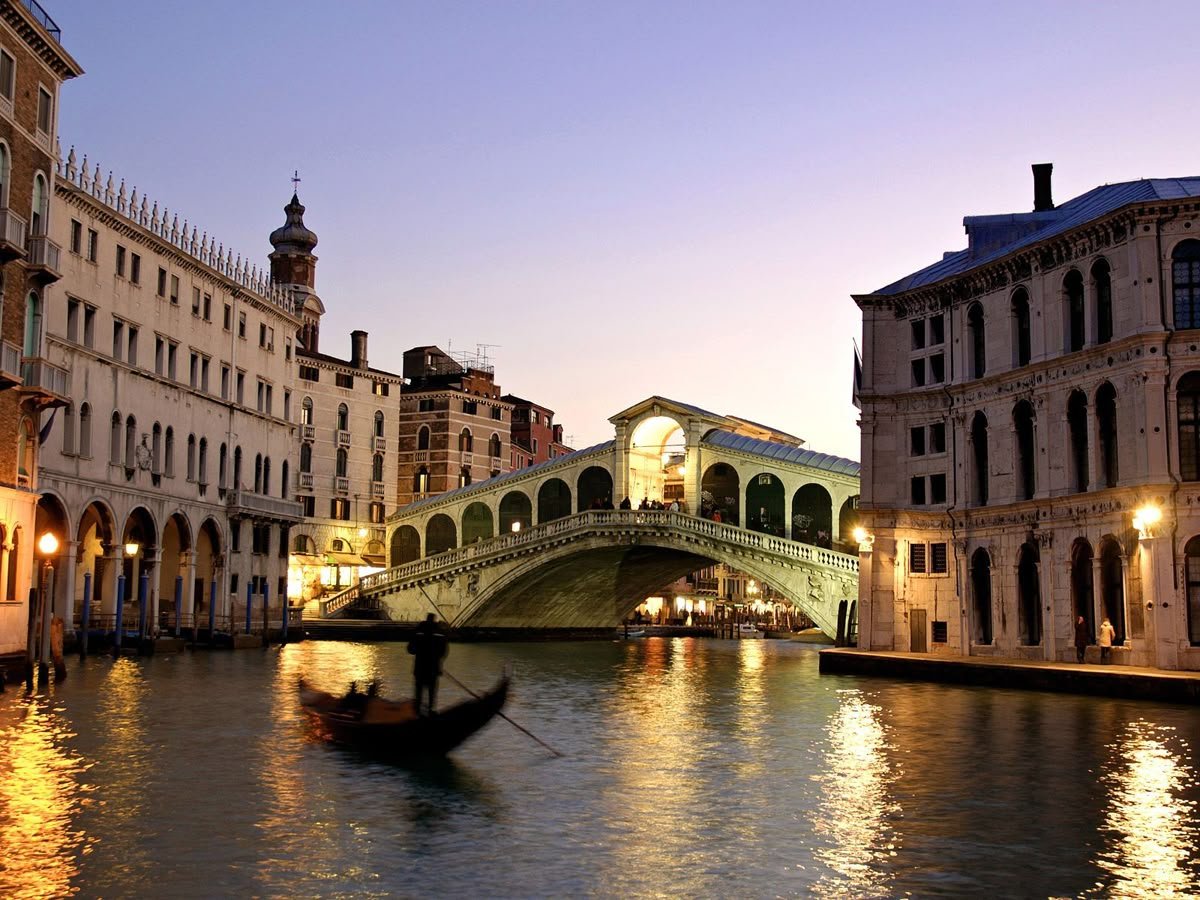
Venice was even more demanding. We had allocated two days but ended up staying four. There was something magical about the city that made it impossible to leave. Every canal, bridge and narrow alley seemed to tell a story. Just when we thought we had seen enough, Venice would reveal another hidden corner worth exploring.
That’s the beauty of Italy. The more time you spend there, the more you realize how much remains undiscovered. It is one of those rare countries where the itinerary constantly loses to curiosity.
The Amalfi Coast deserves slow travel. Tuscany deserves long drives. The Dolomites deserve hiking boots. Sicily deserves its own trip.
Bologna, Verona, Cinque Terre, Naples, Lake Como, Pisa, Turin and countless medieval villages could easily fill months.
I have travelled across much of Italy, and even now my list remains incomplete. That is the beauty of Italy. It never runs out of reasons to return.
The Family Road Trip That Made Italy Even More Special
In December 2019, just before Covid changed the world, we returned as a family. This time it wasn’t business. It was about creating memories. Driving across Italy felt different because I wasn’t discovering it alone anymore.
I was watching my children discover it. One moment remains unforgettable. We were driving from Milan towards Venice.
Suddenly Julius looked at a road sign and shouted:
“Dad, Bologna!”
Jordan immediately replied:
“You mean the pasta?”
Both boys genuinely believed Bolognese was simply a dish.
That day they discovered something new. Bolognese wasn’t originally a dish. It came from Bologna, a real city with a history stretching back over two thousand years. For the next thirty minutes, the car transformed into a travelling classroom. And Julius, as usual, became the teacher.
Julius Explains Venice
One of my favourite travel memories happened in Venice. We parked our car at the final parking area before the roads disappeared. For first-time visitors, Venice feels strange.
Suddenly there are no cars. No buses. No traffic lights.
Only water.
From there we boarded a boat towards our hotel. We stayed on one of Venice’s islands in a historic property overlooking the Adriatic waters. The hotel itself had welcomed travellers for centuries and carried stories in every corridor. For three days we wandered through Venice.
Every bridge seemed to lead to another postcard. Every canal looked unreal. One evening while we were walking along the waterfront, Jordan asked:
“How did people build a city in the water?”
Before I could answer, Julius jumped in.
“Dad, can I explain?”
Of course.
Jordan nodded.
Julius began:
“Long ago people were escaping invaders. They came to these islands because armies couldn’t easily reach them.”
Jordan looked confused.
“But how did they build houses?”
“They put wooden poles deep into the mud under the water.”
Jordan’s eyes widened.
“So the whole city is standing on wood?”
“Yes,” Julius replied proudly. “Thousands and thousands of wooden poles.”
Jordan stopped walking.
“You are joking.”
“I’m not. That’s why Venice is special.”
For the next twenty minutes Julius continued explaining Venetian merchants, sea trade, ships and how Venice became one of Europe’s richest cities.
I simply walked behind them smiling. Travel had become something bigger than sightseeing. It had become curiosity, learning and shared memories. Meanwhile, Sunitha sat on the balcony with a glass of Italian wine in hand, quietly admiring the Adriatic Sea. The distant lights reflected on the water, boats drifted slowly through the evening, and the entire scene felt calm and serene. Unlike the energy of Rome or the elegance of Milan, Venice seemed to move at its own pace. There were no car horns, no rush and no urgency. Just the gentle sound of water, centuries of history and a peacefulness that made you want to stay a little longer.
As I listened to Julius explaining the history of Venice to Jordan, I couldn’t help but smile. At that moment, I was reminded of something I have always believed: travel is one of the greatest classrooms in the world. A textbook can teach a child that Venice was built on wooden piles driven into a lagoon. But standing there, looking at the canals, the bridges and the centuries-old buildings, turns knowledge into understanding. The world has a way of teaching lessons that no classroom ever can. Geography becomes real. History comes alive. Cultures become familiar rather than foreign.
Years from now, the boys may not remember every chapter they studied in school, but I am certain they will remember that evening in Venice, watching the sunset over the Adriatic while talking about merchants, explorers and one of the most extraordinary cities ever built. That is the true return on investment from travel. Not the photographs we take, but the perspectives we gain.
It had become education. It had become curiosity. It had become family.
Why Italy Means So Much To Me
When I think about Italy, I don’t just think about the Colosseum, Venice or Vatican City. I think about the younger version of myself arriving in Rome with a paper map, a business itinerary and absolutely no idea that travel would become such an important part of my life.
That first trip didn’t simply introduce me to a new country. It introduced me to a new way of looking at the world.
Years later, when I returned with Sunitha, Julius and Jordan, Italy gave me something even more valuable. Watching the curiosity of my children reminded me that travel is not only about discovering new places. It is about discovering new perspectives. Seeing Julius explain Venetian history to Jordan made me realize how much children absorb when they experience the world firsthand. Travel doesn’t just show children the world; it teaches them how to think about it.
Today, after nearly 100 countries, Italy still feels unfinished. Every visit reveals another village, another story, another reason to return. Perhaps that is Italy’s greatest gift. It keeps reminding us that no matter how much we have seen, there is always more to learn, more to explore and more to understand.
Some countries become memories. Italy became a chapter of my life.
Your Turn
- If you had six months in Italy, which region would you explore first?
- What is the one country that changed the direction of your life?
- Have your children ever taught you something unexpected while travelling?
Leave a Reply