
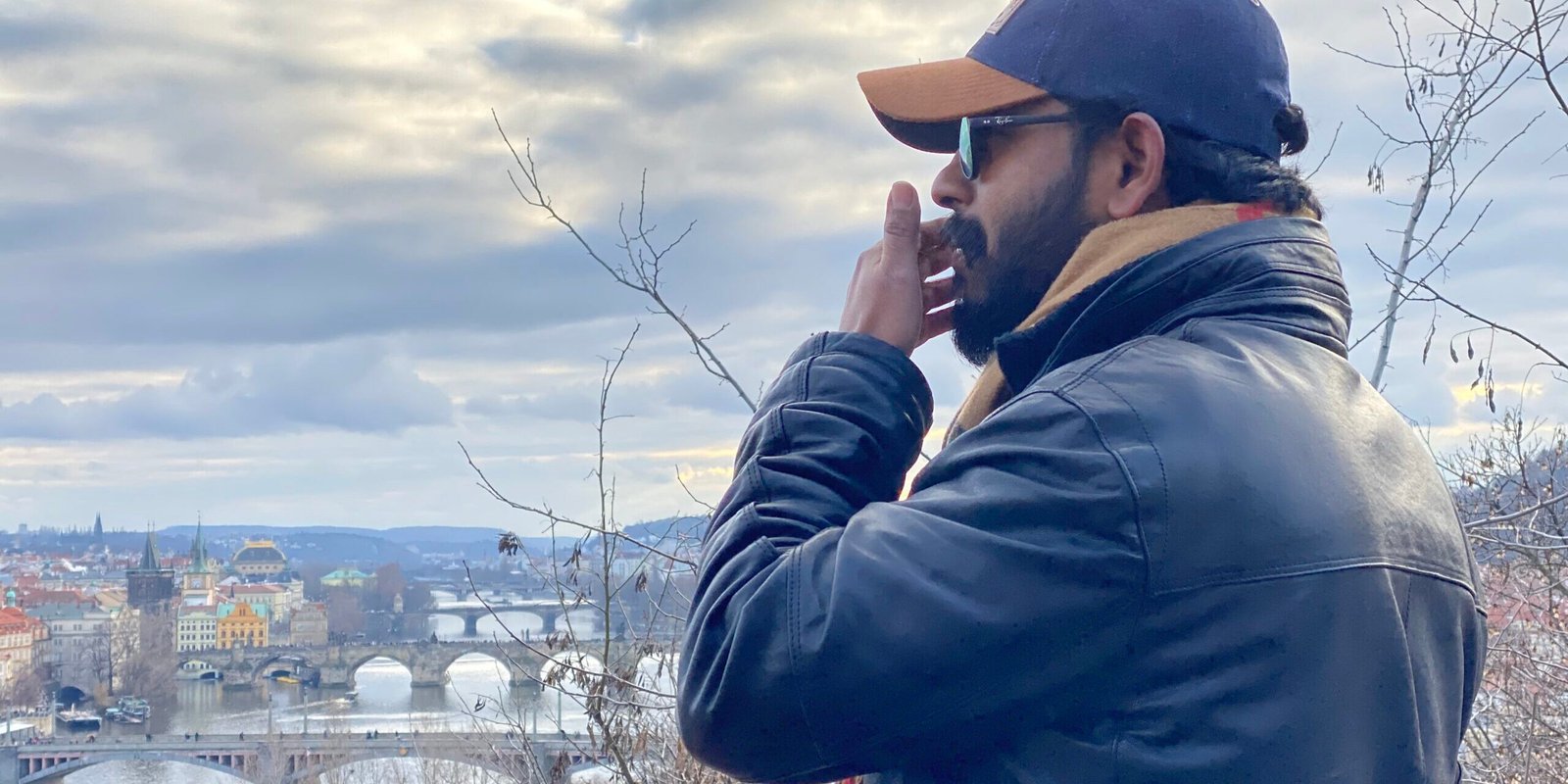
Beyond Passport Stamps: The Life Lessons Hidden in Every Journey
7 Timeless Principles I Discovered Only After Exploring the World
TL;DR: For the impatient traveler
People often ask me what travelling has taught me.
Most expect me to recommend hidden beaches, scenic road trips, or underrated destinations. They expect a list of countries to visit before turning forty or retiring. While I enjoy sharing those recommendations, they are never the first thing that comes to mind.
The greatest gift travel has given me isn’t another passport stamp or another photograph.
It is perspective.
Over the years, I realized that every journey quietly teaches travel life lessons that extend far beyond geography. They shape the way we solve problems, deal with uncertainty, build resilience, make decisions, and even define success. Interestingly, many of these lessons already had names long before I recognized them: Murphy’s Law, the Compounding Effect, the Pareto Principle, the Familiarity Principle, Falkland’s Law, Wilson’s Law, and Kidlin’s Law.
I never learned them from a classroom or a management seminar.
I learned them while travelling.
And perhaps that is why I believe meaningful travel experiences are one of the greatest investments we can ever make — not in places, but in ourselves.
The Lost Mumbaikar says:
“The world didn’t teach me these principles. It simply gave me enough journeys to understand them.”
What Travel Really Taught Me: 7 Principles That Changed My Life
“Travelling didn’t just show me how different the world is. It quietly showed me how much I still had to learn about myself.”
When I booked my first international trip, I wasn’t searching for life lessons from travel or personal growth through travel.
Like every first-time traveler, I simply wanted to see the world beyond the pages of magazines and television screens. I wanted to stand in front of famous landmarks, drive through breathtaking landscapes, and experience cultures that had always felt distant. Every new country felt like another achievement, another dream realized, and another story waiting to be told.
At that stage of my life, I genuinely believed that travel was about destinations.
Today, after travelling to nearly 100 countries, I know it never was.
Looking back, I realize that countries were only the setting. The real journey was happening somewhere far more important. Every airport, every unfamiliar road, every border crossing, and every conversation with a stranger quietly changed something inside me. Without noticing it, travel reshaped the way I approached uncertainty, confidence, patience, planning, and even failure.
This is why I often say that the greatest benefits of travel have nothing to do with ticking countries off a list. The true value lies in the perspective it gives us and the person it helps us become.
The greatest education of my life didn’t happen in an engineering classroom, inside a corporate boardroom, or during a leadership workshop. It happened while getting lost in unfamiliar streets, navigating cultures I barely understood, and discovering that the world is often far kinder than the headlines suggest.
Years later, while reading about principles that psychologists, economists, and philosophers had been discussing for decades, I found myself smiling.
Not because I was discovering something new.
Because I realized I had already experienced many of them through meaningful travel experiences.
The world had quietly become my teacher long before I realized I was its student.
And that, perhaps, is the greatest lesson of all: travel and personal development are inseparable. The destinations may change, but the life lessons from travel stay with us long after the journey ends.
Murphy’s Law – The Best Travel Experiences Rarely Go According to Plan
Murphy’s Law is a popular saying that means: “Anything that can go wrong, will go wrong.”
It doesn’t mean disasters are guaranteed. Instead, it’s a humorous reminder that if there’s a possibility of a mistake or failure, it’s wise to prepare for it.
Before I started travelling extensively, I believed that a perfect itinerary created a perfect holiday. Over the years, I discovered that Murphy’s Law is one of the most valuable travel life lessons.
At first glance, it sounds pessimistic. But after exploring nearly 100 countries, I’ve come to see it differently. In travel, Murphy’s Law doesn’t mean disasters are waiting around every corner. It simply means that travel uncertainty is inevitable. Flights get delayed. Roads close unexpectedly. Weather changes without warning. Hotels make mistakes. Luggage goes missing. Plans that looked perfect on paper suddenly need to be rewritten.
Ironically, many of the best meaningful travel experiences and unforgettable travel stories are born from those unexpected moments.
The more I travelled, the more I realized that success on the road is not about avoiding problems. It is about adaptability — the ability to adjust when things don’t go as planned. That mindset has become one of the most important life lessons from travel.
I remember an incident during my solo road trip in Bosnia while driving from Montenegro. My car got a puncture, and I had already planned to visit the Latin Bridge in Sarajevo, the historic location where Archduke Franz Ferdinand was assassinated, an event that triggered World War I. Fortunately, I met a group of backpackers from Poland. As I shared my plans with them, our conversation drifted from World War I to World War II, and eventually to Poland itself. Until then, Poland had only been a country on my travel list, but after that conversation, it became a destination I knew I had to visit.
I remember the unexpected detours. I remember the conversations and experiences that only happened because life forced me to change direction.
That’s when I realized that Murphy’s Law isn’t warning us that everything will go wrong. It is reminding us that perfection is an illusion.
Travelling becomes infinitely more enjoyable the moment we stop trying to control every detail and start appreciating the beauty of travel uncertainty. Some of the world’s greatest destinations can be researched online, but the greatest travel memories are often impossible to plan.
Perhaps that is why experienced travelers become calmer with every journey. They understand that the best travel psychology isn’t about control — it’s about embracing unpredictability.
The Compounding Effect – Every Journey Quietly Builds a Better Version of You
The Compounding Effect is the principle that states: Small actions, repeated consistently over time, create disproportionately large results.
Whenever someone discovers that I have travelled to nearly 100 countries, two questions inevitably follow.
The first is usually: “How have you managed to travel to so many countries?”
My answer is surprisingly simple. I never started with the goal of visiting 100 countries. I set realistic targets each year, visited a few new places, and built on that momentum. One country became three, three became ten, ten became twenty, and before I realized it, the numbers had started multiplying. Looking back, it was the power of compounding at work. Small, consistent actions repeated over time created results that once seemed impossible.
The second question inevitably follows: “Which country changed your life the most?”
People usually expect me to mention Iceland, Peru, New Zealand, or Romania. Instead, I surprise them with a different answer. No single country changed my life — every country did. One journey taught me patience, another quietly taught me humility. Some challenged assumptions I didn’t even realize I had. Others reminded me that kindness exists in places where the media only reports fear.
Every destination left behind a lesson, and although none of those lessons felt extraordinary while they were happening, together they slowly reshaped the person I was becoming. That is the beauty of compounding.
Most people associate the word with money or investing. They understand how small financial investments grow into something significant over time. Travelling works in exactly the same way. Every journey deposits something into your character: a little more confidence, a little more resilience, a little more curiosity, a little more gratitude.
Individually, those changes are almost invisible. Collectively, they become transformational.
Years later, you suddenly realize that the person boarding today’s flight bears very little resemblance to the nervous traveler who boarded that first international trip in 2009. The confidence isn’t the result of one extraordinary adventure. It is the result of hundreds of ordinary experiences quietly building upon one another.
That is why I often tell people that travelling didn’t make me wiser overnight. It simply gave life hundreds of opportunities to teach me the same lesson in different ways.
And perhaps that is the greatest benefit of travelling. It doesn’t change you all at once — but it changes you consistently. That is the essence of personal growth through travel and one of the most powerful life lessons from travel.
The Pareto Principle – We Remember Moments, Not Itineraries
The Pareto Principle, also known as the 80/20 Rule, states: Roughly 80% of outcomes come from 20% of causes.
When I first started travelling, I believed the more places I visited in a day, the more successful the trip would be. My itineraries were packed from morning until night because I was afraid of missing something important. If there was a famous church, I wanted to see it. If there was a museum, I wanted to visit it. If a viewpoint appeared on Google Maps, I convinced myself I couldn’t leave without standing there.
For a while, it felt satisfying. Then something interesting happened.
Years after returning home, I realized I could barely remember half of those attractions. I couldn’t recall every hotel I had stayed in or every restaurant where I had eaten. Many of the monuments slowly faded from memory, despite the effort I had made to include them in my itinerary. Yet certain moments remained as vivid as if they had happened yesterday.
A conversation with a stranger. A quiet sunrise over an empty landscape. Sitting with my family without saying a word because the moment itself said everything. A simple meal that tasted extraordinary because of the people around the table.
I experienced this firsthand in Cuba. My original plan was ambitious: explore Havana, Viñales, Trinidad, Cienfuegos, and several other destinations in just seven days. Like many travelers, I wanted to see as much of the country as possible.
But Cuba had other plans.
I ended up spending far more time in Viñales than I had intended. Instead of staying in a hotel, I stayed with a local Cuban family in a modest homestay. What I remember today is not the list of places I missed. I remember the family. I remember the homemade Cuban meals shared around their table. I remember the conversations, the warmth, the laughter, and the feeling of being welcomed into their daily lives, even though we didn’t speak the same language. Somehow, kindness, smiles, and shared meals communicated more than words ever could.
Years later, those evenings in Viñales remain far more vivid in my memory than any hotel room or rushed sightseeing itinerary.
That experience taught me something important: travel is not always about covering more places. Sometimes it is about staying long enough for a place to reveal its soul.
The memories that stay with us are rarely the ones we planned. They are often the moments we never saw coming. That is when I began seeing travel through the lens of the Pareto Principle.
Perhaps eighty percent of the itinerary gives us only a handful of pleasant memories, while twenty percent of completely unexpected moments become the stories we continue telling for the rest of our lives.
That is why I believe the greatest travel life lessons are not about how many places you visit, but about the depth of the meaningful travel experiences you allow yourself to have.
The Familiarity Principle – Confidence Is Earned One Journey at a Time
The Familiarity Principle is a psychological concept that states: The more we are exposed to something, the more we tend to like, trust, or feel comfortable with it.
One of the biggest compliments people give experienced travelers is: “You make it look so easy.”
The truth is, it wasn’t always easy.
I still remember the excitement mixed with nervousness before my early international trips. Everything felt unfamiliar. Airports looked confusing, immigration counters felt intimidating, and every announcement over the loudspeaker sounded important. Walking through a country where I didn’t understand the language felt like stepping into another world, and even ordering a simple meal required more courage than I care to admit today.
Looking back, I realize I wasn’t lacking ability. I was simply lacking familiarity.
Travelling has taught me that confidence is rarely something we possess before beginning a journey. It is something we gradually earn because we keep taking the next step. Every airport becomes easier than the previous one. Every conversation with a stranger becomes a little more comfortable. Every unfamiliar culture slowly reminds us that people are often far more welcoming than our fears ever imagined.
The world didn’t become smaller because I travelled. My comfort zone became larger.
That, in my opinion, is one of the greatest travel life lessons. It quietly replaces uncertainty with experience. It teaches us to trust ourselves in unfamiliar situations and reminds us that most challenges are temporary. Eventually, you stop asking yourself whether you are capable of handling the unknown because experience has already answered that question many times before.
The confidence built through travelling doesn’t stay at the airport when you return home. It follows you into job interviews, business meetings, difficult conversations, and every new opportunity life presents. That is why I have always believed that personal growth through travel is one of the greatest investments we can make.
The passport may stay in a drawer after the holiday ends, but the confidence you earned while using it quietly stays with you forever. That is the true value of life lessons from travel — they shape not just your journeys, but your entire approach to life.
Falkland’s Law – Not Every Situation Demands an Immediate Decision
Falkland’s Law is a decision-making principle that says: “When it is not necessary to make a decision, it is necessary not to make a decision.”
Modern life constantly tells us to act quickly: reply immediately, decide immediately, solve every problem the moment it appears.
Travelling has taught me something completely different.
I have realized that some of the best decisions are made only after we stop trying to make them instantly. When plans suddenly change, our first instinct is often to react emotionally because uncertainty makes us uncomfortable. We feel pressured to fix everything immediately, even when we don’t yet understand the situation.
Experience has slowly taught me another approach: pause, observe, and then decide. That simple habit has transformed the way I travel and, more importantly, the way I approach life.
Every destination has taught me that uncertainty is not always a problem waiting to be solved. Sometimes, it is simply a reminder that the world is unfolding in ways we cannot yet see.
I learned this lesson during my 2019 summer road trip through the Balkans. On my very first day in Belgrade, I lost my phone. It contained everything: hotel bookings, rental car details, maps, contacts, reservations, and my entire travel plan for the next few weeks. My first reaction was simple: maybe I should just return to Dubai.
But instead of panicking, I decided to slow down. The next day, I spent a few hours walking along the Danube River, thinking about what to do next. Gradually, the frustration faded. A new plan emerged. Rather than trying to recreate every booking and every detail, I decided to embrace the uncertainty and explore the Balkans one day at a time.
What followed was one of the most memorable road trips of my life. I drove across Serbia, Bosnia and Herzegovina, and Montenegro, discovering places and experiences that were never part of my original itinerary.
Today, I barely remember losing the phone. What I remember are the mountain roads, the conversations, the unexpected detours, and the freedom that came from letting go of a plan that no longer existed.
Looking back, I realize that the loss of my phone felt like a disaster at the time. In reality, it became the beginning of a much better story.
Patience often reveals opportunities that urgency would have completely overlooked.
The same principle has shaped my career as much as my travels. Some of the most important decisions I have made were successful not because I made them quickly, but because I gave myself enough time to gather information, understand different perspectives, and allow clarity to replace emotion.
Travelling the world has convinced me that rushing creates movement. Patience creates direction. The older I become, the more I realize those two things are very different.
That is why I believe decision making under uncertainty is one of the most powerful travel life lessons. It teaches us that clarity often comes with time, and that the best decisions are not always the fastest ones.
Wilson’s Law – Curiosity Is the Greatest Passport You’ll Ever Own
Wilson’s Law is a principle often quoted in technology and innovation circles: “If you put information and communication tools in the hands of people, they will do amazing things with them.”
When I started travelling internationally, there were no smartphones. I carried printed hotel confirmations, paper maps, flight tickets, guidebooks, and handwritten notes with important phone numbers. If you got lost, you asked a local for directions. If plans changed, you adapted.
Today, almost everything fits inside a single device. Your phone is your map, boarding pass, travel agent, translator, currency converter, hotel booking system, and camera. With a few taps, you can plan an entire journey across multiple countries.
Wilson’s Law is visible everywhere in modern travel. Give ordinary people access to information and communication tools, and they can confidently explore places that once seemed difficult or intimidating.
But travel has also taught me something important: technology is an incredible tool, but it should never become a dependency.
During my solo road trip through the Balkans in 2019, I lost my phone on my very first day in Belgrade. At first, it felt like a disaster. But I simply had to go old school. I started writing things down again. I asked people for directions. I relied more on conversations, observation, and flexibility than on a screen.
The trip continued, and it eventually became one of the most memorable journeys I have ever taken. That experience reminded me that technology should enhance our travels, not define them. The greatest value of a smartphone is not that it tells us where to go — it gives us the confidence to explore places we may never have considered before.
Yet once I reach my destination, I prefer to switch it all off and focus on the moment, on being fully present. Because while tools matter, what matters even more is what we choose to do with them.
That is why I believe curiosity is the greatest passport you’ll ever own. Technology may guide you, but curiosity is what truly opens doors. It leads to conversations, discoveries, and life changing travel experiences that no app can predict.
Kidlin’s Law – Most Problems Become Smaller When We Understand Them
Kidlin’s Law states: “If you can write the problem down clearly, then the matter is half solved.”
One of the most valuable travel life lessons I’ve learned is that many problems are not as big as they first appear. What makes them feel overwhelming is often not the problem itself, but the uncertainty surrounding it.
When something goes wrong during a journey, our minds tend to create stories far larger than reality. A delayed flight becomes a ruined holiday. A wrong turn becomes a disaster. A missed reservation feels like the entire trip is falling apart.
But experience has taught me to pause and ask a simple question: What is the actual problem? Not the imagined problem. Not the worst-case scenario. The real problem.
Once we identify it clearly, solutions often appear much faster than expected.
I remember many moments during my travels when the situation initially felt stressful. Yet when I broke it down into smaller parts, I realized that only one piece of the journey had gone wrong — not the entire journey itself.
Travel has shown me that confusion creates anxiety, while clarity creates action. The moment we define a problem accurately, our focus shifts from worrying to solving. That lesson has been just as useful outside travel. In business, it is easy to spend hours discussing symptoms while ignoring the real issue. In relationships and professional life, misunderstandings often grow because nobody has clearly identified the root cause.
Kidlin’s Law reminds us to slow down and create clarity. More often than not, the solution is already closer than we think.
Perhaps confidence is not about avoiding problems. Perhaps confidence comes from knowing that whatever challenge appears, you can break it down, understand it, and solve it one step at a time.
That is why I believe travel teaches problem solving and strengthens critical thinking. It shows us that resilience isn’t about avoiding challenges — it’s about facing them with clarity and calm. And I don’t think there is a greater souvenir than the ability to stay calm, find clarity, and move forward.
The Lost Mumbaikar Reflections
After travelling to nearly 100 countries, I have come to realize that the greatest travel life lessons are rarely about destinations. They are about understanding how to navigate life itself.
The principles we explored in this blog may have different names, but together they form a practical guide for dealing with uncertainty — whether you are standing in a foreign country, running a business, raising children, or planning your financial future. These lessons in personal growth through travel have helped me far beyond the road.
In business, I have learned that preparation prevents many problems, clarity solves most problems, and patience avoids expensive mistakes. Some of my best decisions came not from acting quickly, but from understanding the situation fully before taking action.
As a parent, I have seen the power of these principles in raising my children. Travel has taught them adaptability, confidence, cultural awareness, resilience, and independence. None of those qualities appeared overnight. They were built through hundreds of small experiences that compounded over time. That is one of the most overlooked benefits of traveling for personal growth in families.
The same applies to financial literacy. Wealth is rarely created by one brilliant decision. It is usually built through discipline, patience, continuous learning, and the ability to stay focused on long-term goals while others chase short-term distractions.
Perhaps that is why I believe travel and personal development are inseparable. Travel teaches us to prepare for uncertainty, understand problems clearly, make better decisions, trust the power of small consistent actions, and remain curious enough to keep learning.
The countries, mountains, beaches, and road trips are wonderful memories. But they are not the greatest souvenirs.
The greatest souvenir is the person you become along the way.
That, for me, is the true value of meaningful travel experiences and the lasting impact of the life lessons from travel.
Your Turn
- After reading these travel life lessons, which principle resonated with you the most?
- Has travelling ever changed the way you think, approach challenges, or see the world? Or are you still waiting for that first journey that might change your life?
I’d genuinely love to hear your story because every traveler carries lessons that no classroom, no business book, and no guidebook can ever teach. And perhaps your experience will inspire someone else to take that first step into the world.
Frequently Asked Questions
1. What are the most valuable travel life lessons?
Travel teaches adaptability, resilience, patience, and confidence. These lessons go beyond destinations, shaping how we approach uncertainty, solve problems, and grow as individuals.
2. How does travel contribute to personal growth?
Travel exposes us to unfamiliar cultures, challenges, and situations. Each journey builds confidence, resilience, and emotional intelligence, helping us grow both personally and professionally.
3. Why is travel considered the best teacher?
Unlike classrooms, travel teaches through real-world experiences. From missed flights to unexpected friendships, every journey offers lessons in problem solving, decision making, and perspective.
4. How does solo travel change your life?
Solo travel pushes you outside your comfort zone. It teaches independence, adaptability, and self-discovery, helping you trust yourself in unfamiliar situations and grow in confidence.
5. What are the long-term benefits of meaningful travel experiences?
The greatest souvenirs of travel are not photos or passport stamps, but the life lessons that stay with you — improved decision making, cultural awareness, resilience, and a growth mindset.
See Also:
- How to Travel More with an Indian Passport, US Visa & UAE Residency Strategy
- Travel Life Lessons: 7 Timeless Principles I Discovered Only After Exploring the World

Leave a Reply