
Cuba
Where Time Slows Down and Cigars Tell Stories
TL;DR — For the Impatient Traveller
Cuba had lived in my imagination long before I ever visited it. Growing up in the 1980s, names like Fidel Castro, Che Guevara, and Ernest Hemingway carried a strange mystique, while images of vintage American cars, hand-rolled cigars, and Havana’s faded glamour made Cuba feel like a distant cinematic dream. In 2018, during a work trip to the United States, I finally turned that curiosity into reality with a solo motorbike road trip through Havana, Viñales, and Varadero. What I expected was cigars and history. What I found instead was a country that made me question whether modern life’s obsession with speed has quietly stolen something important from us.
The Lost Mumbaikar says:
“Some countries are remembered for their skylines. Cuba is remembered for its spirit.”
The Dream That Smelled Like Tobacco
Some destinations begin with careful planning. Cuba began decades earlier in imagination.
As a child growing up in Rajasthan, I often heard world news playing on the radio while my father listened intently. I was too young to understand politics, but names like Fidel Castro and Che Guevara sounded larger than life. Add Ernest Hemingway, Havana bars, and those impossibly beautiful old American cars, and Cuba became one of those places that quietly sits in your mind for years without explanation.
Then there was another fantasy, admittedly less philosophical. I always imagined standing inside a real Cuban tobacco farm, watching cigars being rolled by hand, bringing some home, and one day smoking one from my Dubai terrace as some sort of ridiculous life achievement. Strange how the mind creates these little milestones.
That opportunity finally came in 2018 when work took me to the United States. Instead of flying straight back, I made a decision that has often shaped my travels; if a dream destination is within reach, go now. Plans can wait. Life may not.
Miami Before Cuba: An Unexpected Prologue
Before Cuba, I spent a few days in Miami, and strangely, that became the perfect warm-up.
One evening, I visited a Cuban-inspired venue on Ocean Drive called I Love 305, associated with Pitbull and Miami’s Cuban culture. As a fan of his music, the stop felt fitting. While chatting with one of the staff members, who happened to be Cuban, I casually mentioned my plan to ride across Cuba.
He smiled and said, “Then Havana gives you homework. Go to El Floridita. Hemingway never really left that place.”
It was one of those small travel conversations that seem insignificant at the time but quietly shape the journey ahead. That recommendation stayed with me.
Arrival in Havana: Stepping Into Another Era
Landing at José Martí International Airport felt less like arriving in a new country and more like stepping into a different timeline.
I had just come from Dubai and Miami, cities built around speed, ambition, efficiency, and relentless movement. Havana felt like the opposite of all of that. Outside the airport, brightly painted American cars from the 1950s rolled past like moving museum pieces. Buildings looked tired but dignified. People moved without visible urgency. Nobody seemed in a rush to prove anything.
It immediately became clear that Cuba was not going to be experienced the same way as other destinations.
My original plan was aggressively ambitious, which, if you know my travel style, is unsurprising. Havana, Viñales, Cienfuegos, Trinidad, Varadero on a bike, all packed into one fast-moving road trip. But Cuba had other ideas.
What to Do in Havana Cuba: A City Where History Lives Without Trying
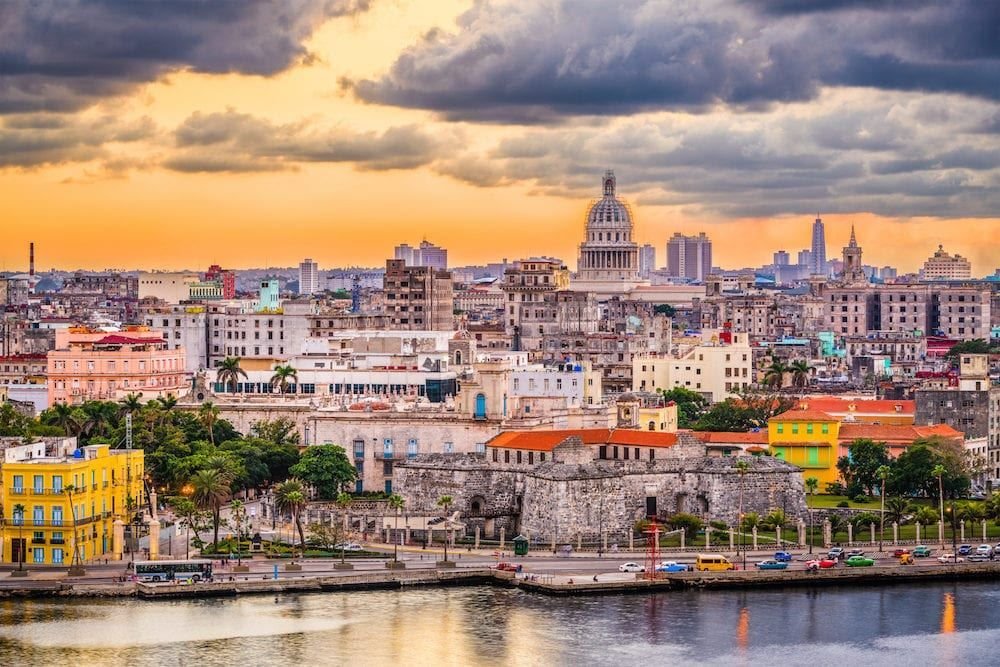
If you are searching for the best things to do in Havana Cuba, start by slowing down. Havana is not polished or modern in the conventional sense, but that is exactly its magic. Decades of trade restrictions after the Cuban Revolution meant Cuba repaired rather than replaced, which is why classic American cars in Havana, faded colonial buildings, and old-world charm still define the city.
One of the absolute best things to do in Havana is spending time along the iconic Malecón Havana, where the Atlantic crashes against the seawall, music drifts through the air, and locals sit for hours talking without urgency. I spent two days exploring Havana, simply soaking in its carefree rhythm, live music, and surprisingly happy atmosphere where people seemed less stressed than many in our hyper-connected cities.
For your Havana itinerary, explore Old Havana attractions like Plaza Vieja, Plaza de la Catedral, and El Floridita, famously linked to Hemingway. Film lovers will recognize Havana from Fast & Furious 8, where its streets became the perfect cinematic backdrop.
The Lost Mumbaikar says:
“Some cities move fast. Havana teaches you why slowing down matters”.
Havana Nights: Hemingway, Legendary Cocktails, and Cuba’s Drinking Culture
If you enjoy a good drink, one of the absolute best things to do in Havana Cuba is exploring its legendary bar scene, because this city did not just serve cocktails; it helped shape cocktail history. Cuba became globally famous for rum-based classics thanks to its sugarcane industry, Caribbean climate, and Havana’s golden era when writers, musicians, celebrities, and American high society escaped here for nights of indulgence.
Naturally, I had to visit El Floridita, easily one of the best places to have cocktails in Havana, famously known as the birthplace of the Daiquiri, where Ernest Hemingway became a loyal regular, reportedly preferring his drink stronger and less sweet.
I also visited Finca Vigía, Hemingway’s preserved house museum near Havana, and suddenly his obsession with Cuba made complete sense. This island had rhythm, sea, fishing, stories, and zero urgency.
If cocktails are your thing, La Bodeguita del Medio, said to have made the Mojito world-famous, is another must-visit, while elegant spots like Hotel Nacional de Cuba’s Bar Vista al Golfo and the stylish rooftop El Cocinero offer some of the best Havana nightlife experiences.
For someone who enjoys a drink, Havana is not just about alcohol, “It is about atmosphere, conversation, and that rare kind of city where nobody seems in a hurry to end the night”.
The Road Trip to Viñales: Where Cuba Slowed Me Down
If you are searching for the best road trip from Havana, let me say this clearly, “the road trip from Havana to Viñales is not just scenic, it is emotional”.
The moment I left Havana on my rented Piaggio three-wheel motorbike, Cuba changed personality. The city’s faded colonial energy slowly gave way to open countryside, farms, sleepy villages, and roads that felt untouched by urgency. The journey itself became one of the best things to do in Cuba, not because of dramatic highways, but because of how beautifully ordinary everything felt.
At one point, I saw groups of school children walking home together, laughing loudly, carrying nothing more than school bags and stories from the day. No phones. No parents tracking locations. No school buses. That simple sight transported me straight back to my own childhood in Rajasthan, when walking home from school was part of life, not a safety concern or logistical operation.
That is the strange power of travel, “Sometimes a foreign country reminds you of a version of yourself you had quietly forgotten”.
Along the way, I stopped at Cueva del Indio, one of the popular attractions near Viñales, where underground cave systems cut through limestone formations. I also paused at a small countryside eatery for slow-cooked Cuban pork served with rice, beans, and fried plantains. No branding. No presentation theatrics. Just fresh food made honestly, “Some of the best meals on road trips happen where menus do not exist”.
Living with a Cuban Family in Viñales
If Havana gives you history, Viñales gives you heart.
Arriving in Viñales felt like entering a completely different Cuba. Giant limestone hills, known as mogotes, rose dramatically from endless green tobacco fields, creating one of the most beautiful landscapes, I saw anywhere on the island. It immediately became clear why this region is central to every serious Cuba travel guide.
I had originally planned to stay just one night before continuing to Cienfuegos and Trinidad. But travel sometimes rewards flexibility more than planning.
Instead of checking into a hotel, I ended up staying with a local Cuban family after a casual recommendation from someone in town. No online booking platform. No polished reviews. Just old-fashioned human trust.
The elderly couple who hosted me welcomed me like an old friend rather than a paying guest. My room was simple, the house was modest, but the warmth was unforgettable. In the evenings, I sat in their kitchen watching meals being prepared while we somehow managed conversations despite the language barrier.
I spoke English. They spoke Spanish.
Yet somehow, we discussed family, children, life, and dreams.
I showed them photos of Sunitha and the boys. They smiled warmly and insisted, through gestures and broken words, that I must one day return with family.
That night reminded me of something powerful.
The Lost Mumbaikar says:
“Luxury is not always what money buys. Sometimes luxury is simply peace, home-cooked food, and conversations that do not need perfect grammar”.
Viñales Cigar Farm Tour: Cuba’s Most Authentic Experience
If there was one experience I had dreamed about for decades, it was this. One of the best things to do in Viñales Cuba is a Cuban cigar farm tour, and interestingly, it was my host family who strongly recommended this particular farm.
Cuban cigars are world-famous because of the island’s unique climate, rich soil, centuries-old tobacco craftsmanship, and the art of hand-rolled Cuban cigars, still considered the gold standard among cigar lovers.
When I first arrived, the farm owner and workers honestly looked straight out of a Hollywood cartel or old mafia movie. The kind of faces you would expect in a Mexico crime film, serious and intimidating.
But the moment they realized I was a genuine traveler from Dubai who had come all this way because of a childhood fascination with cigars, everything changed. Smiles appeared, drinks were offered, and for the next few hours, they walked me through every step of the Cuban tobacco farm experience; harvesting, drying, fermenting, leaf selection, and the final hand-rolling process.
There was no tourist script, just pride, passion, and generosity. Before I left, they handed me a bundle of handmade cigars as a gift.
.
Why Viñales Changed My Cuba Itinerary
My original Cuba itinerary was classic me; too ambitious, too fast, and packed with places like Havana, Viñales, Trinidad, Cienfuegos, and Varadero. But Cuba had other plans. I was enjoying Viñales Valley Cuba so much; the peaceful countryside, old men casually smoking cigars, and all chill that I extended my stay by two extra days and decided to leave Trinidad and Cienfuegos for my next Cuba trip. Sometimes the best travel decisions happen when you stop following itineraries and start following instinct.
I did make a short ride to Varadero Beach Cuba, one of the best beaches in Cuba, and yes, the turquoise Caribbean water was postcard-perfect. But after the soul of Viñales, it felt more like a beautiful resort escape than the real Cuba I had fallen for. So instead of chasing more destinations, I gave myself one final extra day in Havana and that turned out to be the perfect ending.
Back in Havana nightlife, I stopped sightseeing and simply lived the city. Evenings at Malecón Havana, vintage cars rolling by, live salsa spilling onto the streets, and slowly working my way through Cuba’s legendary cocktails beyond the classic Daiquiri and Mojito felt far more rewarding than rushing through another checklist. Some destinations are explored. Havana is simply experienced.
The Miami Airport: Cigar Interrogation
Then came the unexpected comedy.
Back in Miami, US immigration began questioning my Cuba trip. At that time, travel to Cuba from the United States for pure tourism was restricted, with approved categories such as religious travel, educational exchange, cultural visits, journalism, family visits, and humanitarian purposes. Since I had entered Cuba from the US, the officer naturally wanted to know why.
When he asked my reason, I said, somewhat unconvincingly, “religious travel.”
To be fair, I had visited a church in Havana.
The officer looked at me with the kind of smile that instantly tells you he has heard every version of this story before. Then came the next question.
“Anything to declare?”
Technically, I had not bought anything in Havana, since the cigars were gifted to me at the Viñales tobacco farm, so I confidently said no.
Big mistake.
The moment he opened my bag and saw the stack of hand-rolled Cuban cigars, he looked at me, paused, and smiled. “I know you went for tourism,” he said casually, in the calm tone of someone far too experienced to be fooled.
At that point, I dropped the act and told him the full story; the Cuba motorbike road trip, the cigar farm, the childhood obsession, and the generous farmers who gifted them to me. He was actually quite amused, but rules were still rules. Every cigar was confiscated.
Then I made one final emotional appeal.
I told him this had been a childhood dream and asked if I could at least keep a couple as a memory.
He smiled, probably deciding I was more foolish than dangerous, and handed me back two cigars. Ironically, even those never reached my Dubai terrace. I later gifted them to two friends.
The Lost Mumbaikar says:
“The cigar was never the souvenir. The story of Cuba was”.
Final Reflection: Cuba’s Greatest Export Is Perspective
Cuba gave me cigars, stories, music, beautiful roads, and unforgettable hospitality.
But its greatest gift was perspective.
In a world obsessed with speed, optimisation, and endless digital noise, Cuba quietly asked a dangerous question:
If modern life has made everything easier, why are so many people less content?
I am not romanticising hardship.
But I am saying this.
Somewhere between Havana’s crumbling streets and Viñales’ tobacco fields, I realised that progress and peace are not always the same thing.
And perhaps real travel exists for exactly that reason; Not to escape life. But to challenge the way we are living it.
Your Turn
- Have you ever visited Cuba, and if not, which would tempt you more; the music and cocktails of Havana, the Viñales cigar farms, or the beaches of Varadero?
- And if you spent a week in Cuba, do you think you would explore nonsto or finally slow down and simply live the moment?
Leave a Reply