

Mexico
TL;DR For the impatient traveler
What started as a business trip with Motorola Solutions turned into one of my most memorable travel chapters. Over three visits to Cancún, I explored ancient Chichén Itzá, mysterious cenotes, underground caves, and the vibrant nightlife of the Caribbean coast, while later discovering the cultural depth of Mexico City.
Mexico turned out to be far more than the Hollywood images I grew up with; it is a country of ancient civilizations, incredible food, music, and unforgettable energy. And in my case, it also became a reminder that sometimes work trips quietly open the door to the world.
The Lost Mumbaikar says:
“Growing up, Mexico looked like a mafia, gang, dust, and danger.
Years later I arrived and discovered something far more powerful: culture.
The Real Reason I Went to Mexico
Let me confess something. Mexico was never part of some grand backpacking dream.
It was a business trip.
Back when I was working with Motorola Solutions, the company hosted its annual regional conference in Mexico, and I attended three consecutive years. 2018, 2019, and 2020. And honestly, I owe a part of my Latin American journey to that phase of my career.
From Dubai, travelling to Latin America is neither easy nor cheap. Long flights, awkward connections, and expensive fares often make spontaneous exploration unrealistic. But when work starts taking you to the United States regularly, something interesting happens; geography suddenly becomes negotiable.
That is exactly what I did.
Instead of treating business travel as routine, I treated it as opportunity. I started extending trips. Adding detours. Turning stopovers into stories. Quietly, over time, this strategy helped me explore more than ten countries across North, Central, and South America.
That is one of travel’s underrated lessons. Opportunity rarely introduces itself dramatically.
Sometimes it arrives as a calendar invite. Sometimes it looks like work. And if you are alert enough, work can quietly become a passport to experiences you never imagined.
Hollywood’s Mexico vs The Real Mexico
Long before I ever landed there, Mexico already existed in my imagination. But not because of geography books.
Because of Hollywood.
Films like Desperado, Man on Fire, and even the unforgettable Mexico scenes in Spectre had created a very specific image in my head; a country of danger, dusty streets, mariachi guitars, dramatic confrontations, and cartel chaos.
Reality?
Completely different. The real Mexico is loud, colourful, emotional, historic, warm, and unapologetically alive. Yes, there is complexity, like any major country. But reducing Mexico to crime headlines is like reducing India to traffic. It misses the soul entirely.
What I discovered was a nation layered with ancient civilizations, extraordinary food, incredible hospitality, music in the air, and landscapes that feel almost surreal.
And yes…the tacos deserve their own visa category.
The Magic of Chichén Itzá and the “Ok Baby” Story
This remains one of the strangest travel coincidences of my life.
Long before my serious travel years, I had a strange little Facebook habit. Whenever someone posted photos from places I had already visited, I would comment:
“Nostalgic.”
But when I saw a destination I had never visited, I had another habit. I would simply write:
“Ok baby.”
It was my quiet, playful way of telling the universe: I haven’t visited you yet… but one day I will.
On 27 February 2017, a travel company (I used to follow lot of sites to get an idea of locations) posted a photo of Chichén Itzá.
I commented: “Ok baby.”
Exactly one year later, in February 27, 2018, I was in Mexico attending Motorola’s conference at the beautiful Paradisus Cancún Resort.
One day, the company organized an excursion to Chichén Itzá. As our bus approached the ancient site, my phone buzzed. It was Facebook Memories. And what appeared? That exact photo. That exact comment.
“Ok baby.”
Same date. One year later. Same destination. I was genuinely stunned. I showed my friends. Even they were shocked.
One of them jokingly told our Mayan guide. The guide smiled and said something unforgettable:
“In Mayan culture, people believe you do not go to Chichén Itzá. The pyramid calls you when it is your time.”
Maybe coincidence. Maybe timing. Maybe manifestation.
But moments like these make travel feel strangely magical.
Beyond Hollywood’s Mexico: What I Actually Found Beyond Cancún
Growing up, Hollywood taught me to imagine Mexico as a land of gunfights, cartels, dusty streets, and dramatic chaos; the kind of world seen in Desperado, Man on Fire, and countless action thrillers.
But what I discovered through my travels was something entirely different. Beyond the beaches and nightlife of Cancún, Mexico revealed itself as a country of extraordinary history, ancient civilizations, surreal natural wonders, and unforgettable culture.
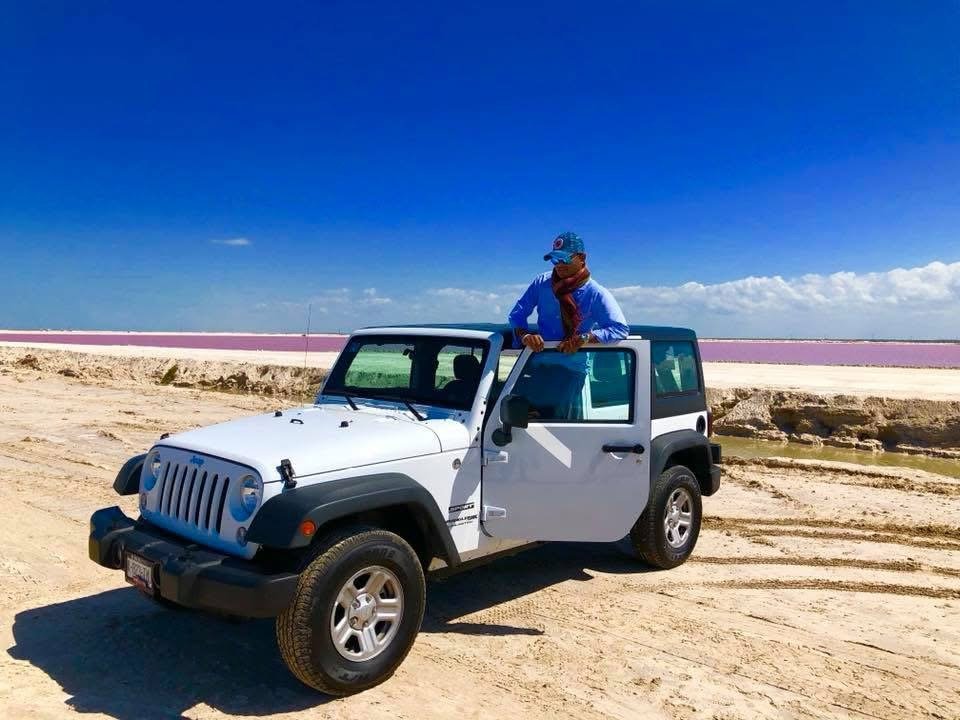
Within a few hours of Cancún, I stood before Chichén Itzá, one of the New Seven Wonders of the World, swam in sacred Mayan cenotes like Cenote Ik Kil, explored the underground limestone caves of Río Secreto, and witnessed the dreamlike pink waters of Las Coloradas in the Yucatán Peninsula. That is the real beauty of Mexico travel.
A destination where history, mystery, adventure, beaches, and culture coexist effortlessly. Sometimes the places we misunderstand the most become the ones that surprise us the deepest.
The Night Cancún Briefly Felt Like Hollywood
On 5 March 2018, while I was in Cancún, Mexico, I briefly encountered the version of Mexico that Hollywood loves to dramatize. News spread quickly that armed men had entered Hospital General de Cancún in a cartel-linked shooting, and suddenly the atmosphere felt different. Police presence was visibly heavier that evening, patrol vehicles were noticeable across parts of the city, and for a moment, it felt like a scene straight out of Desperado, Man on Fire, or Sicario.
But that is where real Mexico travel separated itself from movie fiction.
Later that same night, we stepped out expecting tension, perhaps even deserted streets. Instead, Cancún nightlife was exactly what the city is famous for; restaurants were full, music poured out of bars, tourists were enjoying tequila, and the Caribbean energy carried on as usual. That moment reminded me of something every traveller eventually learns: Mexico tourism, like most destinations, cannot be judged by isolated headlines alone. Behind the dramatic news cycles, Cancún remains one of the most visited tourist destinations in Mexico, known for its beaches, resorts, nightlife, and access to the incredible Yucatán Peninsula attractions.
Mexico City: The Soul of Mexico
If Cancún feels like Mexico’s glamorous postcard, Mexico City feels like its beating heart. When I finally explored it in 2019, I discovered a side of Mexico travel that Hollywood had never fully prepared me for. This was not the dusty, dangerous backdrop of action films, but a city that felt intensely alive, historic, layered, and deeply emotional.
Walking through Zócalo, the historic heart of Mexico City, you are surrounded by grand colonial architecture, ancient Aztec history, bustling food stalls, street musicians, churches, and an energy that never seems to pause. It does not feel like a tourist destination; it feels like a civilization still breathing. Even the famous opening sequence of James Bond’s Spectre, set during the Day of the Dead parade, became so iconic that Mexico later turned it into a real annual event, proof that sometimes cinema shapes culture just as much as culture shapes cinema.
This is where ancient Mexico, Spanish colonial heritage, and modern Latin American life collide beautifully. If Cancún entertains with beaches and nightlife, Mexico City offers culture, history, architecture, food, and soul, making it one of the most fascinating cities to visit in Mexico.
Why Mexico Still Calls Me Back
I travelled to Mexico three times between 2018 and 2020, just before the pandemic changed the world, and each visit revealed a completely different side of the country. One trip was about the ancient wonders of Chichén Itzá and the Mayan world, another about the surreal cenotes and underground caves of the Yucatán Peninsula, and another about the culture, history, and energy of Mexico City. From Cancún beaches and nightlife to Aztec history and hidden natural wonders, Mexico never felt repetitive; it kept reinventing itself.
Professionally, those were also defining years for me during my time with Motorola Solutions, where I was fortunate to be performing well and even earned President’s Club recognition.
By day, it was all about business strategy, technology discussions, and regional conferences. By night, it was tequila, Caribbean music, and the unmistakable electric energy of Cancún nightlife, occasionally making us feel like badly dressed extras from a Hollywood Mexico movie like Desperado.
When I left Motorola in 2021, I later heard those annual Mexico conferences had stopped. But I remain genuinely grateful for that chapter, because sometimes a company gives you far more than a career. Sometimes it quietly becomes your gateway to the world. For me, Mexico travel was not just another business trip; it became one of the chapters that expanded both my passport and my perspective.
The Lost Mumbaikar says:
“The smartest travellers know this: sometimes the road to adventure begins in a boardroom.”
Final Reflection
Mexico taught me a simple but powerful lesson: adventure does not always begin with a plan; sometimes it begins with saying yes. What started as a Motorola Solutions business trip to Cancún became my gateway to exploring Mexico, Chichén Itzá, cenotes, Mexico City, and parts of Latin America. A country I once knew only through Hollywood became one of my most unforgettable travel chapters.
Your Turn
- Have you ever taken a work trip or unexpected detour that turned into an unforgettable adventure?
- Which destination completely shattered the version Hollywood or popular culture had created in your mind?
The Real Reason I Went to Mexico
Let me confess something. Mexico was never part of some grand backpacking dream.
It was a business trip.
Back when I was working with Motorola Solutions, the company hosted its annual regional conference in Mexico, and I attended three consecutive years. 2018, 2019, and 2020. And honestly, I owe a part of my Latin American journey to that phase of my career.
From Dubai, travelling to Latin America is neither easy nor cheap. Long flights, awkward connections, and expensive fares often make spontaneous exploration unrealistic. But when work starts taking you to the United States regularly, something interesting happens; geography suddenly becomes negotiable.
That is exactly what I did.
Instead of treating business travel as routine, I treated it as opportunity. I started extending trips. Adding detours. Turning stopovers into stories.
Quietly, over time, this strategy helped me explore more than ten countries across North, Central, and South America.
That is one of travel’s underrated lessons. Opportunity rarely introduces itself dramatically.
Sometimes it arrives as a calendar invite. Sometimes it looks like work.
And if you are alert enough, work can quietly become a passport to experiences you never imagined.
Hollywood’s Mexico vs The Real Mexico
Long before I ever landed there, Mexico already existed in my imagination. But not because of geography books.
Because of Hollywood.
Films like Desperado, Man on Fire, and even the unforgettable Mexico scenes in Spectre had created a very specific image in my head; a country of danger, dusty streets, mariachi guitars, dramatic confrontations, and cartel chaos.
Reality?
Completely different. The real Mexico is loud, colourful, emotional, historic, warm, and unapologetically alive.
Yes, there is complexity, like any major country.
But reducing Mexico to crime headlines is like reducing India to traffic.
It misses the soul entirely.
What I discovered was a nation layered with ancient civilizations, extraordinary food, incredible hospitality, music in the air, and landscapes that feel almost surreal.
And yes…the tacos deserve their own visa category.
The Magic of Chichén Itzá and the “Ok Baby” Story
This remains one of the strangest travel coincidences of my life.
Long before my serious travel years, I had a strange little Facebook habit. Whenever someone posted photos from places I had already visited, I would comment:
“Nostalgic.”
But when I saw a destination I had never visited, I had another habit. I would simply write:
“Ok baby.”
It was my quiet, playful way of telling the universe: I haven’t visited you yet… but one day I will.
On 27 February 2017, a travel company (I used to follow lot of sites to get an idea of locations) posted a photo of Chichén Itzá.
I commented: “Ok baby.”
Exactly one year later, in February 27, 2018, I was in Mexico attending Motorola’s conference at the beautiful Paradisus Cancún Resort.
One day, the company organized an excursion to Chichén Itzá.
As our bus approached the ancient site, my phone buzzed.
It was Facebook Memories. And what appeared? That exact photo. That exact comment.
“Ok baby.”
Same date. One year later. Same destination.
I was genuinely stunned. I showed my friends. Even they were shocked.
One of them jokingly told our Mayan guide.
The guide smiled and said something unforgettable:
“In Mayan culture, people believe you do not go to Chichén Itzá. The pyramid calls you when it is your time.”
Maybe coincidence. Maybe timing. Maybe manifestation.
But moments like these make travel feel strangely magical.
Beyond Hollywood’s Mexico: What I Actually Found Beyond Cancún
Growing up, Hollywood taught me to imagine Mexico as a land of gunfights, cartels, dusty streets, and dramatic chaos; the kind of world seen in Desperado, Man on Fire, and countless action thrillers.
But what I discovered through my travels was something entirely different. Beyond the beaches and nightlife of Cancún, Mexico revealed itself as a country of extraordinary history, ancient civilizations, surreal natural wonders, and unforgettable culture.
Within a few hours of Cancún, I stood before Chichén Itzá, one of the New Seven Wonders of the World, swam in sacred Mayan cenotes like Cenote Ik Kil, explored the underground limestone caves of Río Secreto, and witnessed the dreamlike pink waters of Las Coloradas in the Yucatán Peninsula. That is the real beauty of Mexico travel.
A destination where history, mystery, adventure, beaches, and culture coexist effortlessly. Sometimes the places we misunderstand the most become the ones that surprise us the deepest.
The Night Cancún Briefly Felt Like Hollywood
On 5 March 2018, while I was in Cancún, Mexico, I briefly encountered the version of Mexico that Hollywood loves to dramatize. News spread quickly that armed men had entered Hospital General de Cancún in a cartel-linked shooting, and suddenly the atmosphere felt different. Police presence was visibly heavier that evening, patrol vehicles were noticeable across parts of the city, and for a moment, it felt like a scene straight out of Desperado, Man on Fire, or Sicario.
But that is where real Mexico travel separated itself from movie fiction.
Later that same night, we stepped out expecting tension, perhaps even deserted streets. Instead, Cancún nightlife was exactly what the city is famous for; restaurants were full, music poured out of bars, tourists were enjoying tequila, and the Caribbean energy carried on as usual. That moment reminded me of something every traveller eventually learns: Mexico tourism, like most destinations, cannot be judged by isolated headlines alone. Behind the dramatic news cycles, Cancún remains one of the most visited tourist destinations in Mexico, known for its beaches, resorts, nightlife, and access to the incredible Yucatán Peninsula attractions.
Mexico City: The Soul of Mexico
If Cancún feels like Mexico’s glamorous postcard, Mexico City feels like its beating heart. When I finally explored it in 2019, I discovered a side of Mexico travel that Hollywood had never fully prepared me for. This was not the dusty, dangerous backdrop of action films, but a city that felt intensely alive, historic, layered, and deeply emotional.
Walking through Zócalo, the historic heart of Mexico City, you are surrounded by grand colonial architecture, ancient Aztec history, bustling food stalls, street musicians, churches, and an energy that never seems to pause. It does not feel like a tourist destination; it feels like a civilization still breathing. Even the famous opening sequence of James Bond’s Spectre, set during the Day of the Dead parade, became so iconic that Mexico later turned it into a real annual event, proof that sometimes cinema shapes culture just as much as culture shapes cinema.
This is where ancient Mexico, Spanish colonial heritage, and modern Latin American life collide beautifully. If Cancún entertains with beaches and nightlife, Mexico City offers culture, history, architecture, food, and soul, making it one of the most fascinating cities to visit in Mexico.
Why Mexico Still Calls Me Back
I travelled to Mexico three times between 2018 and 2020, just before the pandemic changed the world, and each visit revealed a completely different side of the country. One trip was about the ancient wonders of Chichén Itzá and the Mayan world, another about the surreal cenotes and underground caves of the Yucatán Peninsula, and another about the culture, history, and energy of Mexico City. From Cancún beaches and nightlife to Aztec history and hidden natural wonders, Mexico never felt repetitive; it kept reinventing itself.
Professionally, those were also defining years for me during my time with Motorola Solutions, where I was fortunate to be performing well and even earned President’s Club recognition.
By day, it was all about business strategy, technology discussions, and regional conferences. By night, it was tequila, Caribbean music, and the unmistakable electric energy of Cancún nightlife, occasionally making us feel like badly dressed extras from a Hollywood Mexico movie like Desperado.
When I left Motorola in 2021, I later heard those annual Mexico conferences had stopped. But I remain genuinely grateful for that chapter, because sometimes a company gives you far more than a career. Sometimes it quietly becomes your gateway to the world. For me, Mexico travel was not just another business trip; it became one of the chapters that expanded both my passport and my perspective.
The Lost Mumbaikar says:
“The smartest travellers know this: sometimes the road to adventure begins in a boardroom.”
Final Reflection
Mexico taught me a simple but powerful lesson: adventure does not always begin with a plan; sometimes it begins with saying yes. What started as a Motorola Solutions business trip to Cancún became my gateway to exploring Mexico, Chichén Itzá, cenotes, Mexico City, and parts of Latin America. A country I once knew only through Hollywood became one of my most unforgettable travel chapters.
Your Turn
- Have you ever taken a work trip or unexpected detour that turned into an unforgettable adventure?
- Which destination completely shattered the version Hollywood or popular culture had created in your mind?
Leave a Reply