
Serbia
The Country I Thought I Knew Until I Visited Second Time.
TL;DR. For The Impatient Traveler
I visited Serbia in 2019 to finally explore the former Yugoslavia, a region that had fascinated me since childhood through tennis stars like Monica Seles, history, and world news.
The trip got off to a terrible start when I lost my brand-new iPhone on my first night in Belgrade, taking all my bookings and plans with it. Instead of going home, I continued the journey through Serbia, Bosnia and Montenegro.
What I discovered was a region defined not by war, but by resilience, history, beauty and remarkable people. From Belgrade’s spirit and Sarajevo’s history to Montenegro’s stunning coastline, the Balkans constantly challenged my assumptions.
I even returned to Belgrade to pursue the phone case, visited Novak Djokovic’s restaurant, and predicted he would one day become the GOAT.
Years later, I returned with Sunitha to celebrate our wedding anniversary.
Serbia taught me a simple lesson: don’t judge a country by its headlines, and don’t let a bad start ruin a great journey.
The Lost Mumbaikar says:
“The Balkans taught me that countries should never be judged solely by their past conflicts. Behind the headlines are resilient people, remarkable history, stunning landscapes and stories of rebuilding”.
Serbia: The Trip That Began with a Stolen iPhone
Some destinations attract you because of their beauty.
Others because of their history.
For me, Serbia was always about history.
Growing up in India, names like Yugoslavia, Tito, Belgrade, Bosnia, Kosovo, NATO, and the Balkans regularly appeared in newspapers and television news. I remember listening to discussions about a country that no longer exists and wondering how one nation eventually became many. Years later, after travelling across much of the world, that curiosity never disappeared.
In 2019, I finally decided to explore a part of Europe that had fascinated me since childhood.
The plan was straightforward.
Ride through Turkey.
Fly to Belgrade.
Drive through Serbia, Bosnia and Montenegro.
Later complete the remaining pieces of former Yugoslavia with Croatia and Slovenia.
Simple on paper. Memorable in reality.
Because Serbia would teach me one of the most important travel lessons I have ever learned before I had even started exploring the country.
A Perfect Beginning in Turkey
Before Serbia came Turkey and what a beginning it was.
I spent several days riding a Yamaha motorcycle- Yamaha MT-09 2015 through Istanbul and towards Antalya. There is something special about exploring a country on two wheels. The road becomes part of the experience rather than simply a way to reach a destination; Istanbul towards Pamukkale, Fethiye and Antalya. This was not the main story of this blog, because Turkey deserves a separate chapter of its own, but that ride gave my Balkan trip a perfect beginning.
Istanbul had already filled me with energy. Then came the open roads, small towns, mountain stretches, coastal views and the slow shift from city chaos to Mediterranean calm. By the time I reached Fethiye and continued towards Antalya, I felt completely connected to the journey.
The roads were excellent, the countryside was beautiful and the weather seemed to be on my side.
Everything was working exactly as planned.
Maybe too perfectly.
Because the moment I landed in Belgrade, Serbia had a very different welcome waiting for me.
First Impressions of Belgrade
Landing at Nikola Tesla Airport felt special.
For many travelers, Serbia is simply another country in the Balkans. For me, it was a destination I had wanted to visit since the 1990s. Growing up in India, I regularly heard names like Yugoslavia, Tito, Belgrade, Bosnia and Kosovo in newspapers and television news. Add my admiration for Monica Seles and later Novak Djokovic, and Serbia had been on my travel list long before I ever booked a ticket.
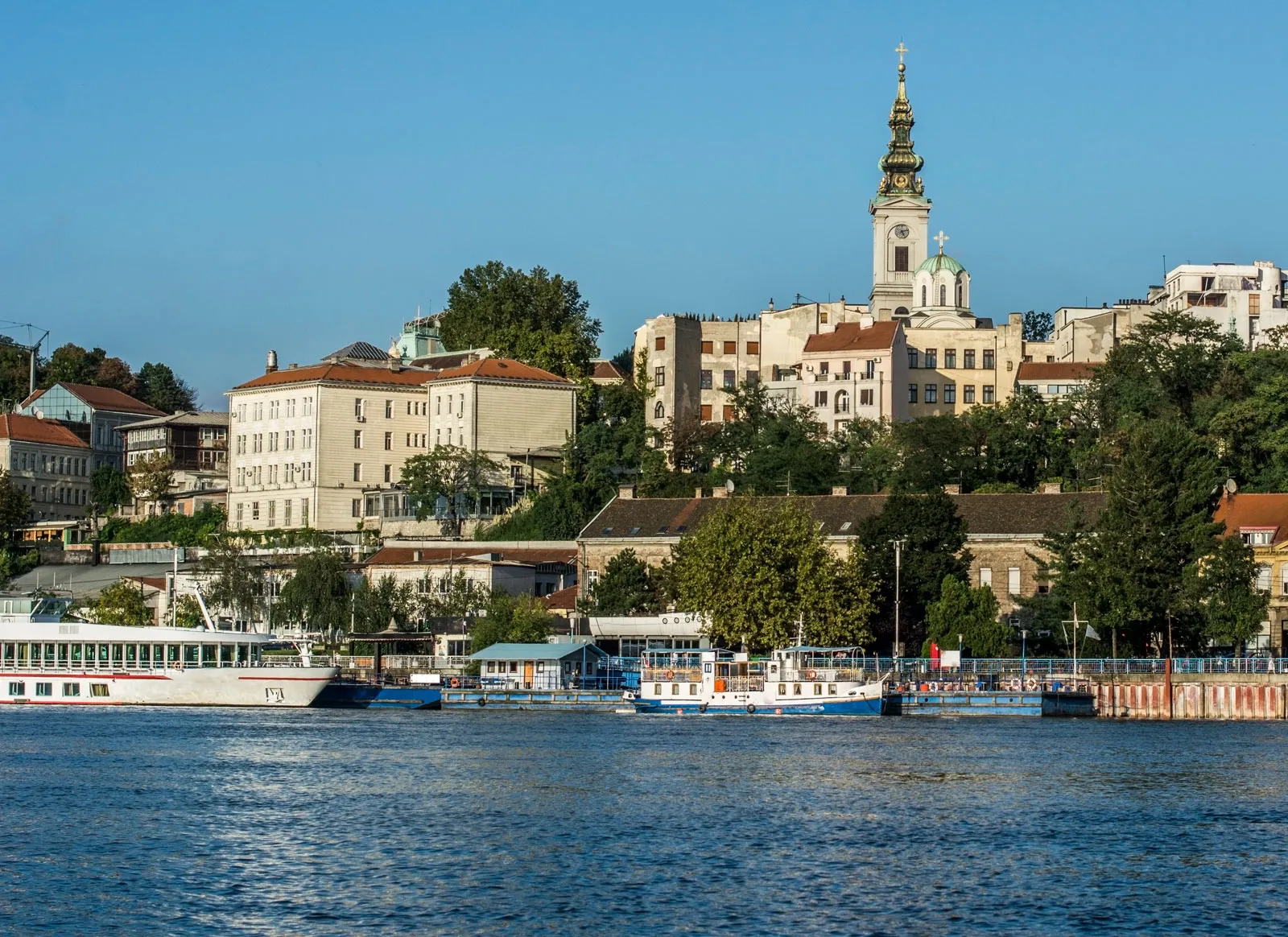
After checking into my hostel, I headed straight into the city. I wandered through Republic Square, explored the old town and eventually made my way to Kalemegdan Fortress, one of the absolute must-visit attractions in Belgrade. Standing above the meeting point of the Danube and Sava rivers, I understood why this city had been fought over for centuries.
As evening approached, I found myself near the famous Pobednik Monument, overlooking the rivers and the city skyline. Music drifted from nearby lounges, people gathered with friends and the atmosphere felt relaxed and welcoming. Sitting there with a drink in hand, watching Belgrade glow in the evening light, I realised this was very different from the Serbia I remembered from the television news of the 1990s.
History has a way of creating one image.
Travel often reveals another.
Belgrade, Yugoslavia and the Power of Community
As I sat there overlooking the rivers, my mind drifted back to the stories I had heard growing up. Yugoslavia was regularly in the news during the 1990s. The breakup of the country, the wars, NATO bombings and political tensions shaped how much of the world viewed this region.
Yet standing in Belgrade, I saw something very different.
I saw busy cafes. Families enjoying the evening. Friends laughing together.
A city full of life.
The more I learned about Belgrade, the more I became fascinated by its resilience. One story that repeatedly came up was how people continued gathering in cafes, listening to music and spending time together even during the NATO bombing campaign of 1999.
Life continued. That lesson stayed with me. Communities matter. Families matter. Friendships matter.
When difficult times arrive, it is rarely governments, buildings or institutions that carry us through. It is the people around us. Belgrade reminded me that resilience is often built through community, and perhaps that is why the city feels so alive even after everything it has experienced.
Later that evening, as I walked down from Kalemegdan to find a taxi back to my hostel, I remember feeling excited about the road trip ahead through Serbia, Bosnia and Montenegro.
Everything seemed to be going perfectly.
Unfortunately, I had no idea that within a few hours, my Balkan adventure would take a very different turn.
The Missing iPhone
The hostel had been slightly difficult to locate, so I handed my brand-new iPhone to the taxi driver to follow the route on Google Maps. It felt like a completely harmless decision at the time.
Later that evening, after checking in to the bar of my hostel and enjoying a glass of wine, I reached into my pocket. The phone was gone.
Initially, I wasn’t worried. It was an iPhone. Surely I would locate it through iCloud the next morning. But when I called the number from another phone, it was already switched off.
The next morning brought a bigger shock.
The phone had disappeared from my Family Sharing network entirely. Whoever had it knew exactly what they were doing.
The loss of the phone was frustrating. The loss of everything inside it was devastating.
My hotel bookings, road trip plans, maps, contacts and travel notes had vanished overnight. Less than twenty-four hours after landing at Nikola Tesla Airport, all the excitement of finally visiting Serbia had been replaced by panic, frustration and self-doubt.
Like many people, I had always believed Apple’s security, privacy features and Family Sharing would eventually help me recover it. Instead, within hours, whoever had the phone had effectively erased it from my digital world. Standing in the country that gave the world Nikola Tesla, I couldn’t help but smile at the irony.
Apple’s technology had met a Serbian brain. And the Serbian brain had won.
The excitement of arriving in Serbia had vanished overnight. Instead of planning my road trip through Bosnia and Montenegro, I spent the morning visiting a police station, speaking to the rental car company and trying to recover bookings from old emails.
For a brief moment, I even considered ending the trip and flying home.
But travel has taught me that problems are temporary. Regret lasts much longer.
Luckily, I had another phone. Email got there and bookings retrieved and walked to rental office to get my car.
Driving Through Serbia: Finding the Serbia I Never Expected
One of the greatest joys of this trip was the freedom of having my own car.
Road trips reveal a side of a country that airports, trains and city centres rarely show. Once I left Belgrade behind, Serbia began to look very different from the country I had imagined while growing up. The headlines of the 1990s were replaced by rolling hills, rivers, forests and peaceful villages.
My route eventually took me through Zlatibor, Perućac and the stunning Tara National Park, some of the most beautiful places to visit in Serbia. Wanting to experience the countryside properly, I stayed in a traditional wooden house near Tara rather than rushing through the region.
The slower pace was exactly what I needed.
Along the way, I even gave lifts to a few local farmers heading towards nearby villages. We exchanged stories through a mix of broken English, hand gestures and smiles. Moments like these rarely appear in guidebooks, yet they often become the memories that stay with you the longest.
The next few days around Tara National Park became one of the highlights of my Serbia journey. Between drone flights, scenic drives and hikes through the forests, I discovered a side of Serbia that felt peaceful, authentic and untouched by mass tourism. The views over the Drina River and the surrounding valleys were simply spectacular.
One day, I met a Serbian family while trekking. Their youngest son quickly became my little guide, proudly showing me viewpoints and trails around the area. Despite speaking different languages, we somehow managed to communicate perfectly.
Travel has a funny way of proving that kindness rarely needs translation.
That experience stayed with me long after I left Serbia.
The villages around Tara felt so serene that I immediately thought of Julius and Jordan. Sitting outside my cottage, surrounded by forests and mountains, I knew this was a place I wanted to share with my family one day.
And six years later, I did.
In 2025, Sunitha, Julius, Jordan and I returned to Tara and spent three wonderful days in a village surrounded by forests, horses, cows and some of the warmest people we met in Serbia. The boys quickly adapted to village life, spending their days fishing, kayaking, exploring the countryside and enjoying traditional Serbian food like ćevapi, grilled meats, fresh bread and homemade local dishes.
What made the return even more special was that the boys eventually made Serbian friends of their own. Some of those friendships continued beyond the trip, and they were delighted when a few of their Serbian friends later visited Dubai. Watching friendships formed in a small Serbian village continue thousands of kilometres away in the UAE reminded me of one of travel’s greatest gifts.
Sometimes we travel to see places.
Sometimes we travel to collect memories.
And occasionally, if we’re lucky, we travel to build friendships that outlast the journey itself.
Looking back, Zlatibor, Perućac and Tara National Park showed me a Serbia that never appears in breaking news headlines.
A Serbia of nature. A Serbia of hospitality. A Serbia of ordinary people living extraordinary lives.
And that is the Serbia I remember most.
Bosnia: Where History Changed Direction
From Serbia, I crossed into Bosnia & Herzegovina. Few cities fascinated me more than Sarajevo. For history lovers, Sarajevo requires no introduction.
It was here, near the famous Latin Bridge, that Archduke Franz Ferdinand was assassinated in 1914 which erupted World War 1.
A single event. A single moment. And the world changed forever.
Standing there felt surreal. History often feels distant when reading textbooks. Standing in the place where it happened makes it real.
Sarajevo is also a reminder of how resilient people can be. The city endured a devastating siege during the 1990s, yet today it remains vibrant, welcoming and full of life.
Montenegro: The Balkan Surprise
If Bosnia impressed me with history, Montenegro impressed me with beauty. In many ways, Montenegro became the biggest surprise of the entire trip. The Adriatic coastline was stunning.
Kotor looked like something straight out of a postcard, while Budva, on the shores of the Adriatic Sea, was lively, energetic and full of life. When we returned in 2025, Julius and Jordan were completely absorbed in the crystal-clear waters of the Adriatic, spending their days swimming, diving and exploring the coastline. Watching them enjoy the same landscapes that had impressed me years earlier made the experience even more special. Some destinations are beautiful when you visit them alone; others become unforgettable when you return with family.The combination of mountains and sea created landscapes that rival many of Europe’s most famous destinations.
At times, Montenegro felt less like the Balkans and more like a blend of Italy, Greece and France.
I remember thinking how difficult it was to believe that these countries once belonged to the same federation. The differences were remarkable. Yet that diversity is exactly what makes the region fascinating.
Kosovo: The Story That Continues
One issue that continues to influence the region is Kosovo. Kosovo declared independence from Serbia in 2008. While many countries recognise Kosovo as an independent state, Serbia does not.
As a traveller, you quickly realise this remains a sensitive topic.
During my 2019 trip, the rental company strongly advised me not to cross into Kosovo using the Serbian vehicle. They explained that paperwork could become complicated and that local sensitivities should not be underestimated.
I followed their advice. Sometimes local knowledge is worth more than any guidebook. Interestingly, I eventually visited Kosovo in 2023 while travelling through Albani to, North Macedonia. We crossed the border, completed immigration formalities and spent several hours exploring Pristina.
The atmosphere felt noticeably different from Serbia. Different language. Different identity. Different perspective. What fascinated me most was not who was right or wrong.
It was how differently neighbouring societies could interpret the same history. Travel teaches you that every story has multiple versions. The Balkans may be one of the best examples of that lesson.
Completing My Yugoslav Dream
Later in 2019, I completed the remaining pieces of former Yugoslavia by visiting Croatia and Slovenia with my family.
A dream that had started decades earlier was finally complete. I had explored every republic that emerged from the former Yugoslav federation.
Interestingly, Slovenia and Croatia have generally progressed faster economically than some of their neighbours. Both joined the European Union. Both benefited from stronger integration with Western Europe.
Tourism, investment and political stability accelerated development.
Yet after travelling through the entire region, I realised that economic indicators only tell part of the story.
Every country has strengths. Every country has struggles. Every country has a story.
Returning Years Later
Some destinations deserve a second visit, and Serbia was one of them.
As I said, in August 2025, Sunitha and I returned to Serbia, Bosnia, and Montenegro with the kids to celebrate our wedding anniversary.
Returning felt different. The roads were familiar. The cities and villages were familiar. In many ways, I was following the same path I had travelled in 2019.
But I was not the same person. Travel changes us.
The traveller who arrived in Belgrade in 2019 worried about a stolen phone was very different from the traveller returning years later with his wife and children.
The first trip was about curiosity. The second was about appreciation. Both were equally valuable.
One of the lessons travel has taught me is that a difficult beginning should never become the final chapter of a story. Many people abandon a destination, a dream, or even a goal after one setback. But sometimes countries, like people, deserve a second chance.
My first memory of Serbia could easily have been defined by a stolen phone and frustration. Instead, I chose to remember the kindness of people, the beauty of the landscapes, and the experiences that followed. That decision brought me back years later.
Do not allow one bad experience to erase a hundred good possibilities. The same principle applies beyond travel. A failed business venture does not mean you should stop building. A rejection does not mean you should stop trying. A setback does not mean the journey is over.
Sometimes the places that challenge us the most are the ones that call us back. And when we return, we often discover that the destination was never the thing that changed. We did.
That is why some countries stay with us long after the trip ends. They become part of our story. Never let an initial setback stop you from answering a call that still speaks to your heart.
Your Turn
- Have you ever visited a place that looked very different from what the news had made you believe?
- Would you give a country a second chance if your first day went completely wrong?
Frequently Asked Questions
1. Is Serbia travel worth it for first-time visitors?
Yes. Serbia Travel offers a unique mix of history, culture, scenic road trips, and warm hospitality. From Belgrade and Tara National Park to Zlatibor and Kalemegdan Fortress, Serbia is an excellent destination for travellers looking beyond Europe’s usual tourist routes.
2. What are the best places to visit in Serbia?
Some of the best Places to Visit in Serbia include Belgrade, Kalemegdan Fortress, Tara National Park, Zlatibor, Perućac, and the Drina River. These destinations showcase Serbia’s rich history, stunning landscapes, and authentic local culture.
3. Is a Serbia road trip a good way to explore the country?
Absolutely. A Serbia Road Trip is one of the best ways to experience the country’s mountains, rivers, forests, and traditional villages. Self-driving allows travellers to discover hidden gems and enjoy the natural beauty beyond Belgrade.
4. Is Serbia safe for tourists?
Yes. Serbia is generally considered a safe destination for tourists. Whether exploring Belgrade or driving through the countryside, visitors are likely to experience friendly locals, welcoming communities, and a relaxed travel atmosphere.
5. When is the best time to visit Serbia?
The best time to visit Serbia is from April to October, when the weather is ideal for sightseeing, road trips, hiking, and exploring Serbia’s historic towns, national parks, and scenic countryside.
See Also:
- Germany -Where My Travel Story Began with first Schengen Visa
- 25 Countries UAE Indians Can Visit Easily with an Emirates ID
Leave a Reply