

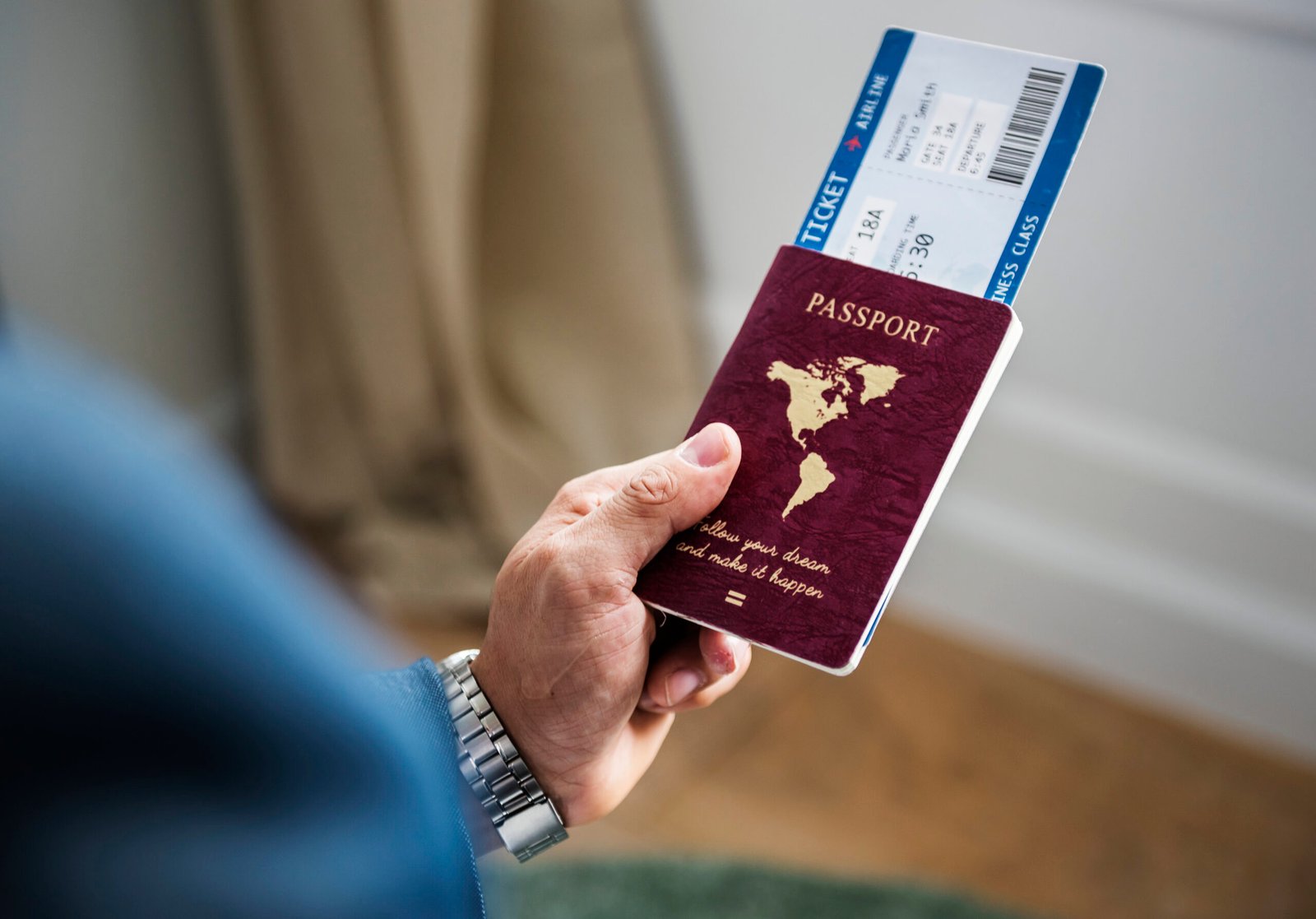
Indian Passport Ranking-Why Other Countries Are Racing Ahead
My Passport Changed My Life. So Why Does the Indian Passport Still Hold Me Back?
There are very few possessions in life that can completely change your destiny. For some, it is a degree. For others, it is a business or an opportunity. For me, it has always been one simple blue booklet; My Indian passport.
People often assume that my most valuable asset is my home in Dubai, my camera that has travelled across continents, or the thousands of photographs and memories collected from nearly 100 countries. The truth is far simpler. Nothing I own has transformed my life more than my passport. It is not just an identity document; it is the reason I have been able to explore the world, understand different cultures, and become The Lost Mumbaikar.
Ironically, the journey of this passport began long before my journey around the world.
Back in 2000, my father proudly completed all the formalities and collected my very first passport. At that time, I had never boarded an aircraft. Growing up in a small village in Rajasthan, travelling abroad wasn’t even part of my imagination.
I accepted my first overseas job in Qatar in 2009, and that old passport finally received its very first immigration stamp. It wasn’t just a departure from India; it was the beginning of an entirely new life. Three years later came my first journey through Europe in 2012. That trip changed something inside me forever. What started as curiosity slowly became a passion, and that passion eventually became a way of life.
Today, that same passport has travelled with me across nearly 100 countries, through the fjords of Norway, the glaciers of Iceland, the ancient ruins of Jordan, the mountains of Peru, the beaches of El Salvador, the castles of Central Europe, the deserts of the Middle East, and countless destinations that once existed only in my dreams. Every immigration stamp represents more than a country visited, it represents a dream fulfilled.
That is why my passport remains my most treasured possession.
Yet despite travelling for almost two decades, there is one part of international travel that still frustrates me every single time.
Applying for visas.
Every new destination begins long before the flight. It begins with paperwork, visa appointments, biometrics, and uncertainty. Since COVID, even securing an appointment can take months. I’ve realised that discovering the world is often easier than getting permission to see it.
This thought became even stronger today while I was writing my latest blog about Kosovo.
Kosovo is one of Europe’s youngest countries. It is still not recognised by several nations, including India, and despite its steady progress, it remains a small, developing economy rather than one of Europe’s wealthiest destinations. I travelled through Kosovo in 2023 while driving from Albania to North Macedonia. What I remember most were its dramatic mountains, the warmth of its people, and the resilience that seemed woven into the country’s identity. But while researching for this article, something else caught my attention.
Its passport.
To my surprise, Kosovo’s passport has become one of the fastest-improving passports in the world over the last decade. That discovery made me stop writing about Kosovo and start thinking about India instead.
How could a country that is still not universally recognised improve its passport ranking so dramatically while the Indian passport seems to remain stuck in the same position?
The answer is both interesting and misunderstood.
Contrary to what many headlines suggest, the Indian passport has not suddenly become weaker. In reality, India has gradually added more visa-free and visa-on-arrival destinations over the years. The real issue is that many other countries have improved much faster. While India moved forward slowly, countries such as the United Arab Emirates, Kosovo, China, Albania, Serbia, Georgia, North Macedonia, and Bosnia & Herzegovina aggressively expanded their global mobility through reciprocal visa agreements, diplomatic engagement, and stronger international cooperation.
The result is that India’s passport hasn’t fallen dramatically, it has simply been overtaken.
Among all these success stories, one country stands out for me more than any other.
The United Arab Emirates.
Having lived in Dubai for over a decade, I have witnessed the country’s remarkable transformation firsthand. Two decades ago, the UAE passport was nowhere near the world’s strongest. Today, it ranks among the very best, allowing its citizens to travel visa-free to almost every major destination on the planet. This wasn’t achieved overnight. It was the result of sustained diplomacy, reciprocal visa-waiver agreements, international trust, and a clear national vision to improve global mobility.
What makes this comparison even more fascinating is that India and the UAE share one of the closest strategic relationships in the world. Millions of Indians live and work in the UAE. Trade continues to grow every year. Cultural ties are stronger than ever before. Yet when it comes to passport power, the gap between the two countries has widened significantly.
Of course, the comparison isn’t entirely fair.
India is home to more than 1.4 billion people, while the UAE has a population of around 11 million. Countries granting visa-free access also consider factors such as visa overstays, illegal immigration, asylum applications, document security, and reciprocal travel arrangements. Negotiating visa-free access for a country the size of India is naturally far more complex.
But complexity should never prevent ambition.
India is now one of the world’s fastest-growing major economies. Indian travellers are exploring the world in record numbers. Our airlines are expanding internationally. Our diplomatic influence continues to grow, and our global reputation is stronger than ever before. If the last decade was about economic growth, perhaps the next decade should also be about improving travel freedom for Indian passport holders.
Whenever I hold my first passport today, I don’t see faded pages or worn-out covers.
I see the dreams of a young boy who once believed international travel belonged only to other people. I see countless immigration counters, unforgettable friendships, unexpected adventures, and nearly one hundred countries that taught me lessons no classroom ever could.
That passport waited nine years for its first stamp.
Since then, it has hardly stopped travelling.
It changed my life in ways I could never have imagined.
Can India Do the Same?
As someone who has spent nearly two decades travelling on an Indian passport, I often wonder whether India can replicate the success stories of countries like the UAE. I believe the answer is yes but it requires long-term vision rather than quick fixes.
The UAE didn’t build one of the world’s strongest passports overnight. It achieved that through years of consistent diplomacy, reciprocal visa-waiver agreements, secure travel documents, and building international trust. Today, its citizens enjoy remarkable travel freedom because passport mobility became part of the country’s broader foreign policy.
India has every reason to aim for the same. We are now one of the world’s fastest-growing major economies, one of the largest outbound tourism markets, and an increasingly influential global power. Prime Minister Narendra Modi has travelled extensively, strengthening India’s relationships with countries across every continent. As India signs trade agreements, strategic partnerships, and investment deals around the world, I hope passport mobility also becomes a regular part of those conversations.
Of course, India’s challenges are very different from those of the UAE. Negotiating visa-free access for a nation of more than 1.4 billion people is far more complex than doing so for a country with a much smaller population. Governments also consider factors such as visa overstays, illegal immigration, asylum claims, document security, and reciprocal travel policies before relaxing visa requirements.
At the same time, recent years have shown what proactive visa diplomacy can achieve. China, for example, has expanded visa-free entry for citizens of many countries as part of a broader effort to boost tourism, strengthen business ties, and rebuild international connectivity. The UAE followed a different path, aggressively pursuing reciprocal visa-waiver agreements across the world. While India’s circumstances are unique, these examples demonstrate that improving passport mobility requires sustained diplomatic focus and long-term commitment.
Every new reciprocal visa-waiver agreement, every expanded eVisa arrangement, and every visa-on-arrival partnership is a step in the right direction. For diplomats, these may be policy achievements. For ordinary Indians, they mean fewer forms to fill, fewer appointments to chase, less uncertainty, and more opportunities to explore the world.
I don’t expect the Indian passport to become one of the world’s strongest overnight. But I do hope that improving the travel freedom of Indian citizens becomes a long-term national objective. Because every door that opens for an Indian passport also opens new possibilities for millions of Indian dreamers.
And perhaps that is why, I continue to hope that one day an Indian passport will not only represent our identity but also our growing place in the world. Because every visa removed is not just another border crossed, it is another dream made possible for millions of Indians waiting to take their very first flight.
The Lost Mumbaikar Says:
“A passport is not measured by the colour of its cover or the number of pages inside it. It is measured by the dreams it allows ordinary people to chase”.
Your Turn
- Which passport stamp means the most to you?
- What’s the most frustrating visa experience you’ve ever had?
- If you could make one country visa-free for Indians tomorrow, which would you choose and why?


Leave a Reply