
Peru
TL;DR — For the Impatient Traveller
Most travel stories about Machu Picchu end with a triumphant photograph at the top.
This one almost ended with a U-turn.
I flew into Peru dreaming of riding a motorcycle through the Andes Mountains to one of the world’s greatest wonders. Instead, I underestimated the altitude, the weather, the distances, and perhaps a little of my own confidence. Torrential rain, flooded mountain roads, crashing waterfalls, and a stranger’s warning forced me to abandon a plan that was less than an hour away from success.
What followed was not the journey I had planned. It was better.
A rain-soaked retreat through the Andes. A night in a stranger’s home. Fresh tropical fruits in a remote Peruvian village. Laughter with local children. Conversations about life, history, and Machu Picchu. And eventually, a lesson that every traveller learns sooner or later:
Mountains do not care about your plans. The road does not reward ego. And some destinations must be earned, not conquered.
The Lost Mumbaikar says:
“The mountain does not care how many countries you have visited. Nature does not negotiate with your résumé.”
Why I Chose South America This Time
Whenever I travelled for company work, I had a simple rule: add a few extra days and explore somewhere completely new. Business may have paid for the flight, but curiosity always dictated the destination.
That year, a work conference in the United States became the gateway to three countries I had never experienced before: Colombia, Peru, and El Salvador. What started as another corporate trip soon evolved into one of the most memorable adventures of my life.
As travelers, we often spend years dreaming about famous destinations. But sometimes the destination chooses you. Peru did exactly that.
From The Motorcycle Diaries to Transformers: Rise of the Beasts, filmmakers have long been drawn to the Andes Mountains for their authenticity rather than spectacle. Unlike many destinations that appear endlessly across movies and social media, Peru feels different. It is rarely overexposed. It is referenced, respected, and experienced.
Even Machu Picchu, one of the world’s greatest wonders, remains largely untouched on film due to strict preservation regulations. Perhaps that is exactly why its mystery survives. In an age where everything can be seen online, Machu Picchu still manages to feel undiscovered.
Many travelers associate the Andes with the haunting sounds of traditional pan flutes echoing through mountain valleys. While Leo Rojas, famous for The Lonely Shepherd, is not Peruvian, his music has become emotionally linked with the landscapes of Peru and the Andes. His melodies seem to capture what cameras often cannot: the silence, the scale, and the soul of the mountains.
This blog is about Peru and my journey toward Machu Picchu. Colombia and El Salvador deserve stories of their own, and those stories will come later.
I flew from Miami to Colombia, spent a few days absorbing the rhythm, warmth, and energy of the country, and then continued toward Peru.
The Andes were waiting.
Three Days. One Dream; Machu Picchu.
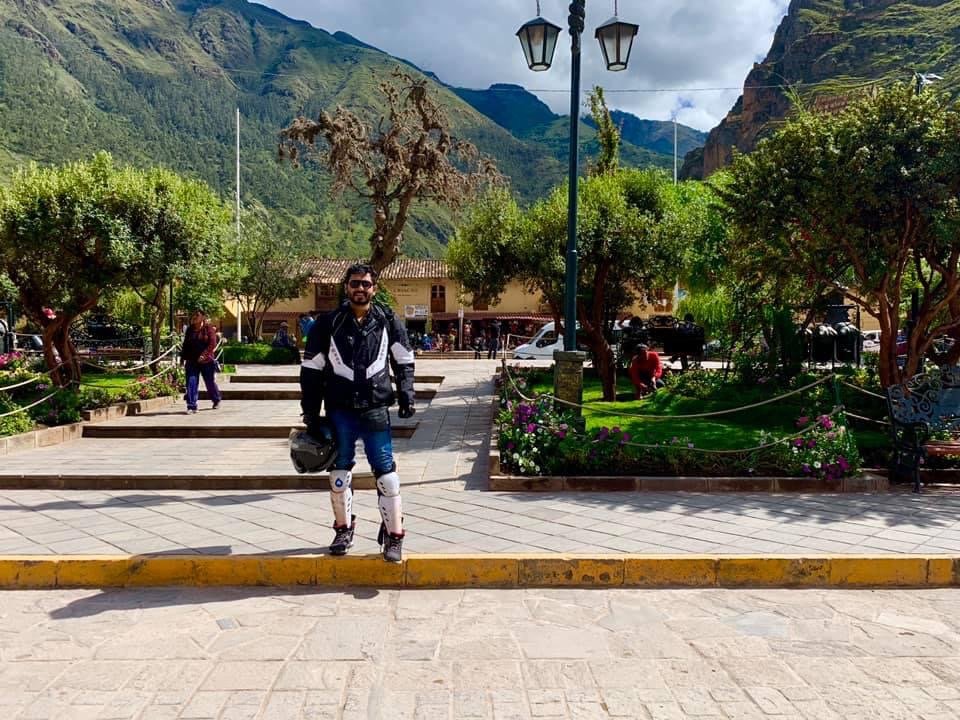
I arrived in Cusco, Peru, with only three days available and one dream that had been on my bucket list for years: Machu Picchu. Most travellers reach this legendary UNESCO World Heritage Site by train, enjoying one of the world’s most scenic journeys through the Sacred Valley. I could have done the same. It would have been easier, faster, and certainly more comfortable. But travel has never been about comfort for me. It has always been about the stories hidden between the starting point and the destination.
Built by the Incas in the 15th century and hidden high in the Andes Mountains, Machu Picchu is far more than a tourist attraction. It is a symbol of human ambition, resilience, and vision. Every year, thousands of travellers visit Peru to witness this wonder, but I wanted to experience the country beyond the postcard views. I wanted to understand the roads, the villages, the mountains, and the people who make Peru as one of South America’s most fascinating destinations.
Instead of booking a train ticket, I rented a motorcycle. The plan was simple: ride from Cusco to Santa Teresa, continue toward Hidroeléctrica, and eventually reach Aguas Calientes, the gateway to Machu Picchu. It was not the easiest route, but then again, some of life’s most rewarding experiences rarely come from choosing the easiest path. Whether in travel, business, or life itself, growth often begins where convenience ends.
Riding Through the Heart of Peru
The journey through the Peruvian Andes was every bit as spectacular as I had imagined. Endless green mountains stretched toward the horizon. Small villages appeared unexpectedly between valleys. Llamas and alpacas wandered freely beside the road while local farmers carried on with daily life against a backdrop that looked almost unreal. Every turn revealed another breathtaking view, reminding me why road trips remain my favourite way to explore the world.
As the kilometres passed, I found myself slowing down more often, not because I had to, but because I wanted to absorb the moment. Modern life teaches us to rush toward outcomes. Travel teaches patience. The road to Machu Picchu reminded me that success is not always measured by how quickly we arrive, but by how much we learn along the way. The mountains had stood there for centuries before I arrived and would remain long after I left. Standing among them was a humbling reminder of how small our worries often are.
With Machu Picchu somewhere ahead and the vast Andes surrounding me, I realised this journey was becoming about far more than reaching a famous landmark. Sometimes we chase destinations believing they will change our lives. More often, it is the road itself that changes us. Machu Picchu was the dream, but the ride through Peru was already becoming the memory, I would carry home.
When the Andes Changed the Plan
About 30 to 40 kilometres into my ride from Cusco toward Machu Picchu, everything changed. Until then, the journey had been perfect. The roads were beautiful, the mountains were magnificent, and I was enjoying every moment of my Peru motorcycle adventure. Then, without warning, dark clouds rolled over the Andes. The sun disappeared. The temperature dropped. Within minutes, rain began falling across the mountain roads.
What surprised me most was that neither Google Maps nor the weather forecast had given any indication of what was coming. I had no raincoat. Fortunately, my riding jacket was built for adventure touring and offered decent protection. My passport was safely tucked inside my jacket, while my GoPro mounted on the helmet was waterproof and ready for whatever came next. Looking back, that was the moment the trip stopped being a vacation and started becoming an adventure.
I briefly pulled over beneath a small roadside shelter, only to find myself surrounded by barking dogs fiercely guarding their territory. Waiting was not an option. The rain seemed manageable, and I was still thinking about the last train connection toward Aguas Calientes. So I made the decision every traveller eventually faces. I kept moving. The Andes are wonderfully simple. One road. One direction. No shortcuts. No alternative routes. Just keep going.
The Mountain Decides Who Passes
As I climbed deeper into the Andes Mountains, the rain intensified. What began as a light shower soon became a serious obstacle. Water started cascading down the mountainsides, creating temporary waterfalls that crashed across the narrow mountain road before disappearing into the valleys below. Visibility dropped dramatically. The sun vanished behind thick clouds. At more than 2,000 metres above sea level, there were no street lights, no guard rails, and no second chances. On one side stood towering mountains. On the other, a drop of nearly 200 metres into darkness.
Like many dreamers chasing a goal, I kept going. After all, Machu Picchu was waiting.
The rain became heavier. The waterfalls became stronger. Some had grown so powerful that they were flowing directly across the road, creating a thick sheet of moving water. Every time I attempted to ride through, I could feel the motorcycle sliding beneath me. The tyres struggled for grip. The road was disappearing under rushing water. That was when reality finally overruled ambition. I got off the motorcycle and began pushing it manually through each flooded section, one step at a time.
Success is often portrayed as moving faster. The mountains taught me that survival sometimes means moving slower.
In business, travel, and life, speed impresses people. Wisdom protects people.
When the Mountain Changed My Plan
What frustrated me most was not the rain. It was how close I was.
The hotel was already booked in Aguas Calientes, the small town below Machu Picchu where travellers spend the night before taking the famous bus to the ancient Inca citadel. My plan was simple. Reach Hidroeléctrica, park the motorcycle, walk or take the train into Aguas Calientes, get a good night’s sleep, and finally visit one of the world’s greatest wonders the next morning.
I was probably less than an hour away.
After travelling through more than 90 countries, crossing deserts in Oman, snowstorms in Finland, remote roads in Iceland, and mountain passes across Europe, I could hardly remember a time when I had voluntarily abandoned a travel plan. Somehow, I always found a way.
This time, the Andes had other ideas.
The rain became relentless. Temporary waterfalls were now crashing directly across the road from the mountains above. What had been a smooth mountain road had transformed into a series of flowing streams. Water rushed across the asphalt, creating slippery surfaces that pushed the motorcycle sideways. Every few hundred metres another waterfall appeared, carrying rocks, mud, and water directly onto the road.
Still, I continued.
Perhaps it was determination. Perhaps it was stubbornness. Perhaps it was overconfidence.
I convinced myself that Machu Picchu was too close to turn back now.
Then a pickup truck appeared through the rain from the opposite direction. The driver stopped, rolled down his window, and began shouting urgently in Spanish. I could not understand his words, but I understood his expression. He pointed repeatedly behind me.
Turn around. Go back. Do not continue.
Looking back today, I believe that stranger may have saved my life.
Sometimes experience creates confidence. Sometimes it quietly creates overconfidence.
Standing there in the rain, soaked to the bone, I finally accepted something I had rarely accepted on previous journeys.
I was not going to reach Machu Picchu that day.
The Long Ride Back
Making the U-turn hurt more than the rain itself.
In one moment, a dream that was less than an hour away suddenly became three hours away in the opposite direction. Every kilometre I rode downhill felt like I was moving further away from a goal I had imagined for years.
My riding jacket was completely soaked. Water had found its way through every layer of clothing. My boots had become small boats filled with rainwater. Outside, the Andes were throwing a storm at me.
Inside, my thoughts were doing exactly the same.
Every traveller dreams about reaching the destination. Few talk about the disappointment of watching a dream disappear around the next corner.
The Lost Mumbaikar says:
“Life is not only about chasing goals. It is also about accepting when circumstances are bigger than you”.
I rode nearly three hours downhill through the darkness toward a small village near Santa Teresa, finally arriving close to eleven at night. Everything was closed. The streets were empty. I was exhausted, hungry, wet, and mentally defeated. I had no spare clothes, no backup plan, and no idea where I would sleep.
For a few moments, I simply stood there in the rain. Then something beautiful happened. Travel reminded me once again why I continue exploring this world.
A local man named Gillbur listened patiently to my story. His English was limited and my Spanish was almost non-existent, but kindness requires no translator. Without hesitation, he arranged shelter at his home. He handed me dry clothes, gave me a towel, and told me not to worry. Breakfast would be ready at eight in the morning.
The greatest souvenirs from travel are rarely landmarks. They are people. Long after you forget hotel names and flight numbers, you remember the stranger who helped when you needed it most.
That night, wearing borrowed clothes in a stranger’s home somewhere in the Peruvian Andes, I reflected on how quickly life can change. Just a few hours earlier, I had imagined checking into my hotel in Aguas Calientes and preparing for Machu Picchu.
Instead, I was sitting safely under a roof, listening to rain hammer the mountains outside.
And strangely, I felt grateful. Grateful for the pickup driver. Grateful for Gillbur.
Grateful that my biggest disappointment was a postponed dream and not a tragic ending.
Because the truth is simple; A delayed dream is still a dream. A lost life gets no second chance.
I fell asleep that night smiling quietly at my own daring, my stubbornness, and perhaps a little bit of my stupidity.
The next morning, Machu Picchu was still there. The Andes were still there.
And thankfully, so was I.
A Morning Peru Taught Me
The next morning felt completely different.
Less than twelve hours earlier, I had been standing in the rain, frustrated that I had missed Machu Picchu. Now, I was sitting with Gillbur’s family over fresh bread, local soup, and warm llama milk, watching the Andes wake up around us.
We spoke about Peru, the Incas, and life in the valley. Gillbur explained that Machu Picchu is not just a place to visit; for many locals, it is a place to feel. A sacred place. A place that carries history, energy, and stories far older than any traveller passing through.
Then he said something I had heard before.
“Nobody comes to Machu Picchu. Machu Picchu calls them.”
Years earlier, a guide in Chichén Itzá, Mexico, had told me exactly the same thing.
Maybe it is folklore.
Maybe it is destiny.
Or maybe some places simply arrive in our lives when the time is right.
As we walked through the village, looking at old stone walls and traditional Andean homes, I realised something. Had the rain not stopped me, had the pickup driver not warned me, and had I stubbornly continued, I would never have met Gillbur and his wonderful family.
Sometimes missing the destination is how you discover the real journey.
The best travel memories are rarely monuments. They are people.
That morning, Peru gave me a lesson no guidebook ever could.
And somehow, missing Machu Picchu hurt a little less.
The Lost Mumbaikar says:
Some places give you photographs. Some people give you perspective. The second gift lasts longer.
A Morning Peru Gifted Me
Riding there through small village near Santa Teresa, surrounded by the Peruvian Andes, I realised that some of the best experiences in travel are the ones no itinerary can ever plan.
Later, I spent time with the local children. Like kids everywhere, they were curious about the motorcycle. One by one, they climbed on, posed for photos, and enjoyed short rides around the village. Their excitement was contagious. The smiles on their faces were genuine, innocent, and priceless. To be honest, I am not sure who enjoyed it more, them or me.
Happiness is often sold as something expensive. The happiest moments are usually free.
The world becomes a much friendlier place when you stop counting countries and start connecting with people.
As the sun climbed higher, I resumed my Peru road trip. The same roads that had terrified me the previous evening now looked completely different. Sunlight illuminated the winding mountain roads, turning every bend into a postcard. Endless green hills rolled across the horizon, dotted with bright yellow wildflowers. The valleys sparkled. The mountains looked alive. It was one of those rare moments when you stop the motorcycle, remove the helmet, and simply stare.
No photograph could capture it properly. No drone could do it justice. No travel reel could recreate the feeling of being there.
Sometimes the road gives you exactly what you wanted. Sometimes it gives you something far better than what you planned.
Looking back, missing Machu Picchu that day no longer felt like failure. The storm had changed my route, but it had also given me one of the most authentic experiences of my travels in Peru. A local family. New friendships. Unforgettable landscapes. And a reminder that the best South America road trips are not measured by the landmarks you reach, but by the moments you never expected to find.
Cusco, Lima, and a Promise to Return
Back in Cusco, I explored more of the city and tried local cuisine with the bike owner and his friend. I ate cuy (guinea pig) with traditional bread and soup. I had wanted to try llama meat, but after riding alongside them so many times, I could not.
That evening, live musicians played near my table. They sang my favourite “Desperado” song twice. It felt like a quiet thank you from the universe.
I wrote in my diary at Cusco airport and promised Machu Picchu I would return one day.
With an extra day available, I flew to Lima. The city surprised me. European-style architecture, Spanish influence, kind people, and excellent food. Lima deserves its own blog, and it will get one.
From Lima, I flew to New York, then back to Dubai.
Before You Go
Before you close this page, pause for a moment.
• Have you ever turned back from a plan and later felt grateful for it?
• Do you believe unplanned journeys leave stronger memories than perfect itineraries?
Leave a Reply