
oman canyon

Grand Canyon of Oman: Jebel Shams and Jabal Akhdar

The Lost Mumbaikar Presents: The Ultimate Oman Road Trip Series

Chapter 4: Grand Canyon of Oman: Jebel Shams and Jabal Akhdar

When most people imagine Oman, they picture deserts, camels, beaches and perhaps the beautiful mosques of Muscat. Very few first-time visitors imagine standing on the edge of a canyon nearly 3,000 metres above sea level, trekking through mountain villages, experiencing temperatures below freezing or discovering that it can occasionally even snow in Oman.
That is exactly why the Grand Canyon of Oman remains one of my favourite sides of the country.
After more than 100 road trips into Oman, I have driven through the Al Hajar Mountains, explored Jebel Shams and Wadi Ghul, travelled around Jabal Akhdar, stayed at Anantara Al Jabal Al Akhdar Resort and trekked through these mountains. Yet this part of Oman still manages to surprise me.
As you leave Muscat and start climbing, the country slowly changes. The temperature drops, cities disappear and roads begin twisting around enormous walls of rock. Villages become tiny marks below you, deep valleys suddenly open beside the road and viewpoints appear where you simply have to stop the car.
This isn’t the Oman many people expect.
And that’s precisely why I love it.

The Lost Mumbaikar Says

“Jebel Shams makes you look down into Oman and Jabal Akhdar makes you walk through it. Together, they show you just how far the real Oman extends beyond the desert”.
Jebel Shams & Wadi Ghul: Exploring the Grand Canyon of Oman

Search for the Grand Canyon of Oman and almost every road eventually leads you towards Jebel Shams Oman.
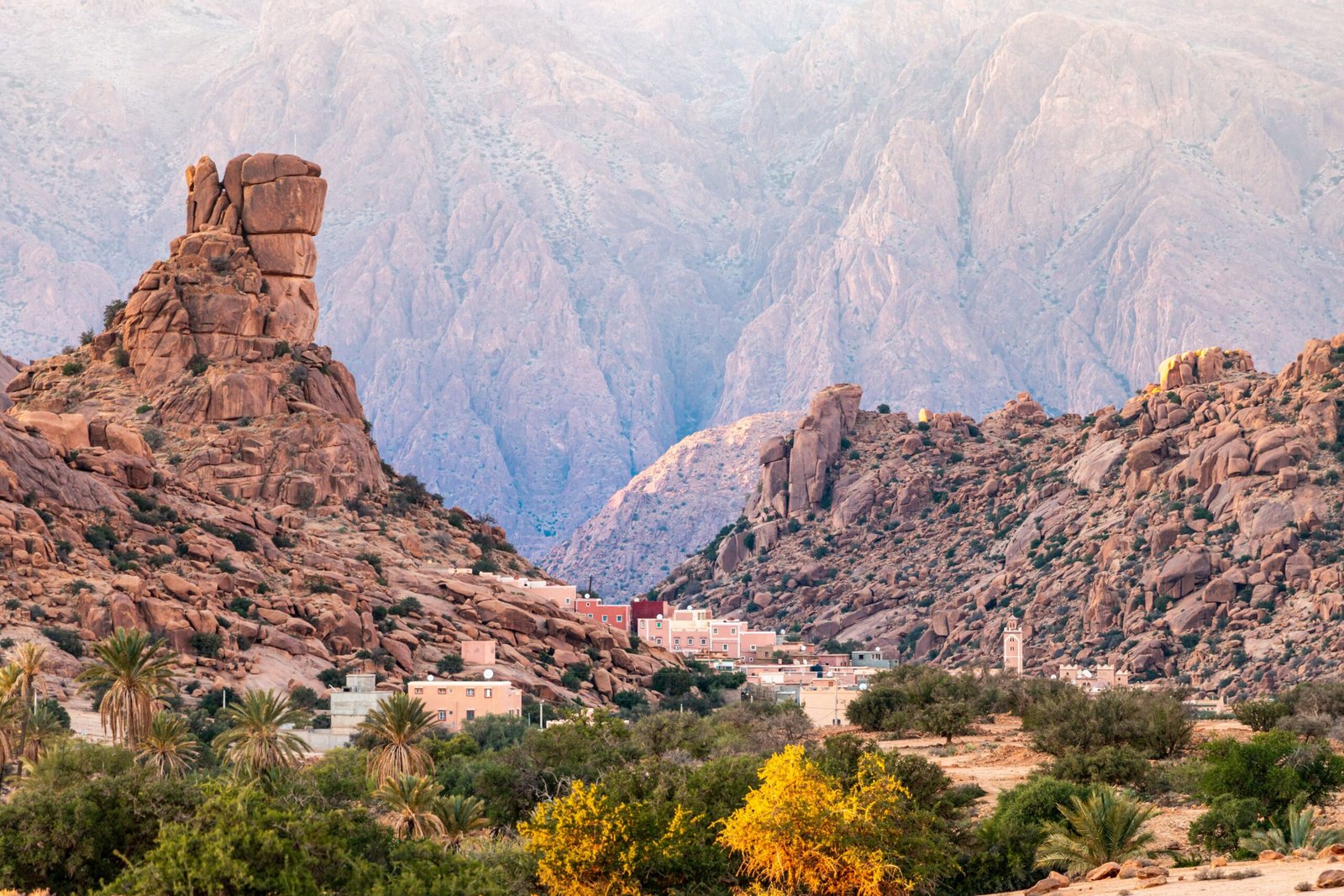
Jebel Shams, whose name roughly translates as Mountain of the Sun, is Oman’s highest mountain and rises to around 3,000 metres in the western Al Hajar Mountains. Below it lies the immense canyon landscape associated with Wadi Ghul, creating the dramatic cliffs and ravines popularly known as the Oman Grand Canyon or Grand Canyon of Arabia.
I’ve visited the Grand Canyon in the United States with Tiny Julius and Jordan in 2016, so I understand why people make the comparison.
There is a similar moment when you stand near the edge and your eyes struggle to understand the scale in front of you. Layers of exposed rock descend into the canyon, shadows move across enormous cliff faces and roads and settlements below become almost impossibly small.
But I don’t think Jebel Shams needs Arizona to make it impressive.
One thing I’ve realised while writing this Oman series is how often we describe the country by borrowing famous landscapes from somewhere else. Musandam becomes the Norway of Arabia, the Daymaniyat Islands remind people of the Maldives and Jebel Shams becomes the Grand Canyon of Oman.
Those comparisons are useful before you arrive. Once you’re standing there, they become less important and Jebel Shams feels completely Omani.
The barren Hajar Mountains, isolated settlements, goats appearing on impossible ledges, ancient villages tucked against the rock and mountain roads twisting through the landscape give the Jebel Shams Grand Canyon, its own personality.
And as with almost everything I love about Oman, getting there is part of the experience.

Muscat to Jebel Shams: The Road Is Part of the Journey

A beautiful Muscat to Jebel Shams road trip takes you inland towards Nizwa before continuing towards Al Hamra and the mountains. If you have time, include Misfat Al Abriyeen, where old houses, date plantations and traditional falaj irrigation channels provide a completely different landscape before you climb towards Wadi Ghul and Jebel Shams.
On paper, Jebel Shams from Muscat is roughly a three-to-four-hour journey depending on your exact route and stops.
But I’ve learnt not to calculate Oman road trips purely in kilometres or Google Maps driving times.
A three-hour journey can easily become five.
A viewpoint appears and you stop.
You notice an old village and stop again.
The afternoon light suddenly hits a mountain beautifully and everybody gets out of the car. Sometimes you simply find a quiet place with shade, take out tea or food you’ve brought from home and sit there.
That’s Oman for me.
The destination matters, but the interruptions between destinations often become the memory.

Jebel Shams Balcony Walk: Walking Along the Grand Canyon of Oman

For anyone searching for the best things to do in Jebel Shams, the famous Jebel Shams Balcony Walk should be high on the list. The route, generally associated with the W6 trail, begins around Al Khitaym and follows the side of the canyon towards the abandoned settlement of As Sab.
The name Balcony Walk makes perfect sense once you see it. You’re effectively walking along a natural balcony carved into the enormous canyon wall.
Instead of simply looking down into Wadi Ghul from a viewpoint, you’re walking alongside it. The scale becomes much more real when you’re moving through the landscape rather than photographing it from beside your car.
The Balcony Walk Oman experience isn’t an extreme mountaineering expedition, but neither should it be treated casually.
Wear proper footwear, carry enough water, use sun protection and preferably start early. If you’re uncomfortable with heights, understand what the trail involves before setting out.
The same applies when travelling with children. Whether the Jebel Shams hike is appropriate depends much more on their hiking experience, confidence and ability than simply their age.
Mountains don’t care how easy somebody described the trail on Instagram.

Snow in Oman? Jebel Shams in Winter Can Surprise You

This is another reason I find the mountains fascinating. This isn’t the Oman most people expect.
While Muscat may be enjoying pleasant winter sunshine, high in the Al Hajar Mountains Oman can be experiencing completely different weather.
Yes, it can snow in Oman.
Snowfall is rare and nobody should plan a holiday expecting guaranteed snow, but Jebel Shams is the best-known location for snowfall in Oman because of its elevation.
Snow fell on Jebel Shams during a cold spell in January 2023, when temperatures dropped below freezing. More recently, Jebel Shams recorded temperatures around −4°C in January 2026 during another period of intense winter weather.
The high mountain areas can also experience hail, frost and icy conditions when strong winter weather systems affect northern Oman.
January and February are generally the months when the possibility of these extreme cold events is most relevant, although there is absolutely no guaranteed “snow season” in Oman.
That’s an important distinction.
Don’t book a January Jebel Shams winter trip expecting Switzerland.
But don’t assume Oman means T-shirts and 25°C everywhere either.
You can leave relatively mild Muscat and several hours later be standing high in the mountains where temperatures are close to or below freezing.
For me, that contrast is far more interesting than simply being able to say that Oman occasionally gets snow.
It demonstrates how geographically diverse this country really is.

Jabal Akhdar Oman: My Anantara Stay, Trekking & Diana’s Point

Jabal Akhdar Oman gave me a very different mountain experience.
The name means Green Mountain, although you shouldn’t arrive expecting one enormous green hill. Jabal Akhdar is an elevated landscape of cliffs, deep valleys, agricultural terraces and mountain villages where altitude creates a completely different environment from the plains below.
I stayed at Anantara Al Jabal Al Akhdar Resort, one of the most spectacularly positioned mountain resorts I’ve experienced in Oman.
But what I remember most wasn’t simply staying in a luxury hotel.
It was the trekking.
Luxury hotels can sometimes isolate you from a destination. You arrive, enjoy the room, swimming pool, restaurant and beautiful view and eventually leave having experienced the resort more than the place.
Jabal Akhdar deserves something different.
Once I started trekking through the surrounding mountains, the hotel became secondary to the landscape.
The trails take you through cliffs, old villages and agricultural terraces that generations of people have carved into these mountains. Depending on the season, the Jabal Akhdar mountains are known for roses, pomegranates and other crops that seem almost impossible when you remember that you’re still in Arabia.
Walking also changes your perspective.
Looking across the canyon from a hotel terrace is beautiful.
Walking through the mountains makes you notice where villages are positioned, how paths connect communities and how people adapted to living here long before tourists arrived with 4x4s and Google Maps.
That’s why Jabal Akhdar trekking became one of the strongest memories from my stay.
And then the Anantara staff told me the story of Princess Diana.

Diana’s Point Oman: The Story Behind Jabal Akhdar’s Famous Viewpoint

One of the most famous things to do in Jabal Akhdar is surprisingly connected to British royal history.
Princess Diana visited Oman with Prince Charles in 1986. During that visit, she spent time at a dramatic mountain viewpoint overlooking the canyon. The location subsequently became associated with her visit and is now famously known as Diana’s Point Oman.
Today, Diana’s Point is one of the signature landmarks at Anantara, Jabal Al Akhdar.
When the staff explained the story to me during my stay, it added another layer to the landscape.
Stand there and you understand why the viewpoint was memorable. The canyon opens enormously in front of you.
But what interested me wasn’t simply that Princess Diana had once stood there. I had already been trekking through those mountains.
So Diana’s Point didn’t feel like another luxury-hotel attraction where you arrive, take a photograph and leave.
It felt like part of the wider Jabal Akhdar landscape I’d been walking through.
That’s how I would recommend experiencing it. Stay somewhere beautiful if you want. Enjoy the luxury. Have dinner overlooking the canyon. Stand at Diana’s Point. But then leave the resort and walk.
That’s where Jabal Akhdar really begins.

Jebel Shams vs Jabal Akhdar: Which Is Better?

This is one of the most common questions people planning an Oman mountain road trip ask.
Jebel Shams or Jabal Akhdar?
For me, it’s the wrong question.
If you have enough time, don’t choose.
Experience both.
Jebel Shams is about scale. You go for Wadi Ghul, the enormous Grand Canyon of Oman viewpoints, the Balcony Walk and that extraordinary feeling of standing above one of Arabia’s most dramatic canyon landscapes.
Jabal Akhdar is about living within the mountains. The villages, agricultural terraces, trekking routes, cooler climate, deep valleys and mountain resorts create a more intimate experience.
Jebel Shams makes me want to stop and look.Jabal Akhdar makes me want to walk. That is probably the simplest way I can explain the difference.
If you’re planning a Muscat to Jebel Shams and Jabal Akhdar road trip, I would give the mountains at least two or preferably three days rather than racing up and down in one day.
Nizwa makes an excellent gateway and allows you to combine Oman’s mountain landscapes with one of its most historic cities.

Do You Need a 4×4 for Jebel Shams and Jabal Akhdar?

This is something you should understand before renting a car.
For Jabal Akhdar, access to the main plateau is controlled and visitors driving up are generally required to have a 4WD vehicle. The mountain ascent is steep, and vehicles are checked before proceeding.
For anyone searching do you need a 4×4 for Jebel Shams, the answer is more nuanced.
Road infrastructure has improved and travellers can reach much of the Jebel Shams area in ordinary vehicles, although road surfaces, gravel sections and conditions can vary.
Personally, I prefer a 4×4 for both.
Not because I want to demonstrate that I’m adventurous. Because I want freedom.
If I see a side road, village or viewpoint that looks interesting, I don’t want my rental car deciding whether I’m allowed to explore it.
That freedom has always been one of the biggest reasons I’ve loved driving in Oman.
And during winter, check the weather before heading into either mountain region. Heavy rain, hail, ice or unusually cold conditions can change mountain-road conditions quickly.

Best Time to Visit Jebel Shams & Jabal Akhdar

For most travellers, October to April is the best time to visit Jebel Shams and Jabal Akhdar, particularly if hiking and trekking are part of the journey.
December, January and February bring the coldest mountain temperatures. Nights can become genuinely cold at altitude, so carry proper warm clothing even if Muscat feels comfortable.
January and February offer the greatest possibility of encountering unusual winter conditions such as frost, hail or, very occasionally at the highest elevations, snow.
Spring brings another reason to visit Jabal Akhdar.
The mountain’s famous rose season generally occurs around March and April, when terraces are covered with fragrant Damask roses traditionally used to produce Omani rose water.
That gives Jabal Akhdar two completely different seasonal personalities.
Winter gives you cold mountain Oman and Spring gives you green, agricultural Oman.

The Lost Mumbaikar Reflections

I’ve travelled through enough mountains around the world to know that height alone doesn’t make a place memorable.
What I remember about this part of Oman isn’t simply a number telling me how high Jebel Shams is.
I remember standing above Wadi Ghul and trying to understand the scale of the canyon below. I remember mountain roads where I stopped the car simply because the view suddenly became too beautiful to drive past.
And I remember staying at Anantara in Jabal Akhdar, leaving the comfort of the resort and trekking through the mountains around it. The staff told me about Princess Diana standing at that viewpoint decades earlier, and today everyone calls it Diana’s Point.
But for me, the famous name wasn’t the most interesting part.
The mountains were. That’s Oman.
Go because you’ve heard about the Grand Canyon. Take the photograph at Diana’s Point. Walk the Jebel Shams Balcony Trail.
But stay a little longer, drive slowly and walk into the mountains.
And if you happen to be there on one of those rare January or February days when winter really reaches the highest peaks, you might discover an Oman you never imagined existed.

Frequently Asked Questions About the Grand Canyon of Oman

1 What is the Grand Canyon of Oman?

The enormous canyon landscape around Jebel Shams and Wadi Ghul in the western Al Hajar Mountains is popularly known as the Grand Canyon of Oman or Grand Canyon of Arabia.

2 Is Jebel Shams worth visiting?

Absolutely, particularly if you enjoy road trips, mountain scenery and hiking. Jebel Shams offers the Grand Canyon viewpoints, Wadi Ghul scenery, the Balcony Walk and some of the most dramatic landscapes in Oman.

3 How far is Jebel Shams from Muscat?

Jebel Shams is roughly 240 kilometres from Muscat depending on your route and final destination. Allow approximately three to four hours of driving, but I would leave considerably more time for stops.

4 Does it snow in Oman?

Yes, occasionally. Snowfall is rare but has been documented at Jebel Shams, Oman’s highest mountain. Sub-zero temperatures, frost and hail are also possible in Oman’s high mountains during strong winter weather systems.

5 When does it snow in Jebel Shams?

There is no guaranteed snow season. When snow does occur, January and February are among the most likely periods because they coincide with Oman’s coldest mountain weather.

6 What is the Jebel Shams Balcony Walk?

The Jebel Shams Balcony Walk, commonly associated with the W6 trail, follows the canyon wall from around Al Khitaym towards the abandoned village of As Sab and offers spectacular views into the Grand Canyon of Oman.

7 What is Diana’s Point in Oman?

Diana’s Point is a famous viewpoint at Anantara Al Jabal Al Akhdar associated with Princess Diana’s visit to Oman in 1986. It overlooks one of Jabal Akhdar’s dramatic canyon landscapes.

8 Do you need a 4×4 for Jabal Akhdar?

Yes, visitors driving to the main Jabal Akhdar plateau are generally required to use a 4WD vehicle, with vehicle checks carried out before the steep mountain ascent.

9 Jebel Shams or Jabal Akhdar – which should I visit?

If you have time, visit both. Choose Jebel Shams primarily for the Grand Canyon scenery and Balcony Walk. Choose Jabal Akhdar for trekking, mountain villages, agricultural terraces, Diana’s Point and a longer mountain stay.

See Also:


Leave a Reply

Your email address will not be published. Required fields are marked *