

Before Nolan’s The Odyssey, We experienced the Real Greece
TL;DR for the Impatient Traveller
Long before Christopher Nolan’s The Odyssey rekindled the world’s fascination with Odysseus, Athena and Greek mythology, our family was already exploring the places where these legends were born. As I watched the film, I couldn’t help but relive our unforgettable 2023 Greece road trip, where history stepped out of textbooks and came alive through Alexander the Great, King Leonidas, Homer, Socrates, Plato and Aristotle.
Ironically, Greece was never our original destination. Expensive flights to France and affordable Wizz Air fares to Athens changed our plans completely and it became one of the best travel decisions we’ve ever made.
Over seven incredible days, we explored Athens, Santorini, Meteora, Thessaloniki, Florina and Kastoria, enjoying spectacular road trips, authentic Greek food, unforgettable sunsets and, finally, the snow we had been chasing across Europe.
Sometimes the destination you choose because it’s cheaper becomes the journey you remember forever.
The Lost Mumbaikar Says
“Watch The Odyssey for the story. Visit Greece for the experience.
You’ll leave with a story of your own”.
Greece Instead of France; the Decision That Changed Everything
Jordan deserves the credit for this one.
Our original plan was France, but the airfares from Dubai were much higher than we expected. Around the same time, Schengen visa appointments for Greece were readily available, so we changed our plans and booked Greece instead.
Looking back, it was one of the best travel decisions we’ve ever made.
What started as a cheaper gateway soon became an unforgettable seven-day road trip across one of the world’s most fascinating countries before we continued to France.
This was also during the golden days of Wizz Air Abu Dhabi. We booked our Dubai–Athens tickets for around AED 240 per person, something that still feels unbelievable today. Better still, we continued from Athens to Tirana and later onwards to Paris, all on Wizz Air. Those affordable fares made multi-country European adventures possible for families like ours and completely changed the way we travelled.
The moment Greece became our destination, everyone in the family found something to get excited about.
For me, it was finally visiting the land of Alexander the Great, Athena, Odysseus and ancient Greek history; stories I’d grown up reading about. The kids couldn’t wait to explore another new country, while Sunitha had only one mission: find snow.
She still remembered our pre-COVID Scandinavian road trip in 2019, when Finland, Sweden and Norway had given us magical winter landscapes. This time, she was determined that our Europe adventure would include snow once again.
Little did we know that Greece had a few surprises waiting for us.
Winter in Greece – Empty Streets, Better Prices and Unexpected Beauty
When most people think of a Greece holiday, they imagine bright summer sunshine, crowded beaches, packed ferries and temperatures above 35°C.
We arrived at Athens International Airport (Eleftherios Venizelos Airport) in the middle of winter, and even then, the airport was buzzing with travellers. It made me wonder, if this is the crowd during the off-season, what must Greece look like in the peak summer months?
Thankfully, once we left the airport and began our road trip, it was a completely different story.
We experienced a side of Greece that many visitors never do.
Travelling during winter isn’t for everyone, but if you don’t mind cooler weather, it can be one of the best times to visit Greece. Instead of waiting in long queues at popular attractions, we often had entire viewpoints almost to ourselves. Roads were quiet, parking was effortless, and exploring historic towns felt far more relaxed.
It felt as though Greece had slowed down just enough for us to appreciate it, rather than rushing from one attraction to the next.
One of the biggest advantages was the cost.
Hotels that are usually expensive during the summer season were available at a fraction of the price. Car rental rates were lower, flights were cheaper, and restaurants that remained open were much easier to get into. For a family travelling across multiple countries, those savings made a noticeable difference.
Winter also allowed us to experience a side of Greece that many visitors never see. Snow-covered mountains, peaceful villages, misty landscapes and dramatic scenery replaced the busy beaches shown in most travel brochures. Northern Greece, especially around Meteora, Florina and Kastoria, looked like a completely different country compared to the postcard images of Santorini or Mykonos.
Of course, travelling in winter has its drawbacks.
Many seasonal businesses on the Greek islands close after the summer tourist season. Beach clubs are shut, ferry schedules are less frequent, and the sea is far too cold for most people to swim. Some restaurants and hotels also take a winter break, particularly in smaller tourist destinations.
We weren’t travelling to spend our days on the beach. We wanted to experience the country’s history, landscapes, villages and culture at our own pace. Winter gave us exactly that.
If your dream holiday is swimming in the Aegean Sea and enjoying the nightlife until sunrise, visit Greece between June and September.
But if you prefer quieter streets, lower prices, easier driving, stunning photography and a more authentic travel experience, don’t overlook Greece in winter. You may discover a side of the country that many summer visitors never experience.
Santorini – Beautiful, Peaceful and Surprisingly Different in Winter
Like millions of travellers, Santorini, Greece, had always been on our bucket list. The iconic blue-domed churches of Oia, whitewashed houses, breathtaking Santorini sunsets, volcanic cliffs and views over the Aegean Sea make it one of the most photographed destinations in the world.
From Athens, we booked a return flight on Ryanair, Europe’s largest low-cost airline, for around €100 per person and landed at Santorini (Thira) International Airport (JTR).
Even in winter, I expected crowds.
Instead, Oia and Fira, the two most famous villages in Santorini, were almost empty. Walking through the narrow streets without queues or tourists felt surreal. Looking at how busy Athens International Airport had been, I could only imagine what Santorini must be like during the peak summer season.
One of the biggest advantages of visiting Santorini in winter was the price. We booked a beautiful two-storey Airbnb with a private plunge pool overlooking the Aegean Sea for a fraction of what it would cost during summer.
Another surprise was Greek wine.
Before this trip, I had never associated Greece with wine. But after tasting several local Greek white wines, I genuinely believe they deserve far more international recognition. Throughout our Greece road trip, they became our drink of choice with dinner, and it’s a shame many of these excellent labels are difficult to find in Dubai.
While Santorini remains one of the most beautiful Greek islands, its quiet winter atmosphere meant it wasn’t the highlight of our trip. For photographers, couples and travellers looking for peace, Santorini in winter is a fantastic choice. But if you’re expecting the lively atmosphere, beach clubs and bustling cafés that have made the island world-famous, summer is undoubtedly the better season.
Sometimes the places you expect the most are quietly outshined by the ones you never planned to fall in love with.
Chasing Snow Across Greece And Finding So Much More
There was one mission on this Europe trip that became almost a family obsession.
Find snow.
If there is one thing Sunitha loves more than beaches, it’s a proper European winter.
Our 2018 Scandinavian road trip, followed by our 2019 Grand Europe road trip through Switzerland, Austria and several other countries, had given us unforgettable snowy memories. Ever since then, she has preferred travelling through Europe in winter rather than summer, hoping every trip will deliver another magical snowy landscape.
Unfortunately, this time it wasn’t happening. Most people don’t associate Greece with snow because its islands and coastline enjoy a warm Mediterranean climate.
As we drove north through mainland Greece, passing beautiful villages, winding mountain roads and breathtaking landscapes towards Meteora, Kastoria and finally Florina, the scenery slowly transformed.
The hills turned white.
The forests disappeared beneath fresh snow.
The rooftops looked like Christmas postcards.
And finally…
We had found our winter wonderland.
The excitement inside the car was impossible to describe. The children jumped out at every opportunity to throw snowballs, build tiny snowmen and simply enjoy something they rarely experience back home in Dubai.
I don’t think I’ve ever seen Sunitha happier on a road trip. That’s exactly why I always say that this how a road trip should be experienced while travelling. Slowly, with the freedom to stop, explore, and enjoy the journey as much as the destination.
Ironically, while everyone talks about Santorini, it was Florina that became the biggest jackpot of our Greece adventure.
But it wasn’t just the snow that made northern Greece unforgettable.
The road trip through mainland Greece was simply spectacular. Every few kilometres the scenery changed from dramatic mountain passes and peaceful lakes to charming villages and the incredible rock formations of Meteora. It was one of those drives where you find yourself stopping again and again, not because you planned to, but because every bend in the road reveals another beautiful view.
Another pleasant surprise was the cost.
Compared with many European destinations, Greece offered incredible value for money. Even when we chose excellent restaurants, our family dinner bills usually came to around €50–70, with generous portions and outstanding quality. I still remember paying well over €100 for fairly ordinary meals in Albania and North Macedonia. In Greece, we often ordered more dishes simply because everything was so reasonably priced. The lower prices per item encouraged us to try local specialties without worrying about the bill.
Sometimes travel works that way.
You spend months dreaming about the famous destinations, only to discover that your favourite memories come from places you knew almost nothing about before you arrived. That’s exactly what happened to us in Greece. While many visitors spend their entire holiday hopping between the Greek islands, we chose to explore mainland Greece by road and it turned out to be one of the best decisions of the entire trip.
As we made our way back from Florina to Athens, we decided not to take the fastest route. Instead, we turned the journey itself into an adventure.
Our road trip took us through the beautiful lakeside town of Kastoria, the vibrant city of Thessaloniki, and the extraordinary monasteries of Meteora, perched dramatically atop towering rock pillars. Along the way, we drove through picturesque villages, rolling mountains and some of the most scenic countryside in mainland Greece, stopping whenever a beautiful view caught our attention. That’ why, I always say why Traveller Should Experience a Road Trip.
Athens – Where History Finally Came Alive
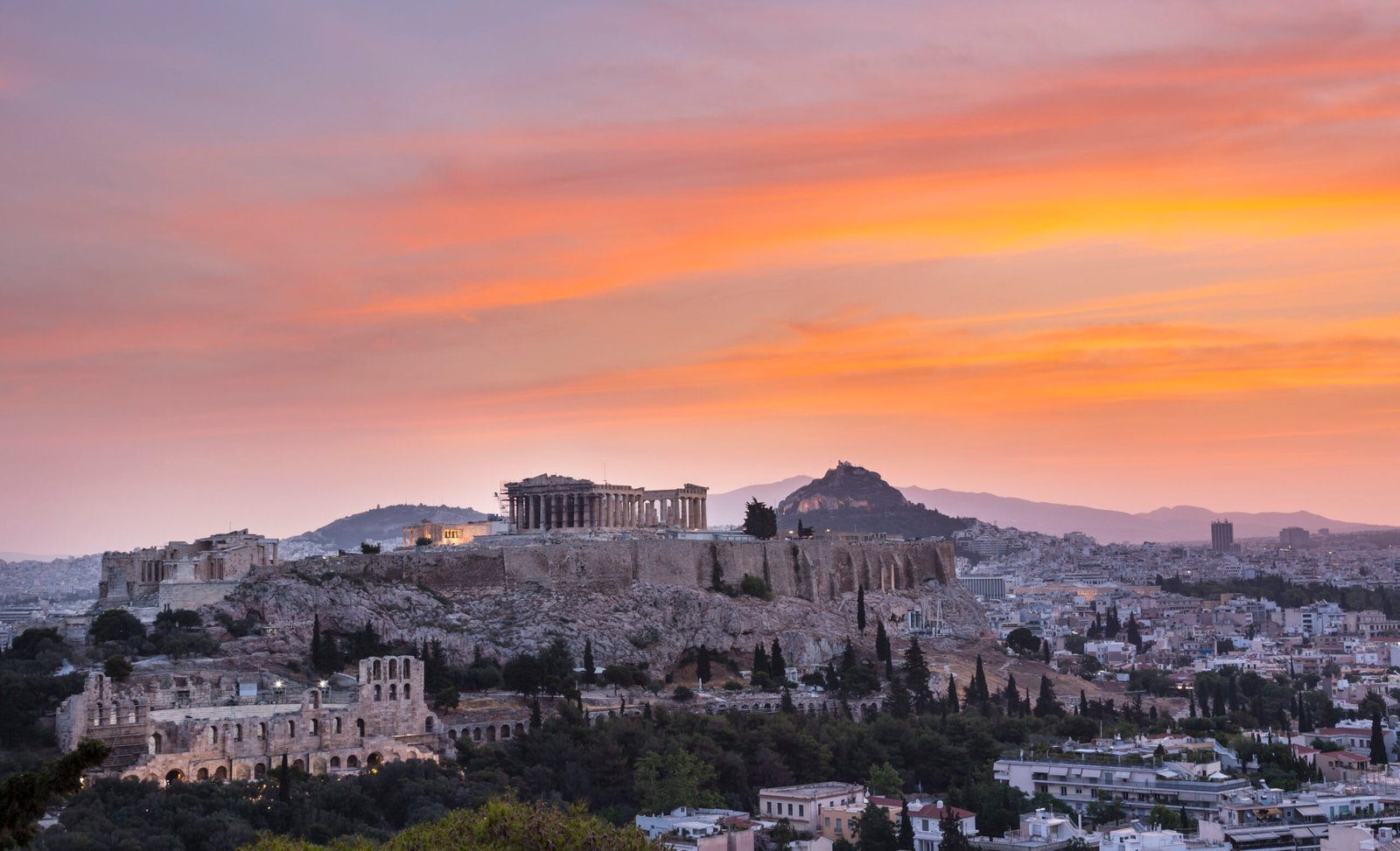
Christopher Nolan’s The Odyssey has introduced a new generation to Odysseus, Athena and the legends of Greek mythology. Watching the excitement around the film brought back memories of my own journey to Athens, Greece, where I experienced those stories in the place where they were born.
Then I arrived in Athens.
It was the land of Alexander the Great riding Bucephalus, King Leonidas and his fearless 300 Spartans, Achilles, Odysseus, Homer, Socrates, Plato and Aristotle. Like millions of students around the world, these were names I first encountered in school textbooks, never imagining that one day I would walk through the very streets where history and mythology came alive.
Athens isn’t simply the capital of Greece. It is one of the world’s oldest continuously inhabited cities, the birthplace of democracy, Western philosophy and countless ideas that still shape our modern civilisation. If you’re planning a Greece itinerary, don’t make the mistake of treating Athens as just a stopover before the islands. It deserves at least two or three days.
Among the absolute must-do experiences in Athens are climbing the Acropolis, standing beneath the magnificent Parthenon, visiting the Temple of Athena Nike, exploring the fascinating Acropolis Museum, wandering through the charming streets of Plaka and Monastiraki, watching the Changing of the Guard at Syntagma Square, and enjoying panoramic views from Mount Lycabettus.
One of my favourite memories wasn’t inside a museum.
It was sitting at a restaurant overlooking the beautifully illuminated Acropolis after sunset. Enjoying authentic Greek food with the Parthenon glowing above the city is one of those travel moments that quietly stays with you forever.
If there’s one city where history, mythology and modern life blend effortlessly, it’s Athens. Whether you arrive inspired by Christopher Nolan’s The Odyssey, fascinated by Greek mythology, or simply searching for the best places to visit in Greece, Athens has a way of making every story feel real.
Why Is It Athens but Everyone Talks About Athena?
One thing genuinely puzzled me during our visit.
Everywhere I looked, I kept seeing the name Athena; the Temple of Athena, statues of Athena and references to the goddess but the city itself was called Athens.
Curiosity got the better of me, so I looked into the story.
According to Greek mythology, Athena, the goddess of wisdom, and Poseidon, the god of the sea, competed to become the protector of the city. Poseidon struck the ground with his trident, creating a saltwater spring. Athena, however, offered an olive tree, symbolising peace, wisdom and prosperity.
The people chose Athena’s gift, and the city was named in her honour.
Standing there, the story suddenly made perfect sense.
Today, with Christopher Nolan’s The Odyssey bringing Odysseus, Athena and ancient Greece back into the global spotlight, many people will become curious about these legends. But no movie can truly replace the feeling of standing beneath the Acropolis, looking up at the Parthenon and realising that these stories have inspired the world for nearly three thousand years.
Athens isn’t just a destination.
It’s where history, mythology and civilisation come together and that’s exactly what makes it unforgettable.
The Lost Mumbaikar Reflections
I’ve been fortunate to stand among the ruins of Rome, wander through the ancient city of Jerash in Jordan, and explore remarkable historical sites across Türkiye. Each one tells an incredible story.
But Athens feels different.
It isn’t just about ancient ruins or impressive monuments. It’s about the atmosphere. The moment you see the Acropolis rising above the city, walk through the streets of Plaka, or sit beneath the illuminated Parthenon at night, you don’t feel like you’re visiting a museum, you feel connected to the birthplace of ideas that shaped the modern world.
The real highlight of Greece wasn’t just the destinations.
It was everything in between.
The open roads, mountain passes, quiet villages, roadside cafés and family-run tavernas serving delicious Greek food made every stop worthwhile. Fresh grilled meats, warm pita, traditional Greek salads, local cheeses and glasses of underrated Greek white wine became part of the journey rather than just another meal.
Then there were one of the best sunsets and that’s the Greece, I’ll always remember.
Frequently Asked Questions (FAQ) About Greece
- Is Greece worth visiting?
Absolutely. Greece offers far more than its famous islands. From the ancient history of Athens and the monasteries of Meteora to scenic road trips, mountain villages and world-class beaches, it’s one of Europe’s most diverse destinations.
- What is the best time to visit Greece?
It depends on your travel style.
- April to June & September to October: Pleasant weather with fewer crowds.
- July & August: Best for beaches and island hopping, but also the busiest and most expensive.
- November to March: Ideal for budget travellers, sightseeing, road trips and experiencing a quieter side of Greece.
- Is Greece good in winter?
Yes. Winter offers lower hotel prices, fewer tourists, easier driving and peaceful sightseeing. While some island businesses close for the season, mainland Greece becomes perfect for road trips, mountain scenery and even snow in the northern regions.
- How many days do you need in Greece?
A minimum of 7–10 days lets you combine Athens with a few islands or explore mainland Greece. Two weeks gives you enough time for a relaxed road trip covering places like Meteora, Thessaloniki, Kastoria and Florina.
- Is Santorini worth visiting in winter?
Yes, if you enjoy peaceful surroundings, photography and lower prices. You’ll experience empty streets and excellent hotel deals, but many seasonal restaurants, hotels and beach clubs remain closed.
- Is Athens worth visiting?
Without question. Athens is one of the world’s oldest cities and home to the Acropolis, Parthenon, Plaka, Monastiraki and countless archaeological sites. It’s a must-visit for anyone interested in history, architecture or Greek mythology.
- What are the best places to visit in Greece?
Some of my favourites include:
- Athens
- Santorini
- Meteora
- Thessaloniki
- Florina
- Kastoria
- Delphi
- Ancient Olympia
- Nafplio
- Is a road trip in Greece worth it?
Definitely. Driving allows you to discover mountain villages, coastal roads, hidden viewpoints and local tavernas that most tourists never experience. Mainland Greece is especially rewarding for self-drive travellers.
- Do I need a car in Greece?
If you’re only visiting Athens and the islands, no. However, if you want to explore mainland Greece, Meteora, northern Greece or smaller villages, renting a car is highly recommended.
- Is Greece expensive?
Compared with many Western European countries, Greece offers excellent value. Accommodation, car rentals and food are generally affordable, especially outside the peak summer season.
- Is Greece family-friendly?
Very much so. Greece has welcoming locals, safe cities, beautiful beaches, historical attractions and plenty of outdoor experiences that both children and adults can enjoy.
- Why is Athens named after Athena?
According to Greek mythology, Athena and Poseidon competed to become the protector of the city. Athena gifted an olive tree, symbolising wisdom and prosperity, while Poseidon produced a saltwater spring. The people chose Athena’s gift, and the city was named in her honour.
- Can you visit Greece on a budget?
Yes. Travelling during the shoulder or winter seasons, booking flights early, renting a car for mainland exploration and staying outside peak tourist areas can significantly reduce costs while offering a more authentic experience.


Leave a Reply