

England
Why England Is So Much More Than London
TL;DR; For The Impatient Traveler
Our winter road trip across England turned out to be very different from what I had imagined and that’s exactly why I loved it. From the tranquil beauty of Windermere in the Lake District to the world-famous streets of London, and from the ancient mystery of Stonehenge to the timeless elegance of Bath, every stop revealed a different side of England.
Like many travellers, I arrived believing London would be the highlight of the journey. Instead, it was England’s countryside, historic towns, scenic drives and unplanned family moments that left the deepest impression. Riding in an iconic black cab, watching the Changing of the Guard, cruising along the Thames, standing before a 4,500-year-old monument, and seeing my boys chase pigeons outside Bath Abbey reminded me that the best travel memories are rarely created by famous landmarks alone.
If there’s one lesson England taught me, it’s this: don’t just visit London, explore the roads beyond it. That’s where England truly comes alive.
The Lost Mumbaikar Says:
“Don’t let London be your entire England. The country’s greatest stories begin where the motorway leaves the city behind.”
The England I Dreamt Of… And the England I Actually Found
Growing up in Morak, Rajasthan, England never felt like a distant country.
It was always present in our home.
My father rarely missed the BBC news, and names like Margaret Thatcher became familiar long before I understood politics. Weekend cricket meant iconic grounds like Lord’s, Old Trafford and The Oval filling our television screen. Then came the excitement of Sachin Tendulkar joining Yorkshire, something that made England feel even closer to every Indian cricket fan.
History books did the rest.
From the British Raj to both World Wars, England featured in almost every chapter I studied. It was a country I had spent years reading about long before I ever stepped foot there.
Then there was the London everyone grows up imagining.
The red telephone boxes. Black cabs. Double-decker buses. Big Ben. Buckingham Palace. Bollywood films that made the city look magical. By the time I finally visited, London already felt strangely familiar, as though I’d been there many times before.
Naturally, England became one of those dream destinations I always wanted to experience.
After an unforgettable road trip through the breathtaking landscapes of Scotland, we crossed the border into England, excited for the final chapter of our UK adventure.
What I didn’t realise then was that this journey would teach me one of my favourite lessons about travel.
Sometimes, the places you’ve dreamed about your entire life aren’t the ones that leave the deepest impression.
Discovering the Lake District Before Driving To London
Crossing into England, our first stop was Windermere, the heart of the beautiful Lake District.
After spending several unforgettable days driving through the Scottish Highlands, I honestly wondered if England could possibly match what we had just experienced. Scotland had completely exceeded my expectations and comfortably earned a place among my Top 25 countries. Its dramatic mountains, winding roads and breathtaking scenery had set the bar incredibly high.
Windermere, however, wasn’t trying to compete.
It welcomed us with a different kind of beauty.
Peaceful lakes reflecting the winter sky, charming cafés, cosy stone cottages and quiet walking paths created the perfect setting to slow down after Scotland’s dramatic landscapes.
We spent two relaxing nights here, enjoying the slower pace before beginning the long drive towards London.
One of the reasons I love travelling through Europe is that the journey often becomes just as memorable as the destination.
The drive from Windermere to London covers around 450 km and takes about five to six hours, but we were in no hurry.
Instead of treating it as a transfer day, we turned it into another adventure.
Rolling green countryside replaced mountains, while centuries-old villages appeared every few kilometres, each looking as though it belonged on a postcard.
We stopped in the beautiful market town of Bakewell, famous for its traditional pudding, before continuing through the historic streets of Stamford, one of England’s prettiest stone-built towns. Walking around these places reminded us that England’s real charm often lies far beyond London.
Of course, no English road trip feels complete without stopping at a local pub for fresh fish and chips.
Crispy batter.
Hot chips.
A cold winter afternoon.
Simple food somehow tastes even better when you’ve earned it on the road.
Looking back, I barely remember how many kilometres we covered that day.
But I still remember those quiet villages, the country roads, and the freedom of simply driving through England with nowhere to be except wherever the road decided to take us.
My First Impression of London
By the time we reached London that evening, it felt as though I was finally meeting a city I had known all my life. This wasn’t just another stop on our UK road trip; it was London, the city that had shaped so many of my childhood memories through history books, cricket matches, television news and countless Bollywood films.
Over the years, I had built an image of London in my mind. I imagined a city bursting with energy, where every street felt alive and every corner looked like a movie scene. Perhaps years of watching films and travel documentaries had raised my expectations a little too high.
The reality was different.
London didn’t have the fast-paced intensity of cities like New York. Instead, it felt calmer, more organised and surprisingly reserved. People weren’t rushing around, there wasn’t the constant buzz I had imagined, and the city seemed to move with quiet confidence rather than loud excitement. At first, I even wondered whether London was slightly overrated.
However, as the next two days unfolded, my opinion slowly began to change. I realised London isn’t a city that tries to impress you instantly. It doesn’t rely on flashy skylines or overwhelming energy. Instead, it reveals itself through centuries of history, magnificent architecture, royal traditions, charming neighbourhoods and stories hidden around almost every corner.
By the time we left, I understood why millions of people fall in love with London. It isn’t a city that shouts for your attention; it quietly earns your admiration, one landmark, one street and one experience at a time.
Exploring London’s Icons
The next two days were everything I had imagined growing up.
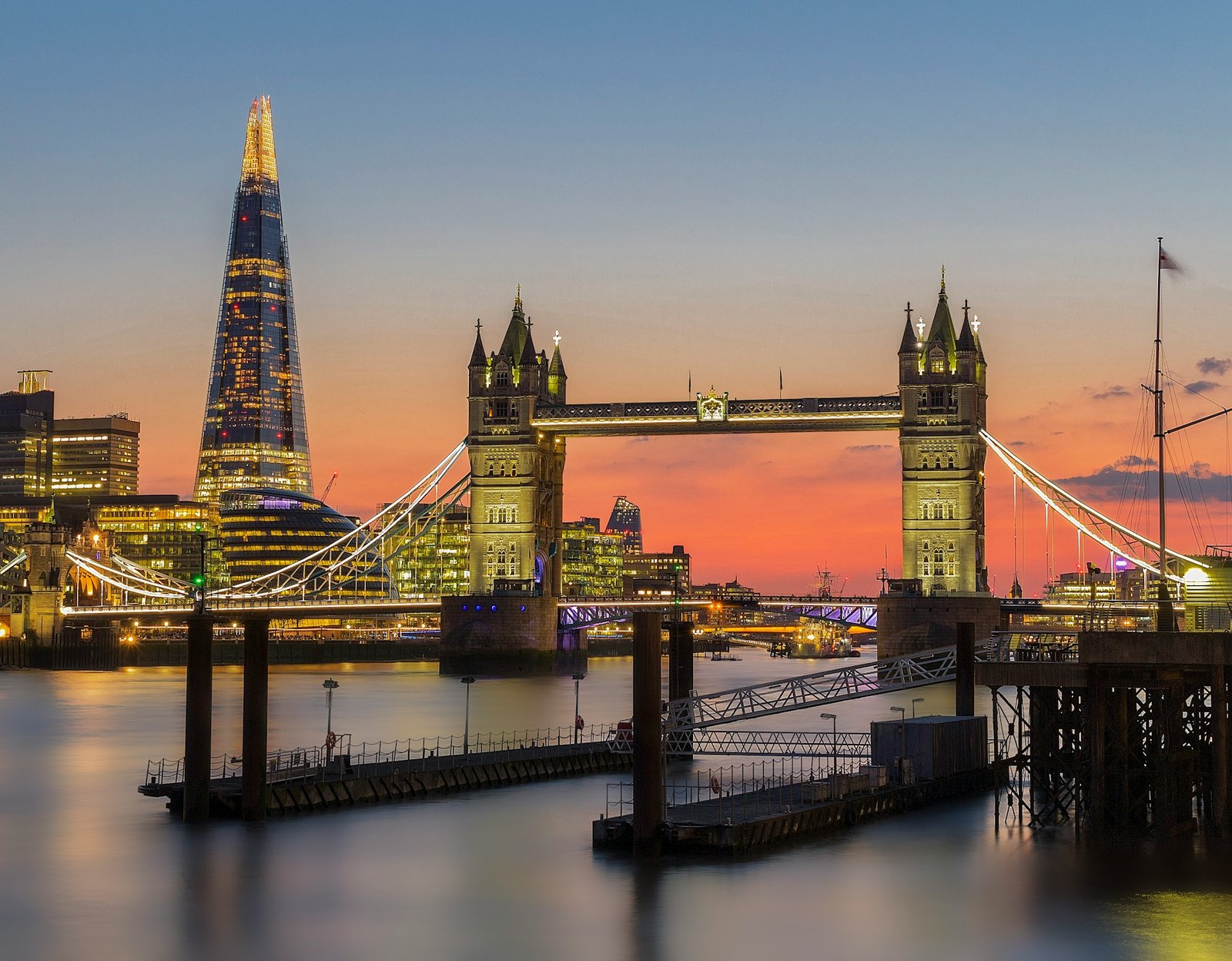
We stood beneath Big Ben, admired the magnificent Houses of Parliament and Westminster Abbey, watched the famous Changing of the Guard at Buckingham Palace, crossed the iconic Tower Bridge, explored the Tower of London, took in panoramic views from the London Eye, wandered through Covent Garden, Piccadilly Circus and Trafalgar Square, and enjoyed a leisurely cruise along the River Thames, which offered one of the best views of London’s famous skyline.
One childhood dream I finally ticked off was riding in one of London’s iconic black cabs. After seeing them for years in documentaries and movies during the 1990s, sitting inside one felt strangely special. Sometimes the smallest experiences become the most memorable.
While I was busy admiring London’s beautiful architecture, Sunitha had already decided what would become the boys’ favourite part of the city; the Natural History Museum. For her, it wasn’t optional; it was a must-do. Watching Julius and Jordan stand beneath the enormous blue whale skeleton, stare in amazement at dinosaur fossils and spend hours exploring the interactive exhibits reminded me that children experience a destination very differently from adults. Long after they forget Big Ben’s height or Buckingham Palace’s history, they’ll probably remember the dinosaurs.
One lazy afternoon in Hyde Park became another unexpected highlight. There was no sightseeing agenda, no rush to tick off another attraction. The boys chased pigeons across the grass while we sat on a bench with coffee in hand, simply enjoying the moment. Looking back, those quiet family memories are every bit as valuable as London’s famous landmarks.
That’s the beauty of London. Yes, it has world-famous attractions, but it’s the moments in between; the parks, the museums, the architecture, the black cabs and the unplanned family time that quietly become the memories you carry home.
The Road to Stonehenge and Bath
Leaving London behind felt surprisingly refreshing. As much as we enjoyed the capital, I was excited to be back on the open road. That’s always been my favourite part of travelling. Cities are wonderful, but it’s the countryside, the unexpected detours and the freedom to stop whenever something catches your eye that truly make a road trip memorable. As we drove through southern England, the traffic slowly disappeared, the roads became quieter, and endless green fields, charming villages and rolling hills reminded us why exploring a country by car is so rewarding.
Our next destination was Stonehenge, a place which is around 150 Kms that has fascinated historians, archaeologists and travellers for centuries. Standing before these enormous stones, believed to have been erected over 4,500 years ago, is difficult to describe. Even today, no one knows exactly how this was achieved or why Stonehenge was built. Some believe it was an ancient astronomical calendar aligned with the solstices, while others think it served as a ceremonial or burial site. Similar stone circles exist across Britain, Ireland and even Brittany in France, but none possess the same mystery or significance. Standing there, I realised that sometimes history is far more fascinating when it leaves a few questions unanswered.
By late afternoon, after a scenic 60 km drive from Stonehenge, we arrived in Bath, and within minutes I knew this would become one of my favourite places in England. Unlike the grandeur and fast pace of London, Bath felt intimate, elegant and wonderfully relaxed. Its honey-coloured Georgian buildings, the magnificent Bath Abbey, the world-famous Roman Baths and charming streets made it feel as though we had stepped into a living history book.
With no itinerary to follow, we simply wandered through Bath’s charming streets, stopped for coffee at a cosy café, admired the elegant Georgian architecture and soaked in the city’s wonderfully relaxed atmosphere. Meanwhile, Julius and Jordan had little interest in Roman history or centuries-old buildings. They had already found their own highlight; chasing pigeons around the square outside Bath Abbey, laughing as the church bells echoed through the city.
Watching them run freely while locals smiled at their excitement reminded me that family travel isn’t always about ticking off famous landmarks. As adults, we often remember the history, the architecture and the stories behind a place. Children remember the freedom, the laughter and the simple moments that made them happy. Years from now, they may not recall every detail about Stonehenge or the Roman Baths, but I’m certain they’ll remember that beautiful afternoon in Bath, running through the square without a care in the world. Sometimes, those unplanned moments become the greatest souvenirs a journey can leave behind.
The Lost Mumbaikar Reflection
Before this trip, England meant one thing to me; London. Like millions around the world, I believed the capital was the country’s biggest attraction. And while London certainly lived up to its reputation with its history, royal landmarks and iconic skyline, it wasn’t what defined England for me.
The real England revealed itself on the road. It was the peaceful beauty of Windermere after the dramatic Scottish Highlands, the endless countryside stretching beyond the motorway, the mystery surrounding Stonehenge, the timeless elegance of Bath, and the countless little moments in between that no itinerary could have planned. It was watching my boys chase pigeons outside Bath Abbey, sharing fish and chips on a cold afternoon, and discovering that some of the best memories happen when you’re not rushing to the next attraction.
That’s why I’ll always recommend exploring England by road. London may introduce you to the country, but it’s the villages, historic towns, ancient landscapes and open roads that help you truly understand it.
Sometimes the destination is what inspires the journey. But it’s the journey itself that becomes the memory.
Frequently Asked Questions About England
1. Is England worth visiting?
Absolutely. England offers far more than London, combining royal history, picturesque countryside, charming villages, ancient landmarks and some of the best road trips in Europe.
2. How many days do you need to explore England?
A week is ideal for a road trip covering London, the Lake District, Stonehenge, Bath and a few countryside stops. Two weeks allows you to explore much more of England at a relaxed pace.
3. Is London worth visiting?
Yes. Every first-time visitor should experience London’s iconic landmarks, museums, parks and royal history. Three to four days is usually enough to cover the main attractions.
4. Is Bath worth staying overnight?
Definitely. Bath is one of England’s most beautiful cities, and staying overnight lets you enjoy its elegant streets, Roman Baths, Bath Abbey and cafés after the day-trippers leave.
5. Is Stonehenge worth visiting?
Without question. Whether you’re interested in archaeology, history or photography, Stonehenge remains one of the world’s most fascinating prehistoric monuments.
6. Can you visit Stonehenge and Bath on the same day?
Yes. Stonehenge is only about 55–60 km from Bath, making it easy to combine both destinations in one day, although staying overnight in Bath is highly recommended.
7. Is an England road trip better than travelling by train?
If you want to experience villages, countryside, scenic drives and hidden gems, a road trip offers far more flexibility than relying solely on trains.
8. What are the best places to visit outside London?
Some of the best destinations include the Lake District, Bath, Stonehenge, the Cotswolds, York, Oxford, Cambridge and Cornwall.
9. Is the Lake District worth visiting?
Absolutely. Windermere and the surrounding Lake District offer beautiful lakes, peaceful villages, hiking trails and some of England’s most scenic landscapes.
10. Is England a good destination for families?
Yes. Attractions like the Natural History Museum, London Eye, Hyde Park, Roman Baths, castles and scenic countryside make England an excellent destination for family holidays.
11. What is the best time to visit England?
Spring (April–June) and autumn (September–October) offer pleasant weather and fewer crowds, while winter provides festive Christmas markets and a unique atmosphere in cities like London and Bath.
12. Should I rent a car in England?
If your itinerary extends beyond London, renting a car is highly recommended. It gives you the freedom to explore the countryside, historic towns and scenic routes at your own pace.
13. How many days should I spend in Bath?
One to two days is perfect. It gives you enough time to visit the Roman Baths, Bath Abbey, the Royal Crescent and enjoy the city’s relaxed atmosphere.
14. What is the driving distance from London to Stonehenge and Bath?
London to Stonehenge is approximately 140 km (2 hours), while Stonehenge to Bath is another 55–60 km (around 1 hour), making them ideal stops on the same road trip.
15. Why should you experience England by road?
Because England’s true charm isn’t limited to London; its rolling countryside, historic market towns, ancient monuments and unexpected roadside discoveries are what make the journey unforgettable.
Leave a Reply