
Luxembourg
One of Our Coldest Travel Memories
TL;DR for the Impatient Traveller
Luxembourg may be one of Europe’s smallest countries, but it left us with one of our biggest travel memories.
We drove through beautiful forests and quiet countryside, crossed the French border without even noticing, survived a freezing night in our camper after the heater failed, and then discovered a country that is as rich in history and heritage as it is in wealth.
If you’re road-tripping through Europe, don’t just pass through Luxembourg. Spend at least a day exploring its charming old town, scenic drives and peaceful atmosphere.
And if you’re travelling by camper van in winter, check your gas cylinder before the shops close. It might just save you from an unforgettable night for the wrong reasons.
The Lost Mumbaikar Says:
“Don’t fear the unexpected. That’s where travel stops being a holiday and starts becoming an adventure.”
Welcome To Wealthiest Country
Some countries become memorable because of their famous landmarks.
Others stay with you because of the stories you create there.
Luxembourg was one of those places.
These days, while writing my series on the world’s smallest countries, I couldn’t leave out this tiny nation tucked between France, Belgium and Germany. Despite being one of Europe’s smallest countries, Luxembourg is also one of the world’s wealthiest, with stunning forests, medieval towns, dramatic valleys and one of the highest standards of living anywhere.
We visited Luxembourg during our Christmas road trip in December 2023, and what should have been a peaceful overnight stay turned into one of our most unforgettable family adventures.
Our First Big European Family Trip After COVID
This journey meant far more than simply visiting another country.
Our last major European family holiday had been in January 2020 when we explored nearly ten countries before the world suddenly changed. Just weeks later, COVID-19 brought international travel to a standstill.
Ironically, I had returned from a business trip to the United States just one day before Dubai announced its lockdown in March 2020. Apart from a short trip to Qatar for the FIFA World Cup in 2022, real international travel had almost disappeared from our lives.
So once everything got normal in 2023, the idea for this trip actually came from Jordan.
He had always wanted to visit France, especially Paris, so we started looking at different options. Flying directly from Dubai to Paris during the Christmas season was proving to be quite expensive.
Instead, we planned the trip differently.
We applied for a Greece Schengen visa and found an incredible deal with Wizz Air, one of my favourite airlines and probably the one I’ve flown with the most across Europe. We booked Abu Dhabi to Athens for just €65 per person, which made the entire itinerary far more affordable than flying directly to France.
The journey was divided into two phases.
Phase 1 was a road trip through Greece, Albania, Kosovo and North Macedonia.
From Tirana, we flew to Paris Beauvais Airport with Wizz Air for just €60 per person, before beginning Phase 2 exploring France, Luxembourg and Germany.
Sometimes, the cheapest way to visit your dream destination isn’t by flying there directly. A little planning can turn one holiday into several unforgettable countries.
Jordan Finally Reached Paris… But the Taxi Fare Was a Shock
After completing our Balkan road trip through Greece, Albania, Kosovo and North Macedonia, we flew from Tirana International Airport (TIA) to Paris Beauvais Airport (BVA) with Wizz Air. The fare was just €60 per person, making it one of the cheapest flights of our entire European journey.
Feeling quite pleased with the bargain, we jumped into a taxi and headed towards our hotel. I wanted the second phase of the trip to begin in style, so I had booked the Grand Hôtel du Palais Royal in the heart of Paris. The plan was simple—forget the road for a couple of days, enjoy long lazy breakfasts, stroll along the Seine, revisit the Eiffel Tower, admire the Louvre, relax in the Tuileries Garden and simply soak in the Parisian atmosphere before starting another road trip.
Then came the reality check.
When we finally reached the hotel, the taxi meter showed almost €300.
I looked at the driver and instinctively said, “What?!”
That’s when I realised a mistake many travellers make. We spend hours searching for the cheapest airfare but forget to calculate the cost of getting from the airport to the city.
Paris has three major airports: Charles de Gaulle (CDG), Orly (ORY) and Beauvais (BVA). While Beauvais often offers fantastic low-cost flights with airlines like Wizz Air and Ryanair, it is much farther from central Paris. If you simply jump into a taxi, the money you saved on your flight can disappear in less than two hours.
In our case, travelling as a family, the overall trip still worked out well, so I didn’t think too much about it. But for a solo traveller or even a couple, that airport transfer can become an expensive surprise.
A small travel tip from The Lost Mumbaikar: Never compare flight prices alone. Always calculate the total journey cost. Flight, airport transfer, and travel time. Sometimes a slightly more expensive ticket to Charles de Gaulle or Orly actually ends up being the cheaper option overall.
After two wonderfully relaxed days in Paris, we took a taxi to the Indie Campers depot on the outskirts of the city, collected our camper van, and officially began the next chapter of our journey through France, Luxembourg and Germany.
Beginning Our Luxembourg Road Trip
Before crossing into Luxembourg, we enjoyed driving through the peaceful French countryside. As the kilometres passed, the scenery gradually changed into rolling hills, dense forests and picturesque villages. The roads connecting France and Luxembourg are among the most relaxing drives in Europe, especially during autumn when the forests are painted in shades of gold, orange and red. Even in summer, the drive feels incredibly scenic, with winding country roads, quiet farmland and endless greenery.
I’ve driven across nearly forty European countries, and road trips remain my favourite way to experience Europe. Europe is designed for road travel. There are no immigration checkpoints between most Schengen countries, the highways are excellent, distances are surprisingly short, and before you realise it, you’ve crossed into another country with a different language, culture and cuisine. One moment you’re driving through rural France, and a few minutes later you’re in Luxembourg without even noticing you’ve crossed an international border.
If you enjoy driving, this is an experience everyone should have at least once. It completely changes the way you think about international travel. Instead of airports, security queues and waiting at departure gates, your journey becomes part of the adventure itself.
Many travellers hesitate to rent a camper van because it looks intimidating.
Yes, it requires more planning than a normal rental car.
Yes, there can be unexpected breakdowns.
Yes, there are hidden charges, equipment checklists and procedures that first-time renters often overlook.
But it also offers a level of freedom that hotels simply cannot match. You wake up surrounded by nature, stop wherever a beautiful viewpoint appears, and travel at your own pace instead of following hotel check-in times.
I’ll write a separate blog explaining everything you should know before renting a camper van in Europe because there are several mistakes first-time travellers can easily avoid.
An Unexpected Night We’ll Never Forget
Our drive into Luxembourg was one of the most peaceful of the entire trip. After hours of winding through forests, quiet villages and scenic country roads, we reached Luxembourg City late in the evening. Everything about the country felt calm, organised and incredibly peaceful. We parked our camper near the city centre, settled in, and looked forward to a warm, relaxing winter night.
That plan lasted until around 8 p.m.
The rental company had provided bed sheets and pillow covers but no blankets, assuring us that the camper’s heater would keep us warm. Unfortunately, the heater suddenly stopped working. Outside, temperatures were close to freezing, and within minutes the cold began creeping into the camper. Julius, Jordan and Sunitha wrapped themselves in whatever clothes they could find while I called the rental company’s emergency support.
“The gas cylinder has probably finished. Replace it.”
It sounded simple.
I drove to the nearest petrol station selling gas cylinders and bought what the attendant recommended. Back at the camper, it wouldn’t fit. I was then sent to another supplier, where they immediately discovered the problem: I had been sold the wrong cylinder. That’s, when I learnt an important lesson for anyone renting a camper in Europe not only do different gas companies use different cylinders, but they often use different connectors as well. The correct gas bottle alone isn’t enough; the fittings also have to match your camper.
By the time I found the right supplier, another problem appeared. The store was closing, and almost everything else in Luxembourg had already shut for the night. We thought to buy a few blankets from a supermarket, but there were no supermarkets open, no department stores and almost no traffic on the roads. Luxembourg, especially during winter, becomes remarkably quiet once evening arrives.
Sunitha looked at me with the expression every travelling husband recognises.
“What now?”
There wasn’t much we could do. We layered our clothes, wrapped ourselves in the bed sheets and tried to laugh at the situation. I kept telling Julius and Jordan to stay awake and keep talking until morning. Within an hour, both boys had fallen asleep. Sunitha somehow managed to sleep too. Children have an incredible ability to accept an adventure for what it is, while adults spend the night worrying about it.
I couldn’t sleep. I stepped outside the camper into one of the quietest nights I’ve ever experienced. There was no traffic, no noise and no light pollution—just the silence of the surrounding forests, a sky full of stars and freezing winter air. Wrapped in my jacket, with a couple of beers and a few cigarettes, I simply waited for sunrise.
Travel doesn’t always give you perfect moments. Sometimes it gives you problems that later become your favourite memories. Looking back, that freezing night remains one of the most unexpected experiences of our Luxembourg road trip. It tested our patience, reminded us that even the best-planned journeys can surprise you, and became another family story that still makes us smile.
As soon as daylight arrived, I found the correct gas cylinder and connector, managed to get a refund for the incorrect one, and within minutes warm air was flowing through the camper again. The boys woke up as though nothing had happened, while Sunitha introduced a new family rule that stayed with us for every camper trip afterwards: Never travel in winter without extra blankets.
Ironically, this wasn’t the first time gas had interrupted one of our camper adventures. Years earlier, while travelling through Finland during winter, our heating gas had also run out.
Back then we discovered that not every fuel station stocks replacement cylinders, especially in remote regions.
You’d think we’d have learnt our lesson.
Apparently, travel likes repeating its exams until you pass them.
Exploring Luxembourg Before Continuing to Switzerland
After surviving our freezing night in the camper, we were in no mood to rush. The first priority was simple find a warm café, enjoy a proper breakfast and forget the previous night’s adventure. Sitting inside with a hot coffee and fresh pastries, it finally felt like our Luxembourg trip had truly begun.
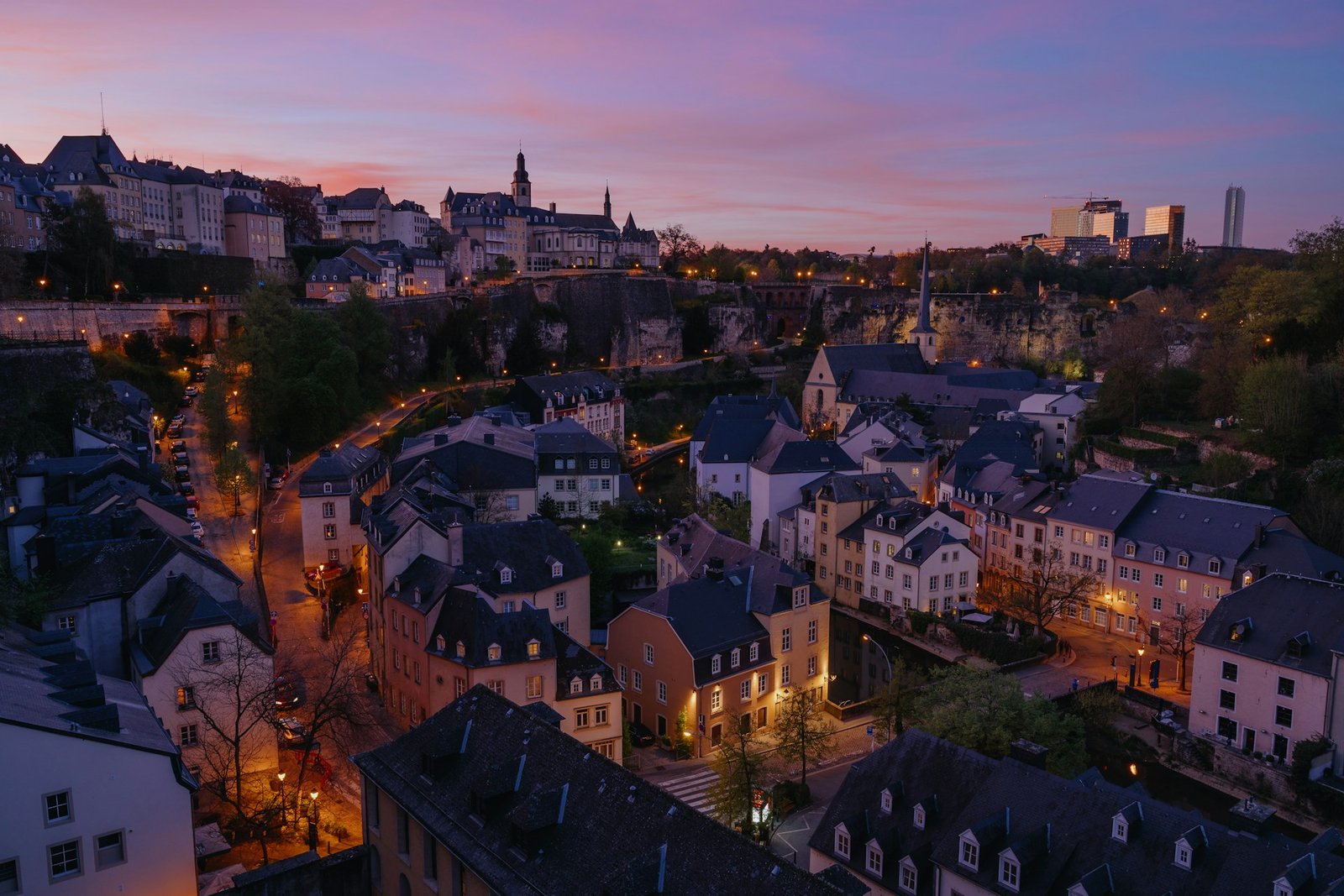
Since we had limited time, we didn’t try to cover every attraction. Instead, we wandered through parts of the beautiful UNESCO-listed Old Town, admired the Grand Ducal Palace from the outside, crossed the iconic Adolphe Bridge and spent time around the charming Grund district. A walk along Chemin de la Corniche, often called Europe’s Most Beautiful Balcony, offered spectacular views over the old city and its valleys.
One thing that surprised me was discovering that Luxembourg isn’t just one of the world’s wealthiest countries on a per capita basis. It is equally rich in history, culture and heritage. Behind its modern financial reputation lies a country of medieval fortifications, ancient streets, castles and centuries of European history. It feels elegant without trying to impress.
The drive itself was another highlight. Luxembourg’s forests, rolling hills and quiet country roads make it one of Europe’s most underrated road-trip destinations. Even if you aren’t visiting specific attractions, simply driving through the countryside is an experience in itself.
If you have more time than we did, I’d also recommend must-do places in Luxembourg:
- Bock Casemates – Luxembourg’s famous underground fortress tunnels (UNESCO).
- Vianden Castle – One of Europe’s finest and best-preserved medieval castles.
- Müllerthal Region – Known as Little Switzerland for its dramatic rock formations and hiking trails.
- Ardennes – Perfect for scenic drives through forests, rivers and picturesque villages.
Before leaving Luxembourg for Switzerland, don’t miss trying a few local favourites. We enjoyed a relaxed café breakfast and in lunch Quetschentaart (plum tart) and Luxembourg’s excellent local wines and Crémant sparkling wine. But if you’re spending longer, look out for Judd mat Gaardebounen (smoked pork with broad beans), Gromperekichelcher (crispy potato fritters) and Bouneschlupp (green bean soup).
With warm memories replacing a very cold night, we pointed the camper towards Switzerland. Within a short drive, we crossed yet another invisible European border, leaving one beautiful country behind and beginning the next chapter of our road trip.
The Lost Mumbaikar Reflections
Travel rarely goes exactly as planned, and that’s precisely why I keep travelling.
Years later, we rarely remember the perfect hotel room, the comfortable bed or the smoothest day of the itinerary. Those moments are pleasant, but they quietly fade with time.
What stays with us are the unexpected chapters, the freezing camper in Luxembourg, the hunt for the right gas cylinder, the empty roads after every shop had closed, the silence of the forests, the stars above a sleeping country, and watching the first rays of sunrise after a sleepless night. At the time, they felt like problems. Today, they’re some of our favorite family memories.
Every road trip teaches something. Sometimes it’s patience. Sometimes preparation. Sometimes resilience. And sometimes it’s simply learning to smile when nothing is going according to plan.
If every journey unfolded exactly as expected, there would be very little to remember. It’s the wrong turns, the surprises, the breakdowns, the conversations with strangers and the unexpected detours that give a journey its character.
And in the end, stories not souvenirs are the greatest treasures we bring back from our travels.
Your Turn:
- Have you ever had a travel disaster that later became the story you tell everyone? I’d love to hear it.
Frequently Asked Questions (FAQ) on Luxembourg
1. Is Luxembourg worth visiting?
Absolutely. Despite being one of Europe’s smallest countries, Luxembourg offers medieval history, UNESCO World Heritage sites, scenic road trips, castles, forests, and one of the highest standards of living in the world.
2. How many days do you need in Luxembourg?
One to two days is enough to explore Luxembourg City, while three to four days allows time to visit Vianden Castle, the Müllerthal Region (Little Switzerland), and the beautiful Ardennes countryside.
3. What are the must-visit places in Luxembourg?
Don’t miss Luxembourg Old Town (UNESCO), Chemin de la Corniche, Grand Ducal Palace, Bock Casemates, Grund, Adolphe Bridge, Vianden Castle, and the Müllerthal Region.
4. Is Luxembourg a good destination for a road trip?
Yes. Luxembourg is one of Europe’s most underrated road-trip destinations, with excellent roads, dense forests, rolling hills, charming villages, and easy connections to France, Belgium, Germany, and Switzerland.
5. Can you drive from France to Luxembourg without border checks?
Yes. Both countries are part of the Schengen Area, so there are usually no immigration checkpoints. However, always carry your passport or identification as random checks can still occur.
6. What food should you try in Luxembourg?
Try Judd mat Gaardebounen (smoked pork with broad beans), Gromperekichelcher (potato fritters), Bouneschlupp (green bean soup), Quetschentaart (plum tart), and local Crémant sparkling wine.
7. Is Luxembourg expensive for tourists?
Luxembourg has a reputation for being expensive, but it offers accommodation, restaurants, and attractions across different budgets. Planning ahead makes it an affordable stop on a European road trip.
8. Is renting a camper van in Luxembourg a good idea?
Definitely. A camper van gives you the freedom to explore Luxembourg’s countryside and nearby countries at your own pace. Just make sure you understand the heating system, gas cylinders, and equipment before setting off—especially in winter.
9. What is the best time to visit Luxembourg?
Spring (April–June) and autumn (September–October) offer pleasant weather and beautiful scenery. Winter provides festive Christmas markets and a magical atmosphere, while summer is ideal for hiking and road trips.
10. Can Luxembourg be combined with other European countries?
Yes. Luxembourg is perfectly located for a multi-country itinerary. Many travellers combine it with France, Belgium, Germany, Switzerland, or even Liechtenstein, making it an excellent stop during a European road trip.
Leave a Reply