
Liechtenstein
The Tiny Country We Decided to Visit at the Last Minute
One of the greatest joys of road trips is that the best memories are often completely unplanned.
During our epic 2019 European road trip, just a few months before the world shut down because of COVID-19, we were driving from Innsbruck, Austria, towards Switzerland. Our original plan was to spend the night in Buchs, the charming Swiss border town that serves as one of the main gateways into eastern Switzerland.
However, Innsbruck hadn’t originally been part of our route.
We made the detour for one reason to visit the remarkable Court Church (Hofkirche), one of Austria’s most famous historical landmarks. Built in the 16th century, the church is renowned for the magnificent tomb of Emperor Maximilian I and its extraordinary collection of 28 larger-than-life bronze statues, popularly known as the Black Men (Schwarze Mander). Walking through its silent halls felt like stepping back into the Holy Roman Empire, and it quickly became one of the highlights of our drive through Austria.
By the time we finished exploring Innsbruck and the Hofkirche, it was already getting late. Buchs was still quite a drive away, and we realised we would be reaching Switzerland well after dark.
That was always the beauty of the way I travelled.
I never booked return flights months in advance, and I rarely reserved hotels until the very last moment. Every day was guided by curiosity rather than a fixed itinerary. Some of my best travel memories have come from decisions made only a few hours earlier.
As we drove towards the Austrian-Swiss border, Julius, who had been following our route on Google Maps, suddenly looked up and said,
“Dad, why don’t we stay one night in Vaduz?”
His suggestion caught all of us by surprise.
Vaduz, the capital of Liechtenstein, was only a short detour from our route. We had never planned to visit it, but that’s exactly why it sounded so appealing. Instead of simply driving past another country, why not spend a night there and let the boys experience one of the world’s smallest nations?
Within minutes, the plan had changed.
Instead of heading straight into Switzerland, we crossed into Liechtenstein; a country many travellers pass without ever stopping.
Sometimes, the best destinations aren’t the ones you’ve planned for months.
They’re the ones your children discover on the map just before sunset.
A Peaceful Morning in Liechtenstein
Our spontaneous decision to stay in Liechtenstein turned out to be one of the most memorable parts of our 2019 European road trip.
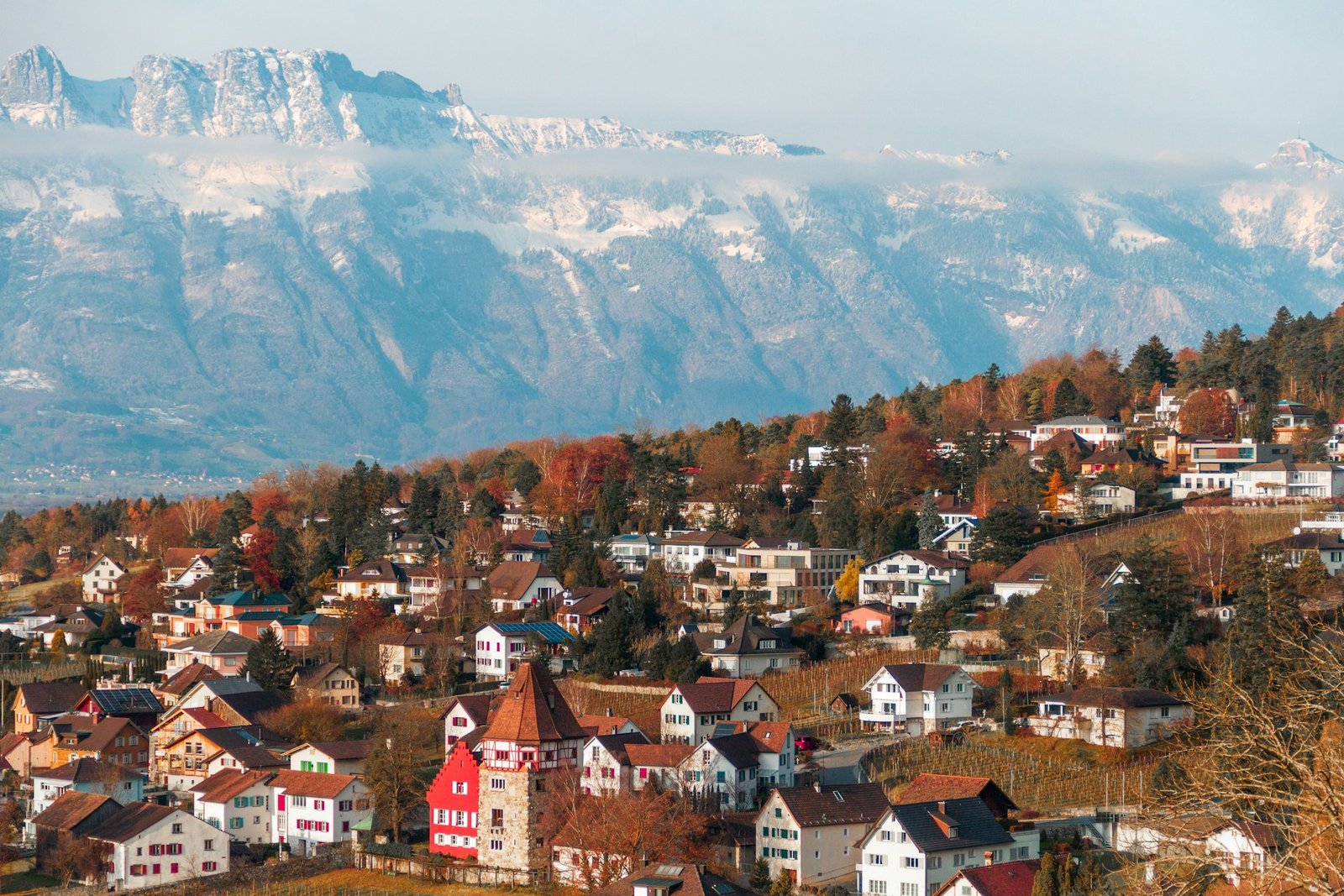
Instead of arriving late in Switzerland, we spent the night in a cosy Alpine eco-cottage just outside Vaduz. Surrounded by green meadows, distant mountains and complete silence, it was exactly the kind of place, I enjoy discovering during road trips.
The next morning was wonderfully lazy.
There was nowhere we had to be. I made myself a cup of coffee and sat outside the cottage while Julius and Jordan wandered around the property. The cool mountain air, one of those mornings where you simply don’t feel like checking the time.
The Lost Mumbaikar Says:
“Never underestimate a country because of its size. Liechtenstein proved that a few peaceful hours can leave memories that outlast weeks in far bigger destinations”.
Exploring Vaduz in Half a Day
One of the best things about Liechtenstein is that you don’t need several days to explore it. Despite being one of the smallest countries in Europe, its capital, Vaduz, is compact enough to discover comfortably in half a day, making it a perfect stop during a European road trip between Austria and Switzerland.
Our first stop was Vaduz Castle (Schloss Vaduz), the official residence of the Prince of Liechtenstein. Standing high above the capital, the medieval castle dominates the entire valley and is undoubtedly the country’s most recognisable landmark.
Unfortunately, I never got the drone shots, I had imagined.
A thick blanket of Alpine fog had settled over the mountains, with the castle appearing and disappearing every few minutes behind the clouds. Under those conditions, flying wasn’t worth the risk. At first I was disappointed, but after standing there for a while, I realised the mist gave the castle a magical atmosphere that a bright blue sky probably never could.
From there we simply walked through Städtle, Vaduz’s charming pedestrian centre. There wasn’t a long checklist of attractions to complete. We enjoyed browsing the small shops, walking past modern sculptures, stopping for coffee and soaking in the relaxed atmosphere. It was clean, peaceful and refreshingly free from the crowds you often find in Europe’s larger capitals.
We also visited the Liechtenstein National Museum, which tells the story of how this tiny principality grew into one of the world’s wealthiest countries. Considering the country’s size, its history is surprisingly fascinating.
A short walk brought us to the historic Red House (Rotes Haus), one of Vaduz’s oldest landmarks. Dating back to the 14th century, its distinctive red walls, vineyards and Alpine backdrop make it one of the most photographed buildings in Liechtenstein.
By lunchtime, we had explored most of Vaduz.
That is one of the things I love about small countries. You don’t spend your day rushing between attractions or sitting in traffic. You simply walk, slow down and enjoy the place at your own pace.
A few hours later, we crossed another border and continued our drive into Switzerland. On our way, I can hear the small talks between the boys. For kids, this was the first truly tiny country he had ever visited.
I smiled while listening.
Years earlier, I had already visited Vatican City, the world’s smallest country, and Monaco, another famous European microstate. Now it was my children’s turn to discover that not every country has to be large to leave a lasting impression.
Sometimes the smallest places tell the biggest stories.
Must do place in Liechtenstein, “Wine Cellars of the Prince of Liechtenstein”.
One place, I regret missing was the Wine Cellars of the Prince of Liechtenstein (Hofkellerei). Owned by the Princely Family, it is one of Europe’s smallest and most exclusive royal wineries, producing award-winning Pinot Noir and Chardonnay from vineyards beneath Vaduz Castle. It’s on eof the favorite wine of us and we were not aware of this fact. The cellar tours include a guided walk through the vineyard and winery, followed by wine tasting, making it one of the country’s most unique experiences.
Unfortunately, we were short on time and had already planned to continue into Switzerland. At the time, many of the guided winery experiences required advance booking for larger groups and took around 60–90 minutes, which simply didn’t fit into our schedule. Today, individuals and small groups can usually join the regular tasting sessions without prior reservation, while larger groups still need to book in advance.
If you’re planning to spend a day in Vaduz, I would definitely recommend setting aside time for this experience. Unlike many tourist attractions, this gives you a chance to experience a tradition that has been part of Liechtenstein for centuries and it’s one thing I wish I hadn’t skipped.
The Lost Mumbaikar’s Reflection
Liechtenstein wasn’t a destination we had spent months researching. In fact, it wasn’t even part of our itinerary until Julius spotted it on Google Maps and suggested we stay there for the night.
Looking back, that’s exactly why I remember it so fondly.
Travel has taught me that some of the best experiences don’t come from ticking off famous landmarks or following a carefully planned itinerary. They come from saying “Why not?” to an unexpected detour, trusting the road and giving yourself the freedom to change your plans.
People often ask me how I’ve managed to visit so many countries. The answer isn’t that I plan better than everyone else.
It’s that I leave room for surprises.
If I had rushed straight to Switzerland, Liechtenstein would simply have been another country outside my car window. Instead, it became another chapter in our family’s story; a peaceful evening in an Alpine cottage, a lazy morning with coffee overlooking the mountains, Julius teaching Jordan about one of the world’s tiniest countries, and another reminder that the size of a destination has nothing to do with the memories it leaves behind.
Sometimes the smallest countries leave the biggest impressions.
And that is exactly why I’ll always choose the road over the itinerary.
Your Turn:
- Have you ever changed your travel plans at the last minute and discovered a place that wasn’t on your itinerary?
I’d love to hear your story in the comments. Sometimes the best journeys begin with a simple “Why not?”
Frequently Asked Questions (FAQ) About Liechtenstein
1. Is Liechtenstein worth visiting?
Absolutely. Although it’s one of the world’s smallest countries, Liechtenstein offers stunning Alpine scenery, peaceful villages, Vaduz Castle, hiking trails and a relaxed atmosphere. It’s an ideal stop during a road trip through Switzerland or Austria.
2. How much time do you need in Liechtenstein?
A half-day to one full day is enough to explore Vaduz, visit its museums, admire Vaduz Castle and enjoy the Alpine surroundings. If you enjoy hiking or wine tasting, consider staying overnight.
3. Where is Liechtenstein located?
Liechtenstein is a small Alpine country located between Switzerland and Austria in Central Europe. It has no airport and is most commonly visited by road or train via Switzerland or Austria.
4. What is Liechtenstein famous for?
Liechtenstein is known for Vaduz Castle, the royal family, Alpine landscapes, one of Europe’s strongest economies, world-class financial services, hiking trails and the Prince’s royal winery.
5. Can you visit Liechtenstein on a day trip from Switzerland?
Yes. Vaduz is less than 30 minutes from Buchs, Switzerland, making it one of the easiest day trips from eastern Switzerland.
6. Do you need a passport to enter Liechtenstein?
Liechtenstein is part of the Schengen Area, so if you’re travelling within Schengen countries, there are usually no routine border checks. However, always carry your passport or identification while travelling.
7. What are the top things to do in Vaduz?
The most popular attractions include:
- Vaduz Castle
- Städtle (Old Town)
- Liechtenstein National Museum
- The Red House (Rotes Haus)
- Liechtenstein Postal Museum
- Prince of Liechtenstein Wine Cellars
- Hiking and panoramic viewpoints overlooking the Rhine Valley
8. Can you visit Vaduz Castle?
You can admire Vaduz Castle from outside and enjoy spectacular views over the capital. However, the castle is the official residence of the Prince of Liechtenstein and is not open to the public, except on special occasions.
9. Is Liechtenstein expensive to visit?
Liechtenstein has a high cost of living, similar to Switzerland. Accommodation and restaurants can be expensive, but since most visitors spend only a day or one night, it remains an affordable addition to a European road trip.
10. Is it worth staying overnight in Liechtenstein?
Yes. While many visitors come only for a few hours, staying overnight allows you to enjoy the peaceful Alpine atmosphere, quiet mornings, scenic walks and local cafés after the day-trippers have left.
11. What currency is used in Liechtenstein?
Liechtenstein uses the Swiss Franc (CHF), even though it is an independent country.
12. What is the best way to visit Liechtenstein?
The best way is by car during a European road trip. Driving from Austria or Switzerland makes it easy to include Liechtenstein without significantly changing your itinerary, and you’ll enjoy some of the most scenic Alpine roads in Europe.
Leave a Reply