
The 48 Laws of Power Helped Me In My Journey
TL;DR: For the impatient readers
When I first picked up The 48 Laws of Power by Robert Greene, I expected a book about manipulation, politics, and corporate survival. What I discovered instead was a fascinating study of human behaviour. While I don’t agree with every law, many of them unexpectedly reflected lessons I had already learned while travelling to nearly 100 countries, leading teams across the Middle East, raising two confident boys, and building The Lost Mumbaikar. This isn’t a review of the book, it’s my journey through the laws that quietly changed the way I travel, lead, and live. Real power isn’t controlling other people. It’s controlling your own fear.
The Lost Mumbaikar says:
“A passport gives you permission to cross borders. The mind gives you the courage to do it.”
The 48 Laws of Power Helped Me Travel, Lead Better and Raise Confident Children
When someone hears the title The 48 Laws of Power, the first reaction is usually the same.
“Isn’t that the book about manipulating people?”
That was exactly my reaction. The title sounded intimidating. Almost ruthless. It felt like a handbook for politicians, CEOs, or people playing office games.
For a long time, I avoided reading it. Then curiosity won.
As I turned each page, I realised something important. Robert Greene wasn’t simply writing about power. He was writing about human behaviour. Some laws were undeniably harsh and didn’t align with my values. Others, however, explained why certain people consistently succeed, why trust is difficult to earn, why reputation matters, why preparation beats talent, and why adaptability often wins over intelligence.
The biggest surprise came much later.
After travelling to nearly 100 countries, leading regional sales teams, working on multimillion-dollar projects, riding motorcycles through Romania, driving across Europe, getting stranded in Peru, exploring countries many people told me to avoid, and watching my children grow through travel, I realised I had unknowingly been practising many of these principles long before I ever read the book.
Travel had already taught me what Robert Greene later gave names to.
This isn’t a blog about becoming more powerful than others. It’s about becoming more capable than the person you were yesterday.
What Are the 48 Laws of Power?
Published in 1998, The 48 Laws of Power is one of the most influential and controversial books on strategy, influence, leadership, and human nature. Robert Greene studied the lives of kings, generals, philosophers, entrepreneurs, and political leaders, distilling recurring patterns into forty-eight laws.
Some readers see them as practical wisdom. Others see them as morally questionable.
I see them differently.
I don’t believe every law should be followed. In fact, several of them don’t fit the way I choose to live or travel. But understanding them is valuable because they explain how people think, make decisions, build influence, and respond to challenges.
Knowledge doesn’t force you to act.
It helps you recognise the game being played around you.
For anyone curious, here are all 48 Laws of Power:
- Never Outshine the Master
- Never Put Too Much Trust in Friends; Learn How to Use Enemies
- Conceal Your Intentions
- Always Say Less Than Necessary
- Guard Your Reputation With Your Life
- Court Attention at All Costs
- Get Others to Do the Work but Always Take the Credit
- Make Other People Come to You
- Win Through Actions, Never Through Argument
- Avoid the Unhappy and Unlucky
- Make People Depend on You
- Use Selective Honesty and Generosity
- Appeal to Self-Interest
- Pose as a Friend, Work as a Spy
- Crush Your Enemy Totally
- Use Absence to Increase Respect and Honour
- Cultivate an Air of Unpredictability
- Do Not Isolate Yourself
- Know Who You’re Dealing With
- Do Not Commit to Anyone
- Play a Sucker to Catch a Sucker
- Transform Weakness Into Power
- Concentrate Your Forces
- Play the Perfect Courtier
- Re-Create Yourself
- Keep Your Hands Clean
- Play on People’s Need to Believe
- Enter Action With Boldness
- Plan All the Way to the End
- Make Your Accomplishments Seem Effortless
- Control the Options
- Play to People’s Fantasies
- Discover People’s Weaknesses
- Act Like a King to Be Treated Like One
- Master the Art of Timing
- Ignore What You Cannot Have
- Create Compelling Spectacles
- Think as You Like but Behave Like Others
- Stir Up Waters to Catch Fish
- Despise the Free Lunch
- Avoid Stepping Into a Great Man’s Shoes
- Strike the Shepherd and the Sheep Will Scatter
- Work on the Hearts and Minds of Others
- Disarm With the Mirror Effect
- Preach Change, But Don’t Change Too Much at Once
- Never Appear Too Perfect
- Know When to Stop After Victory
- Assume Formlessness
While every law offers something to think about, only a handful genuinely changed the way I approached travel, leadership, parenting, and life.
Law 25 – Re-Create Yourself
If there is one law that defines my life, it is this one.
I wasn’t born a traveller. I wasn’t born a travel blogger. I wasn’t born a regional sales manager.
I reinvented myself, many times. Learnt the new trait and adapt in the competition.
I grew up in a small town, studied engineering, and began my career like thousands of others. My first dream wasn’t to visit one hundred countries; it was simply to build a career. Mumbai shaped me. It taught me resilience, independence, and how to survive in one of the world’s most competitive cities. Dubai gave me opportunities I never imagined, exposing me to international business and cultures from every corner of the globe.
Then, somewhere along the way, another version of me emerged; The Lost Mumbaikar.
Travel didn’t replace my career; it enriched it. Every journey taught me something I could never have learned in a classroom. Every passport stamp added a little more perspective. Looking back, I realise that reinvention isn’t a one-time event. It’s a lifelong habit.
Too many people wait for life to change. The happiest people decide to change themselves first.
Law 28 – Enter Action With Boldness
Fear has never completely disappeared from my travels. It simply stopped making decisions for me.
People often ask if I was scared riding a motorcycle through Romania’s Transfăgărășan Highway, surrounded by wild animals and remote mountain wilderness, or driving over 12,000 kilometres across Europe, or visiting El Salvador when headlines suggested it wasn’t safe.
Of course I was.
Boldness isn’t the absence of fear. It’s choosing not to let fear become your travel agent.
When I planned my European road trip, plenty of people questioned the idea. Nine countries. Twenty-two days. Winter roads. Thousands of kilometres.
It sounded exhausting. To me, it sounded unforgettable. Had I waited until I felt completely ready, that journey would never have happened. The same applies outside travel.
Some of the biggest career decisions I’ve made looked risky from the outside. Moving countries. Changing roles. Taking responsibility for larger regions. Yet every significant opportunity in my life began with a decision that felt slightly uncomfortable.
Growth rarely waits inside your comfort zone.
Law 29 – Plan All the Way to the End
People often tell me how spontaneous my travels look. The reality is completely different. The freedom you see is built on preparation you don’t.
A successful road trip isn’t created on the road. It’s created weeks before departure.
Routes.
Hotels.
Border crossings.
Weather forecasts.
Parking.
Fuel stops.
Driving regulations.
Alternative plans.
When our family drove more than 12,000 kilometres across Europe, it wasn’t luck that kept the journey smooth. It was preparation. Yet even the best plans cannot prevent every problem. On the 12th day of a 22-day journey, I lost my USD 4,000 Nikon camera.
In a moment, excitement turned into frustration. The trip suddenly felt different. Small inconveniences became bigger, and for a while, I even questioned whether I wanted to continue.
But preparation helped us recover. We adjusted, regrouped, and kept moving forward.
Ironically, careful planning creates the freedom to be spontaneous. Because when unexpected situations arise, and they always do, you already have options.
That lesson has followed me into corporate life as well. Every successful presentation, negotiation, or customer meeting is often won long before anyone enters the boardroom.
Preparation isn’t boring. It’s confidence in disguise.
Law 5 – Guard Your Reputation With Your Life
A lot of my readers and friends often ask me, “How was your experience in that country?” Sometimes they have already formed opinions. They tell me Indians are not respected, treated badly, or face discrimination in certain places.
My experience has been very different.
After travelling to nearly 100 countries, I can honestly say that I have rarely experienced racism in a meaningful way. Perhaps that is because I approach travel with a simple philosophy. I may be a paying customer, but I never carry an attitude of entitlement. I treat people with respect and genuine warmth.
My greatest strength as a traveller is neither my passport nor my experience. It is my smile.
That smile begins the moment, I step into a taxi on the way to the airport and stays with me until I return home. It is there when I meet airline staff, immigration officers, hotel receptionists, waiters, guides, shopkeepers, and complete strangers. Most people respond to kindness with kindness.
One of the greatest assets, I own isn’t my passport. It isn’t my camera. It isn’t even my travel experience. It’s my reputation.
Whether I’m meeting a customer in Dubai, staying with a family in the Czech countryside, or writing about a country that many people misunderstand, I know one thing: people remember how you make them feel.
Reputation isn’t built through marketing. It’s built through consistency.
Respect local customs.
Treat people kindly.
Listen more than you speak.
Leave places better than you found them.
Eventually, the world has a remarkable way of opening doors for people who carry a good reputation.
For nearly two decades in the corporate world, I have learned that customers don’t return because of presentations alone. They return because they trust you to keep your word.
A smile costs nothing, but it has earned me friendships, hospitality, and unforgettable experiences across the world.
Law 9 – Win Through Actions, Never Through Argument
One of the biggest lessons travel has taught me is that experiences are stronger than opinions.
When I told people I was travelling to El Salvador, almost every reaction was the same.
“Isn’t it dangerous?”
“Why would you go there?”
“Haven’t you seen the news?”
I could have spent hours debating statistics, crime rates and media headlines. Instead, I boarded the flight.
A week later, I returned with an entirely different story.
Beautiful beaches.
Friendly people.
A country changing faster than many outsiders realise. Travel reminded me of something Robert Greene wrote years ago. Arguments rarely change minds. Experiences do.
The same principle has shaped my professional life. Customers don’t buy because I claim our solutions are the best. They buy because they have seen successful installations, reliable support and consistent delivery over many years.
In travel and business, actions will always speak louder than opinions.
Law 22 – Transform Weakness Into Power
Some of my favourite travel stories began as disappointments.
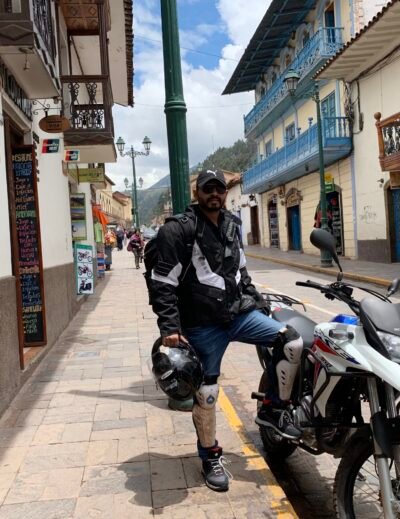
One of them happened in the Peruvaina Andes in 2019. Like thousands of travellers, I had carefully planned my journey to Machu Picchu, Peru. Then nature had other plans. Heavy rains triggered landslides. Roads closed. My itinerary collapsed.
At that moment I had two choices.
Complain about everything that had gone wrong.
Or accept that the journey had simply changed.
Choosing the second option led me to one of my most meaningful travel experiences. Instead of rushing to the next attraction, I experienced extraordinary kindness from local people who helped stranded travellers without expecting anything in return.
Years later, I barely remember the cancelled plans. I vividly remember the people. The same lesson applies to life. Not every setback is stopping you. Some are quietly redirecting you towards a better story.
Law 35 – Master the Art of Timing
Travel has taught me that timing is often more important than speed. Some destinations are magical at sunrise. Others come alive after sunset.
Some countries should be visited before the tourist crowds arrive. Others become unforgettable during Christmas or autumn.
The same principle has guided many of my life’s biggest decisions.
Moving to Dubai. Buying home in Dubai after the COVID market slowdown. Starting The Lost Mumbaikar after years of travelling instead of trying to become an influencer overnight.
Good decisions made at the wrong time often produce poor results. Average decisions made at the right time can change your life.
Success isn’t always about moving faster. Sometimes it’s about knowing when to move.
Law 41 – Avoid Stepping Into a Great Man’s Shoes
When I started writing about travel, I made one promise to myself. I would never try to become someone else.
Social media is full of people chasing the same photographs, copying the same captions, and following the same trends. Sometimes I see someone visit a country for a few days, barely step beyond the tourist trail, and then return home presenting themselves as a travel expert.
I remember during the COVID period when many influencers shared travel stories and experiences online. Some had enormous followings and tremendous influence on social media. Yet when I listened closely, many of those experiences felt manufactured rather than lived. The travel looked good on camera, but it lacked depth and authenticity. A few years later, many of those voices have disappeared, lost in the endless cycle of trends.
That was never my journey.
I wasn’t interested in creating another travel page. I wanted to create The Lost Mumbaikar.
A place where readers could experience countries through real stories rather than perfect itineraries.
That’s why you’ll read about getting lost on Charles Bridge in Prague during Christamas, a Czech rental company laughing when I told them about my planned 12,000-kilometre European road trip, landslides that forced me to turn back in Peru, strangers helping me in Georgia, or sharing dinner with a local family in a small Czech village.
Those moments aren’t always glamorous. They don’t always make the perfect Instagram photograph. But they are real.
And in a world increasingly driven by algorithms, filters, and carefully curated images, real stories still matter. Authenticity builds trust. It attracts the right people. It creates connections that last longer than likes, followers, or viral posts.
Trends come and go. Authenticity endures.
That lesson applies not only to travel, but also to business, relationships, and life itself. The most successful people I have met were rarely the ones trying to impress everyone. They were the ones comfortable being themselves.
The world already has copies. What it needs is the original version of you.
Law 43 – Work on the Hearts and Minds of Others
Ask someone what they remember from a holiday ten years ago. Very few will tell you the museum opening hours, the ticket price, or the exact route they followed.
They’ll tell you about the people they met, the unexpected kindness, the funny mistake, or the emotional moment that stayed with them long after the journey ended.
Stories connect where facts cannot.
When I write about the Czech Republic, I don’t only describe Charles Bridge. I write about the few terrifying minutes when Jordan got lost in the crowd and the relief we felt when we found him.
When I write about Finland in Winter, I don’t only describe the Northern Lights. I remember standing beneath them with my family after a costly accident in a parking lot had briefly threatened to overshadow the trip. The aurora became more than a natural phenomenon. It became a reminder that difficult moments often make the beautiful ones even more meaningful.
When I write about Peru, I don’t only mention Machu Picchu. I remember the local family who helped me when landslides disrupted my plans and reminded me that human kindness often becomes the most valuable souvenir of all.
People rarely remember information. They remember emotion.
People may forget what you told them, but they rarely forget how you made them feel.
The same principle applies in business.
Customers rarely remember every technical detail of a proposal or presentation. What they remember is how you made them feel. Did you understand their problem? Did you listen? Did you genuinely try to help?
For nearly two decades in business, I have followed a simple philosophy: don’t focus on selling; focus on solving.
When customers feel that you understand their challenges and are committed to helping them succeed, the conversation changes. They no longer feel they are being sold to. Instead, they feel confident they are making the right decision.
That approach has helped me build long-term relationships with customers across different countries and industries. Many became repeat customers, trusted partners, and even friends.
Whether in travel, business, or life, people connect with stories because stories are about people.
Facts inform. Stories inspire. Emotions endure.
Law 48 – Assume Formlessness
If I had to choose one principle that perfectly describes travel, it would be this one.
Robert Greene compares successful people to water. Water has no fixed shape. It adapts to whatever stands in its way.
Travel rewards exactly the same quality.
Flights get delayed.
Roads close.
Weather changes.
Borders become unpredictable.
The traveller who insists everything must go according to plan often spends the holiday frustrated. The traveller who adapts discovers experiences no itinerary could have planned.
I learned this lesson many times on the road.
One of the most memorable examples happened while driving through Bosnia and Herzegovina on the route between Budva and Sarajevo. Somewhere in the remote mountains near the Foča region, my car broke down on a quiet stretch of road surrounded by forests.
At first, it felt like a disaster.
But while waiting for the vehicle to be repaired, I met two backpackers from Poland. We started talking, and they shared stories about their country, its history, cities, culture, and hidden destinations. Until that day, Poland had never been high on my travel list.
That unexpected roadside conversation changed that completely. Years later, Poland became one of the countries I was grateful to have visited. Had the car not broken down, that conversation would never have happened. What looked like a problem became a doorway to a future adventure.
Some of the greatest memories of my life happened because things didn’t go according to plan. Looking back, I realise the journey wasn’t testing my itinerary.
It was testing my attitude. The same lesson applies in business.
When I started my career, I would often travel long distances to meet customers, only to discover that an appointment had been cancelled at the last minute. Initially, it was frustrating.
So instead of leaving disappointed, I would try to meet another colleague or department. Even when I lost an order, I continued visiting the customer.
Over time, customers realised that I wasn’t selfish or interested only when there was business to win. I genuinely valued the relationship.
Many opportunities came back later because they remembered that I stayed engaged even after losing the deal.
That should be the attitude of every salesperson.
Anyone can visit a customer when there is an order on the table. The real professionals are the ones who continue showing up after the order is lost.
That mindset became one of the most valuable assets of my career.
Sometimes the roadblock is not stopping your journey. It’s redirecting you to a better one.
For Everyone Who Dreams of Travelling But Hasn’t Taken the First Step.
If there is one thing I hope you take away from this blog, it isn’t Robert Greene’s laws. It isn’t the number of countries, I have visited. It isn’t the stories of road trips, mountains or border crossings.
If you look closely at many of the travel movies, whether based on real events or fiction. The protagonists are rarely extraordinary people. They are ordinary individuals carrying doubts, fears, insecurities, and unanswered questions. What transforms them is not talent or luck; it is the journey itself.
I receive messages almost every week from people who say they dream of travelling alone, taking a road trip, or exploring a country they’ve always wanted to visit. Almost every message ends the same way.
“Maybe one day.”
“I’m not confident enough.”
“I’m scared of travelling alone.”
“What if something goes wrong?”
Whenever I read those words, I smile because I know exactly how they feel. The biggest myth about travel is that experienced travellers are fearless.
We aren’t.
I have travelled to nearly 100 countries, ridden a motorcycle through Europe and South America. I found myself stranded because of landslides in Peru, car break down in Serbia or Georgia and visited Panama or El Salvador many people warned me not to visit. Yet before almost every new adventure, there is still a small voice in my head asking, “What if this doesn’t go as planned?” Which I mentioned in this blog of “Why Too Much Knowledge Makes Us Overthink. The Dunning–Kruger Effect”.
The difference isn’t that experienced travellers don’t feel fear. The difference is that they no longer allow fear to make their decisions.
Confidence is never packed into your suitcase before you leave home. It quietly grows with every journey you complete. It begins with your first international flight, your first conversation with a stranger in another country, your first meal where you cannot read the menu, your first wrong turn, your first problem that you solve without anyone else’s help.
Each experience adds another layer of belief in yourself.
Slowly, almost without noticing, airports stop feeling intimidating. Different languages become opportunities instead of obstacles. Delayed flights, missed trains and unexpected detours stop feeling like disasters because you know, from experience, that you’ll find a solution.
Travel changes something much deeper than your passport. It changes the way you think.
It teaches you to stay calm when plans fall apart, to trust your instincts, to adapt when life takes an unexpected turn and to realise that most of the limits you believed existed were created inside your own mind.
That confidence doesn’t stay at the airport when you return home. It walks into your workplace. It sits beside you during important meetings. It helps you make difficult decisions.
It makes you a better parent because your children learn confidence by watching yours. It gives you the courage to take opportunities that once felt impossible.
Looking back, I don’t believe travelling made me brave. I believe travelling showed me that I had been braver than I ever realised.
So, if you’re waiting for the perfect time, the perfect budget, or the perfect amount of confidence before booking your first trip, let me share one lesson that travelling to nearly 100 countries has taught me: the perfect moment never arrives. You don’t find confidence before you travel, you build it because you travel..
The first step creates the confidence. The confidence creates the next journey. And before you know it, the person who once hesitated to book a ticket is encouraging someone else to explore the world.
These are not just travel lessons. They are life lessons.
Robert Greene’s laws are often associated with power, influence, and success. Travel helped me see them differently.
When fear no longer controls your decisions, when setbacks no longer define your future, and when uncertainty becomes an opportunity rather than an obstacle, you discover a level of confidence that no title, position, or bank account can provide.
That is the greatest gift travel has given me. And it all began with taking the first step.
Your Turn
Have you read The 48 Laws of Power?
- Which law do you believe applies most to your own life?
- Or has travel taught you a lesson that no book ever could?

Leave a Reply