
Kosovo
The Border I Waited Four Years to Cross
TL;DR for the Impatient Traveller
Kosovo wasn’t originally part of my Balkan road trip. In 2019, I had to skip it because my Serbian rental car company warned me about cross-border insurance issues and the ongoing Serbia–Kosovo tensions. Four years later, I finally crossed the border with my family and it turned out to be one of the biggest surprises of our journey.
I found a modern, welcoming country with friendly people, scenic mountain roads, authentic roadside food and one of the most breathtaking sunsets I’ve seen in more than 90 countries.
If you’re planning a Balkan road trip, don’t overlook Kosovo. It may not have Europe’s biggest tourist attractions, but it offers something even more valuable; authentic experiences, genuine hospitality and a powerful reminder that the best journeys often begin where stereotypes end.
The Lost Mumbaikar Says:
“The greatest lesson travel has taught me is this: don’t judge a country by yesterday’s headlines. Every nation has wounds, but it is the strength, hope and resilience of its people that write tomorrow’s story”.
My Road Trip Through Europe’s Youngest Country
Most travellers planning a Balkan road trip dream of Croatia’s coastline, Montenegro’s Bay of Kotor or Bosnia’s famous bridge in Mostar.
Very few place Kosovo on their itinerary.
I did.
Not because it was Europe’s youngest country. Not because it appeared on any “must-visit” travel list. But because it was a country that had spent decades making headlines for conflict rather than tourism.
Growing up, nearly every news story about Kosovo seemed to revolve around war, ethnic divisions or political disputes with neighbouring Serbia. Television showed burning barricades, military convoys, NATO peacekeepers and tense border crossings. Travel forums often described it as a place with little to see, while some travellers questioned whether it was even worth visiting.
To many outsiders, Kosovo was defined by its past. To me, that was exactly why I wanted to understand it.
I’ve always believed that every country has two stories. One is told by history books and headlines. The other is written every day by ordinary people who go to work, raise families and quietly build a better future. Travel has taught me that the second story is often the one worth discovering.
Kosovo’s modern history is shaped by the breakup of Yugoslavia and the Kosovo War of 1998–1999. After years under UN administration, it declared independence in 2008. Today, more than 100 countries recognise Kosovo as an independent nation, while Serbia still considers it part of its own territory.
Over the past decade, Kosovo has occasionally returned to the headlines because of border disputes, licence plate disagreements and political tensions. Yet those moments represent only a fraction of daily life. Like people everywhere, most Kosovars simply want peace, opportunity and a better future for their families.
That is why Kosovo had remained on my bucket list for years. I wanted to see the country beyond the headlines and understand the people behind the politics.
The Kosovo Trip That Never Happened
Back in 2019, I was on one of my favourite solo road trips through the Balkans, driving across Serbia, Bosnia and Montenegro. As someone fascinated by history, I had planned to include Kosovo as well.
But that part of the journey never happened.
When I collected my rental car in Serbia, the company strongly advised me not to drive into Kosovo. They explained that because Serbia does not recognise Kosovo’s independence, taking a Serbian-registered rental car across the border could create insurance and administrative complications. If the vehicle was damaged, stolen or involved in an accident inside Kosovo, I would be fully responsible for the costs.
At the time, I wasn’t willing to take that risk.
The licence plate issue has long been one of the visible symbols of the dispute between Serbia and Kosovo. Over the years, disagreements over vehicle registration plates have repeatedly triggered border tensions, temporary roadblocks and political stand-offs, reminding travellers that the relationship between the two neighbours remains complex. Although agreements have eased some of these practical issues, they were still a genuine concern for rental companies when I travelled in 2019.
So, with some disappointment, I removed Kosovo from my itinerary and promised myself I would return another day.
Sometimes travel isn’t about forcing a destination into your plans.
Sometimes it’s about respecting the circumstances, waiting patiently and trusting that the road will eventually lead you there.
Four years later, it finally did.
Finally Visiting Kosovo
In 2023, while travelling through the Balkans with my family, I finally got the opportunity to visit Kosovo.
This wasn’t a dedicated Kosovo trip. We were driving across the region, and Kosovo naturally lay along our route. The border crossing from Albania into Kosovo was surprisingly smooth and efficient. What I remember most wasn’t the immigration process itself, but the excitement on the faces of the immigration officers when they saw our Indian passports. They warmly asked my sons what had brought us to Kosovo, and Julius, who had read quite a bit about the country’s history before the trip, happily shared what he knew. The officers smiled, clearly pleased that visitors from so far away had chosen to explore their country.
As we continued our drive, the scenery became even more captivating. Winding mountain roads, lush valleys and the peaceful silence of the countryside made the journey feel almost surreal. There was something special about finally crossing into a country I had wanted to visit for years. Sometimes, the road to a destination becomes just as memorable as the destination itself.
Rather than simply passing through, we spent a few hours exploring the country and its capital, Pristina, before continuing our journey. On our return, we crossed Kosovo once again, giving me another chance to appreciate this country that had waited patiently on my bucket list.
Sometimes, you don’t need days to understand a place but a few meaningful hours are enough.
The first thing that surprised me was how modern and energetic Pristina felt. Instead of a city trapped in its past, I found busy cafés, wide boulevards, colourful public spaces and a youthful atmosphere. Kosovo has one of the youngest populations in Europe, and that optimism is visible everywhere. The people I met were welcoming, proud of their country and eager to look towards the future rather than dwell on the past.
One interesting thing, I discovered during my visit was the connection to Dua Lipa. Like many people, I knew her as a British-Albanian pop star. It was only while I was in Kosovo that I learned her family is originally from Pristina, and she proudly identifies with her Kosovar Albanian roots. Through the Sunny Hill Festival and her continued support, Dua Lipa has helped put Kosovo on the global map. But Julius and I didn’t need her recommendation—Kosovo had been on our travel list long before we knew about that connection.
That perfectly summed up my own experience. History explains how Kosovo came into existence, but travel showed me something far more important; a young nation full of hope, resilience and people determined to write the next chapter of their story. Sometimes, the places the world misunderstands the most become the ones that leave the strongest impression.
A Road, A Sunset and the Simple Joys of Kosovo
We didn’t plan to spend hours exploring Kosovo. Our destination for the day was North Macedonia, and another border crossing still awaited us before nightfall. So instead of sitting in a restaurant, we did what every good road trip teaches you to do—stop where the locals stop.
At a small roadside stall, we picked up fresh local snacks, warm pastries, seasonal fruits and cold drinks before continuing our drive. It reminded me so much of India’s highways, where some of the best travel memories are created not in fancy restaurants but at humble roadside stops filled with simple food and genuine smiles.
As we drove deeper into Kosovo, the scenery became increasingly spectacular. Snow-capped mountains framed the horizon while rolling green valleys stretched endlessly before us. Then came a sunset that completely caught us by surprise.
Golden light poured across the landscape, slowly giving way to brilliant shades of orange, pink and deep purple as twilight settled over the mountains. We found ourselves slowing down, pulling over whenever we could, simply to absorb the view while munching on our roadside snacks. There were no tourist crowds, no famous viewpoint, no ticket office; just an open road, my family, and one of the most breathtaking sunsets, I have witnessed in more than 90 countries.
Moments like these remind me why I will always choose a road trip over a rushed itinerary. Sometimes the greatest travel experiences aren’t found at famous landmarks. They’re discovered on an ordinary road, with local food in your hand, mountains in the distance and a sunset you never saw coming.
Kosovo’s Passport Made Me Think
Long after leaving Kosovo, one thought stayed with me.
Its passport.
Kosovo declared independence in 2008, making it one of Europe’s youngest countries. Yet in 2024, the Kosovo passport achieved a major milestone when its citizens gained visa-free travel to the Schengen Area. For a nation that spent years rebuilding after conflict, it was a remarkable achievement.
The more I learned about Kosovo, the more impressed I became. Despite a population of only 1.6 million people and a GDP of around US$12.5 billion, Kosovo continues to punch well above its weight. The country has given the world global stars like Dua Lipa and Rita Ora, while judoka Majlinda Kelmendi won Kosovo’s first-ever Olympic gold medal. Since making its Olympic debut at Rio 2016, Kosovo has won five Olympic medals, including three gold medals in judo, an extraordinary achievement for such a young nation.
As an Indian traveller, I couldn’t help reflecting on the contrast.
Every international trip with an Indian passport still involves visa applications, financial documents, hotel bookings and anxious waiting for approvals. Meanwhile, Kosovo that many people still associate with conflict rather than tourism has steadily improved its global standing through diplomacy, sporting excellence and international engagement.
This isn’t about comparing India and Kosovo.
India is one of the world’s oldest civilizations, home to more than 1.4 billion people, incredible talent and one of the fastest-growing major economies. Kosovo is a small nation still defining its place in the world.
The lesson is much bigger.
Progress isn’t measured by the size of a country. It’s measured by vision, resilience and consistency. Passport strength, Olympic success and international reputation are not built overnight. They are earned over years through stable institutions, global cooperation, investment in people and the determination to keep moving forward despite difficult beginnings.
Standing at the Kosovo border, I wasn’t thinking about rankings alone.
I was thinking about potential.
If a country that declared independence only in 2008 can strengthen its passport, produce Olympic champions and build a respected international identity within a generation, imagine what countries with far greater resources can achieve when they combine talent with long-term vision.
That may have been my biggest takeaway from travelling through Kosovo. Sometimes, the smallest countries leave behind the biggest lessons.
I have written a detailed blog on the global ranking of the Indian passport, examining how its position has changed over the years, why other countries have progressed faster, and the factors that have affected India’s passport strength.
Is Kosovo Worth Visiting? My Honest Verdict
Absolutely.
If you’re planning a Balkan road trip, don’t make the mistake of driving past Kosovo. Whether you’re travelling from Albania, North Macedonia, Montenegro or even Serbia (while understanding current border and rental-car considerations), Kosovo is one of the region’s most underrated destinations.
In just a few hours, I experienced a country that challenged everything I thought I knew. Modern cities, friendly locals, spectacular mountain scenery, authentic roadside food, fascinating history and one of the most beautiful sunsets I’ve ever witnessed made Kosovo far more memorable than I expected.
What makes Kosovo tourism special isn’t famous landmarks or luxury resorts. It’s authenticity. This is a young nation proudly writing its own future while respecting its past. Instead of crowds and commercialisation, you’ll find genuine hospitality, vibrant café culture, scenic drives and a country eager to welcome visitors.
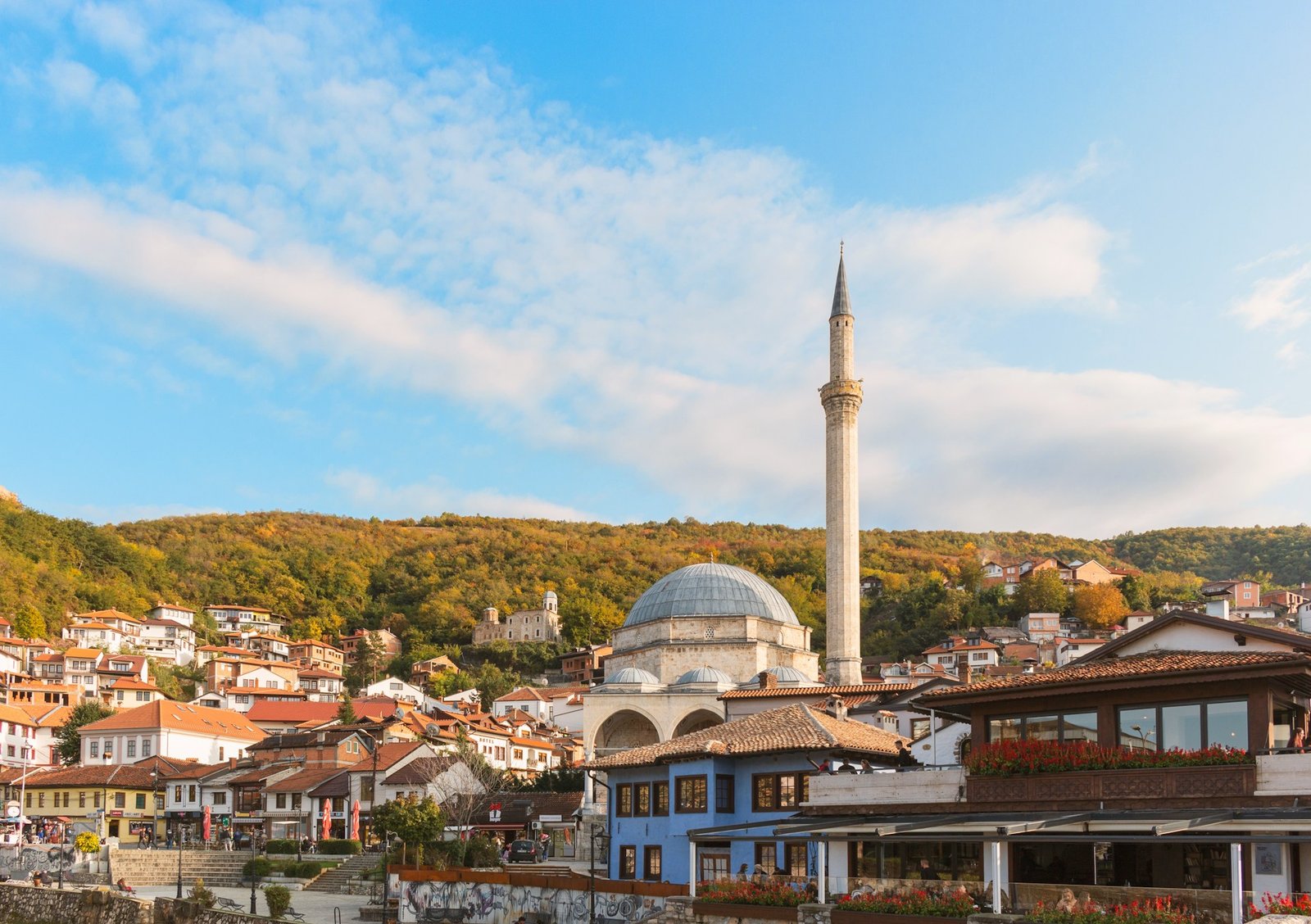
If you have one day in Kosovo, don’t miss Pristina, where you can visit the iconic NEWBORN Monument, stroll along Mother Teresa Boulevard, enjoy local cafés and experience the energy of one of Europe’s youngest capitals. If you have more time, explore the beautiful Ottoman streets of Prizren, hike through Rugova Canyon, visit the UNESCO-listed Gračanica Monastery, relax in Germia Park, or discover the stunning Mirusha Waterfalls.
Another advantage is accessibility. Pristina International Airport is only about 20 minutes from the city centre, making Kosovo an excellent stopover or weekend destination while exploring the Balkans.
For me, Kosovo wasn’t just another country added to my travel map. It was a reminder that some of the world’s most rewarding destinations are the ones people know the least about. If you’re looking for history, culture, mountain landscapes, authentic Balkan experiences and stories beyond the headlines, Kosovo is absolutely worth visiting. Sometimes, the countries that surprise you the most become the ones you remember the longest.
Your Turn
- Have you ever visited a country that completely changed your perception?
- Or is there a destination you’ve avoided because of what you’ve seen in the news?
I’d love to hear your thoughts. Share your experiences in the comments.
Frequently Asked Questions (FAQs) About Kosovo
1. Is Kosovo worth visiting?
Yes. Kosovo is one of the most underrated destinations in the Balkans, offering fascinating history, scenic mountain drives, vibrant cities like Pristina and Prizren, friendly locals and authentic cultural experiences without the crowds found in many European destinations.
2. Is Kosovo safe for tourists?
In my experience, yes. I found Kosovo to be welcoming, peaceful and easy to explore by road. Like anywhere else, exercise normal travel precautions, but most visitors find the country safe for sightseeing and road trips.
3. What is Kosovo famous for?
Kosovo is known for its modern history, the Kosovo War, its declaration of independence in 2008, beautiful mountain landscapes, Ottoman-era towns like Prizren, the NEWBORN Monument in Pristina, and international personalities such as Dua Lipa, Rita Ora, and Olympic champion Majlinda Kelmendi.
4. Do Indians need a visa for Kosovo?
Yes. Indian passport holders generally require a visa to visit Kosovo. However, entry rules can vary depending on whether you hold a valid multiple-entry Schengen, UK or US visa or residence permit. Always check the latest requirements before travelling.
5. Can you drive from Albania to Kosovo?
Yes. Driving from Albania to Kosovo is straightforward, and the border crossing is generally smooth. If you’re renting a car, confirm with the rental company that cross-border travel into Kosovo is permitted and that your insurance remains valid.
6. What are the best places to visit in Kosovo?
Some of the top attractions include Pristina, Prizren, Rugova Canyon, Mirusha Waterfalls, Gračanica Monastery, Germia Park, and the iconic NEWBORN Monument.
7. How many days are enough for Kosovo?
One day is enough to explore Pristina, but 2–3 days allows you to experience Prizren, the Rugova Mountains and several of Kosovo’s natural and historical attractions.
8. Is Kosovo expensive to visit?
No. Kosovo is one of the most affordable countries in Europe. Accommodation, food, fuel and local transport are generally much cheaper than in Western Europe, making it an excellent destination for budget travellers and road trips.
9. What food should you try in Kosovo?
Don’t miss traditional Kosovo cuisine such as Flija, Qebapa, Burek, Tavë, fresh local bread, Balkan pastries and strong local coffee. The food reflects a blend of Albanian, Balkan and Ottoman influences.
Leave a Reply