How many countries should you visit? Should you travel by train or rent a car? Is three weeks enough for four countries? How much will a Europe road trip budget actually be? And if you’re visiting Europe for the first time, should you concentrate on famous cities or try to discover some of the quieter places in between?
After travelling through almost all of Europe, my answer has become surprisingly simple:
Don’t plan countries. Plan a route.
One of the main reasons I have been able to explore so much of Europe is that I rarely treated each European country as a separate holiday. Coming from Dubai, once I had paid for the international flight and reached Europe, I wanted to make that journey count.
So I studied maps, connected neighbouring countries, rented cars and drove.
In my earlier years, I sometimes squeezed far more countries into one European trip than I would recommend today. After all those kilometres, border crossings and hotel changes, I now believe three weeks and three or four well-connected countries is one of the best ways to experience Europe.
But before choosing your multi-country Europe road trip, there is a more important question:
Which Europe are you looking for?
Because the Europe I would recommend to someone visiting for the first time is very different from the Europe I look for today.
Why 3 Weeks in Europe Works So Well
If you’re travelling from Dubai, India or anywhere outside Europe, the international flight is already a major expense.
Whether you stay for seven days or 21 days, you still have to get there.
That’s one reason I have always preferred longer European journeys whenever work and life allowed.
Once you’re there, geography starts working in your favour.
Drive for a few hours and the language can change. The architecture changes. The food changes. The landscape changes.
And across much of the Schengen Area, crossing from one country into another can feel remarkably seamless.
Instead of thinking: France holiday. Switzerland holiday. Austria holiday.
Open the map and ask: Which European countries are best to combine in one trip?
Switzerlandconnects naturally with France, northern Italy and Austria. Germanyworks beautifully with Austria, Czech Republic and Hungary. Croatia can lead towards Slovenia, Bosnia & Herzegovina and Montenegro. Polandcan connect with Slovakia, Hungary and Romania. Denmark, Sweden, Norway and Finlandcan be combined though Ferry and plane small role.
The Lost Mumbaikar Says:
“A successful Europe road trip itinerary isn’t about collecting as many flags as possible, It’s about choosing countries that belong on the same road. Don’t count countries. Connect them”.
First-Time Europe or Repeat Traveller? This Changes Everything
After travelling extensively, it’s easy for someone like me to say:
Skip Paris.
Avoid the tourist attractions.
Find a hidden village.
But that isn’t always fair.
I’ve already seen those places.
You may not have. If you have dreamed for years about standing beneath the Eiffel Tower, go. If Switzerland is the Europe you’ve imagined since childhood, see it. If you want to ride a gondola through Venice, do it.
If the Colosseum has been on your bucket list for twenty years, don’t let an experienced traveller convince you that you’re somehow less adventurous for wanting to see it, “Your first Europe should contain the Europe you’ve dreamed about”.
That’s why, I believe there should be two very different approaches to planning vacation in Europe.
Europe Road Trip for First-Time Visitors
For someone’s first Europe road trip by car, I like a route broadly connecting:
France → Switzerland → Northern Italy → Austria → Germany
Within three weeks, this route gives you an extraordinary amount of the Europe most first-time travellers imagine.
For the first-time traveller section, we should embrace the checklist rather than fight it. On a first Europe trip, photographs in front of places they’ve known since childhood are part of the experience.
I would expand that passage like this:
Start in Paris and be a tourist without apology. See the Eiffel Tower, walk beside the Seine, visit the Louvre Museum and take that photograph in front of the glass pyramid. See the Arc de Triomphe, walk along the Champs-Élysées, explore Montmartre and visit the beautiful Sacré-Cœur Basilica overlooking Paris. If time permits, Notre-Dame Cathedral should also be on your list.
Then collect your rental car. I wouldn’t bother keeping one while staying in central Paris.
Drive towards Switzerland and give it time. This is probably one country where the scenery itself becomes your checklist. Explore Lucerne and Chapel Bridge, Interlaken, Lauterbrunnen, Grindelwald and the Jungfrau region. If experiencing the high Alps has always been part of your Switzerland dream, consider Jungfraujoch. This is the Switzerland many first-time visitors have imagined long before they arrive.
Then continue towards northern Italy.
Spend time around Lake Como before reaching Venice, where the Grand Canal, Rialto Bridge, St. Mark’s Square and St. Mark’s Basilica belong on a first-timer’s list. Take the gondola if you’ve always wanted to. There will be plenty of future trips to tell yourself it’s too touristy.
From Venice, you have a decision to make.
If Rome is one of your lifetime bucket-list destinations, I would seriously consider extending the Italian section and going south. See the Colosseum, Roman Forum, Trevi Fountain, Pantheon and Spanish Steps, and cross into Vatican City for St. Peter’s Basilica and the Vatican Museums/Sistine Chapel.
Yes, this makes the road trip longer. But this article is for someone experiencing Europe for the first time. If seeing the Colosseum has been a dream, I wouldn’t tell them to skip Rome merely to create a more mathematically perfect driving route.
If Rome isn’t essential, stay north and experience the Dolomites before crossing into Austria.
In Austria, combine scenery with the famous sights: Hallstatt, Salzburg’s Old Town and Mirabell Gardens, and Innsbruck surrounded by the Alps. If your route takes you through Vienna, the Schönbrunn Palace, St. Stephen’s Cathedral and historic centre deserve time too.
Finish around Munich and Bavaria. Explore Marienplatz, experience a traditional Bavarian beer hall and, if possible, make the trip to Neuschwanstein Castle another one of those places that looks almost exactly like the Europe many people imagined before they arrived.
And that is precisely the point of this itinerary.
Your first Europe is allowed to be about ticking boxes.
Eiffel Tower? Tick it.
Louvre? Tick it.
Swiss Alps? Tick it.
Venice gondola? Take the photograph.
Colosseum? Absolutely.
Vatican? Go.
Hallstatt? See it for yourself.
Neuschwanstein? Put it in the album.
Experienced travellers sometimes become slightly embarrassed by these checklists. I don’t think first-time travellers should be.
These aren’t merely tourist attractions. For many people, they are places they’ve seen in books, movies, postcards and photographs for most of their lives. Seeing them with your own eyes for the first time is part of what makes a first European trip special.
The road trip then gives you something extra.
Between those famous photographs, you’ll begin discovering the Europe that wasn’t on your checklist.
And perhaps, after a few more trips, those places will become the reason you return.
For many Indian travellers, Switzerland may already feel familiar even on the first visit. Yash Chopra’s films made the Swiss Alps, green meadows and beautiful villages part of our idea of Europe long before Instagram existed. And if you grew up watching Dilwale Dulhania Le Jayenge, somewhere between those mountains and train journeys, it is difficult not to remember Raj and Simran. I’ve even written a separate blog tracing some of the DDLJ filming locations in Switzerland for those who want to add a little Bollywood
What If You’ve Already Seen Europe’s Famous Places?
This is where the journey changes completely and this is where my own story with Europe really begins.
I still remember my first couple of trips. Europe was a collection of destinations connected by airports. I would visit one country, return to the airport, catch another flight, land somewhere else and start again. I remember flying through Germany, then Italy, then Belgium, back to Germany and eventually home to Dubai.
I was seeing Europe. But I wasn’t yet travelling through Europe.
Somewhere along the way, that changed.
Today, when I land at a European airport, I’m thinking about something completely different. My rental car or sometimes my bike is waiting for me. I collect the keys, put my luggage inside, connect the phone and leave the airport.
And for me, that is when Europe begins. No more airport departure boards telling me where I have to go next, the road does.
A country no longer ends because my flight is leaving. If I’m in Austria and Slovenia is a few hours away, the journey can simply continue. Italy can become Switzerland. Croatia can become Bosnia. Montenegro can lead me towards Albania. Germany can disappear into the Czech Republic, Poland or Austria without the journey ever really feeling like it stopped.
That simple change from flying around Europe to driving through Europe completely transformed the continent for me. It is also one of the biggest reasons, I eventually managed to explore almost all of Europe.
So if you’ve already done Paris, Switzerland, Rome, Venice, Amsterdam, Prague, Vienna or Barcelona, perhaps your next European holiday doesn’t need another collection of capital cities.
This is the stage where I would tell you to stop looking only at Europe’s airports and start looking at its roads.
Try Croatia → Bosnia & Herzegovina → Montenegro → Albania.
Or Slovenia → Croatia → Bosnia & Herzegovina → Montenegro.
Or head east through Poland → Slovakia → Hungary → Romania.
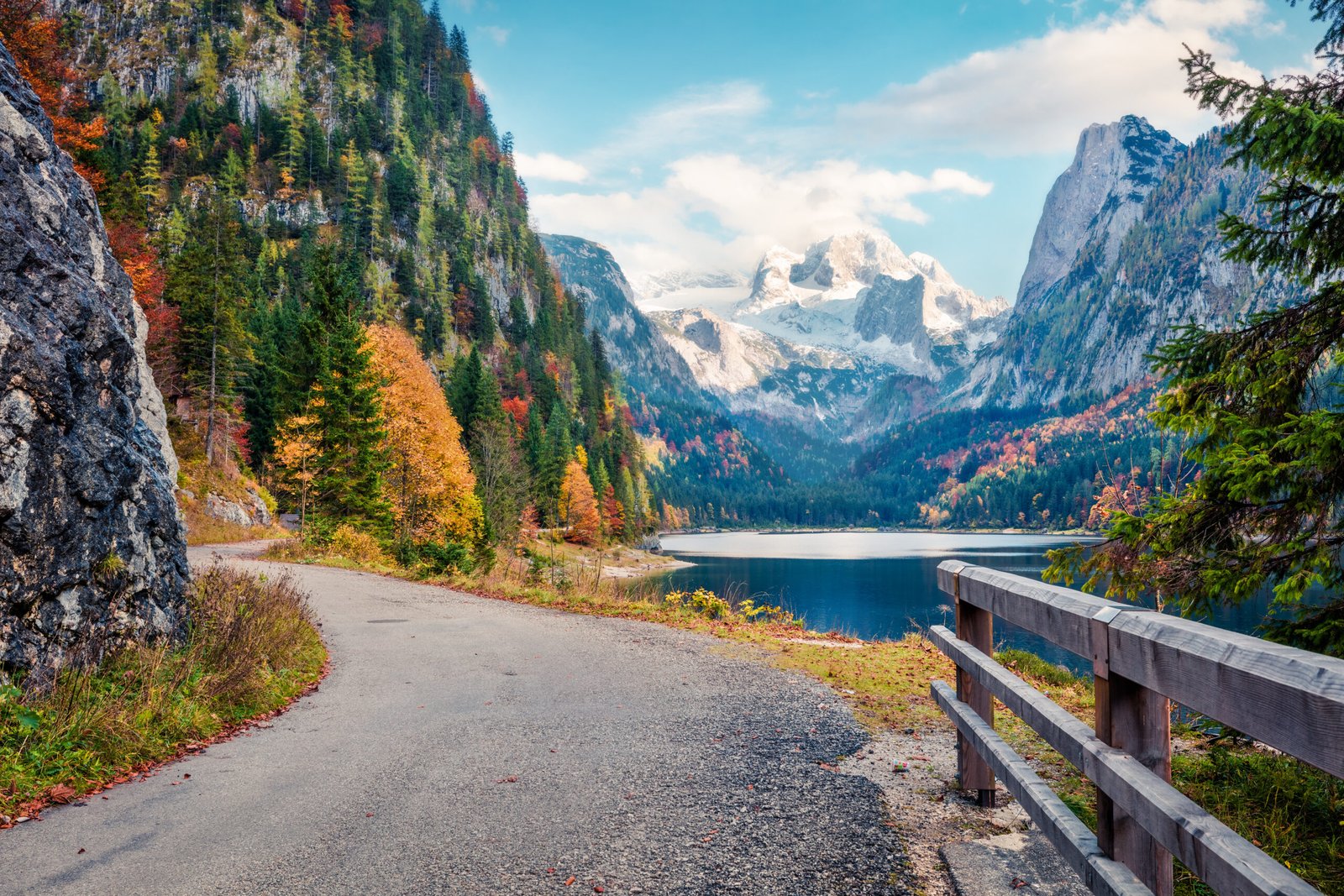
Drive Romania’s Transfăgărășan. Follow the mountains through Montenegro. Stop in a Bosnian village. Drive beside the Adriatic. Follow the Albanian coast. Stay somewhere whose name you had never heard until that morning.
At this stage of travelling, something else starts happening, the road itself becomes the attraction.
And my own travelling has evolved even further, particularly after Covid. Today, give me my car or bike, an empty road, mountains and somewhere peaceful to sleep, and I’m happy.
Julius and Jordan have grown into this style of travel too. They don’t need a famous attraction waiting every morning. Sometimes we deliberately choose accommodation in a silent village where there is almost nothing to “do.”
And strangely, those are often the places we remember. Recently, we were talking about one of our RV journeys through Germany. We had stopped somewhere isolated around the Black Forest.
There was no famous monument, no city, no sightseeing schedule. Just our RV, the forest and silence. We spotted a wild jackal near the RV. The following morning, we woke to the sound of birds. Years later, we were still talking about that night.
That is when you realise how much travelling has changed you.
On your first European trip, you may wake up excited because you’re going to see the Eiffel Tower. Years later, you may wake up somewhere in the Black Forest, hear nothing except birds outside your window and think: This is exactly where I wanted to be. Neither traveller is better than the other, they are simply at different stages of the journey.
I would never tell someone visiting Europe for the first time to choose my silent forest over their Eiffel Tower. Go and see the places you’ve dreamed about. Take the photographs. Tick the boxes, I did too. But once you’ve done that, there is another Europe waiting for you.
And perhaps this is the single biggest lesson, I can give you after exploring almost the entire continent: The day you stop seeing Europe as a collection of countries and start seeing it as one enormous road trip, Europe changes forever.
Land at the airport, collect the keys and drive. You may be surprised by how far that road eventually takes you. It certainly surprised me.
How Many Countries Should You Visit in Europe in 3 Weeks?
You can technically visit a lot of countries in three weeks, I certainly did on some of my earlier European road trips. When another border was only a few hours away, I often thought, why not? That curiosity is one of the reasons I eventually managed to explore almost all of Europe. But if these are countries you’re discovering for the first time, I would now recommend three or four countries, perhaps five when they connect naturally. Twenty-one days shouldn’t become a competition to collect seven passport stamps or photographs from seven capital cities. Give yourself enough time to see the famous attractions, taste the local food, walk around the cities and still have an afternoon when you can stop somewhere simply because it looks interesting. The beauty of Europe is that very different countries sit surprisingly close to one another, so choosing the right geographical combination gives you variety without spending your entire holiday driving.
For a first Europe road trip, France + Switzerland + Northern Italy + Austria + Germany gives you many of the classic European experiences in one journey from Paris and the Eiffel Tower to the Swiss Alps, Italian lakes and Venice, Austrian mountain towns and Bavaria. If spectacular scenery matters more and you’re comfortable with a higher budget, Switzerland + France + Italy + Austria is difficult to beat.
For travellers looking for something more adventurous and generally better value, Croatia + Bosnia & Herzegovina + Montenegro + Albania offers the Adriatic coast, mountains, historic towns and a completely different side of Europe. Slovenia + Croatia + Bosnia & Herzegovina + Montenegro is another beautiful combination if you want Alpine landscapes, lakes and the Adriatic.
For a more economical Central and Eastern European road trip, consider Poland + Slovakia + Hungary + Czech, where old European cities can be combined with the Tatra Mountains and extraordinary roads such as Romania’s Transfăgărășan to Romania and Bulgaria if you want to extend.
And then there is Scandinavia. Denmark + Norway + Sweden + Finland is almost a road-trip category of its own. It is certainly not the cheapest way to explore Europe, and the distances can be much greater, but the experience is completely different: Norwegian fjords, enormous empty landscapes, Swedish forests, Finnish Lapland, Arctic roads and, in the right season, the possibility of seeing the Northern Lights. This is where the journey itself can easily become more memorable than the city you were originally driving towards.
There are many other combinations, of course. Spain and Portugal can easily fill three weeks, while Belgium, the Netherlands, Luxembourg, northern France and western Germany can create a completely different compact European journey. The point isn’t that one route is perfect. Choose the part of Europe that excites you, look at what naturally surrounds it, and build outward from there. The common factor should always be geography rather than the number of flags you can add to your travel history.
The Lost Mumbaikar Reflections
There was a time when Europe meant names to me. Paris. Rome. Switzerland. Venice. Amsterdam. I wanted to see them because they were the Europe which I had known from photographs, movies and stories long before I ever reached there.
Then I travelled to Europe.
Again.
And again.
And somewhere along the way, those names stopped being the only reason I returned.
The roads became the reason. The mountains. The villages. The border crossings. The unexpected accommodation we found somewhere outside a city. The smaller road we took simply because it looked more interesting.
And sometimes, just the silence. Maybe that’s the natural evolution of a traveller. First, you travel to see the places you’ve heard about and then you travel to discover the places you haven’t.
And the way you spend money changes too, I’ve learned not to save money on the memories I came all the way to Europe to create.
If you have dreamed about going to Jungfraujoch for ten years, go. If your children want to see the Eiffel Tower, see it. If that gondola ride in Venice has been sitting on your wish list since you were young, take it. Spend on memories. Save on logistics.
Stay 20 minutes outside the famous town. Buy breakfast from a supermarket occasionally. Choose an apartment with a kitchen. Don’t pay three days of rental and city-centre parking for a car you don’t need while exploring Paris.
Then collect the car when the city is finished.
For me, the greatest value of travelling Europe by car was never simply whether it cost less than taking trains. It was all the places the train would never have taken us. The unexpected village, the roadside lake, the mountain road we hadn’t planned and the accommodation we found simply because we liked where we were. The car didn’t just change how we travelled through Europe; it changed the Europe we were able to see.
The car didn’t just change how we travelled through Europe; it changed the Europe we were able to see. And two things made that freedom possible: The Mindset for Travelling on Road and The Value of Schengen Visa, which allowed us to cross countries almost as easily as crossing cities.
Coming Up Next
Next, I’ll take these ideas further with two full-fledged road trip guides, depending on what kind of traveller you are:


Leave a Reply