Chapter 10: The Oman Beneath the Surface: Caves, Sinkholes and Underground Wonders
A Journey Through Oman’s Hidden Caves, Sinkholes and Underground World
After travelling through Oman so many times, I sometimes feel that the country reveals itself in layers. The first layer is easy to see: mountains, deserts, wadis, beaches and long empty roads. Then you begin exploring deeper and discover traditional villages, hidden coastlines and places you would never notice from the highway.
But there is another Oman that is literally beneath your feet.
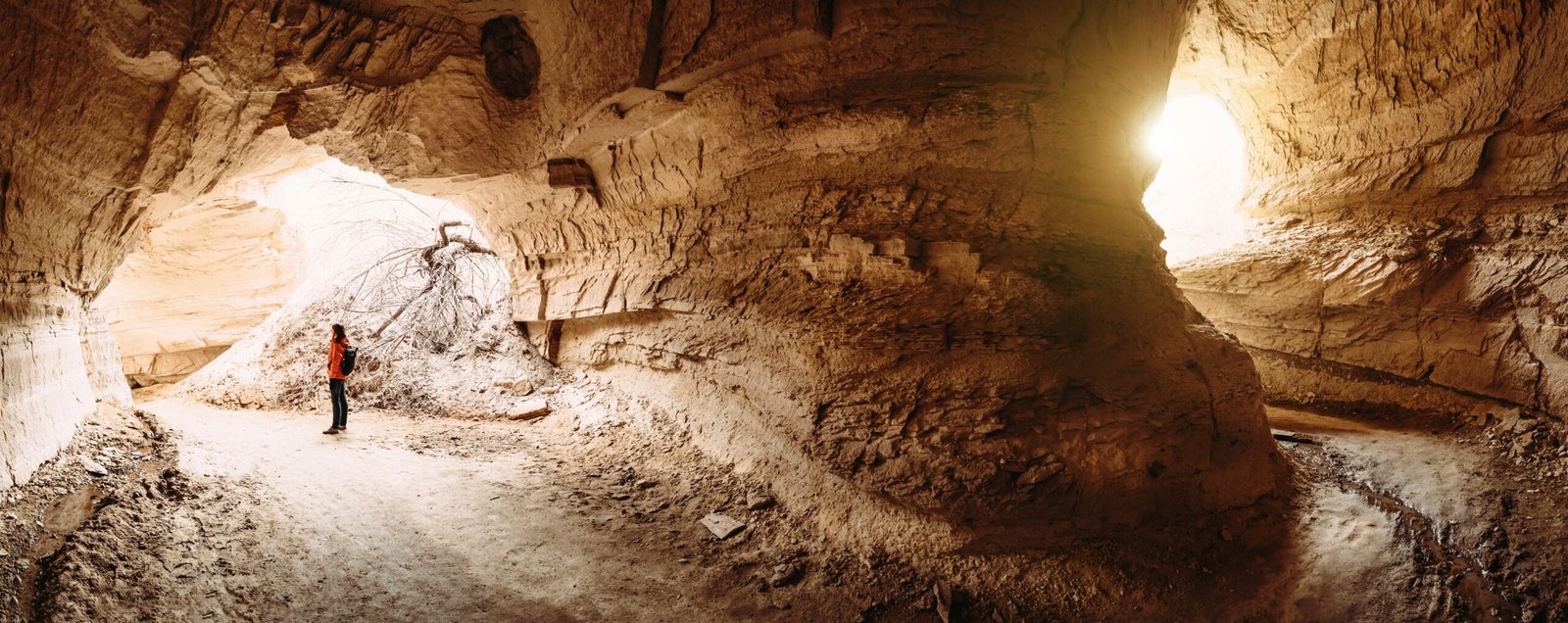
Oman’s mountains hide enormous caves, underground lakes, limestone chambers and sinkholes created by geological processes over millions of years. Some are easy family attractions that anyone can visit. Others are serious adventure destinations where you need specialist equipment, guides and permission.
That contrast is what makes the caves and sinkholes of Oman so interesting.
Oman is particularly fascinating geologically because parts of the country expose rocks associated with ancient oceanic crust and the Earth’s mantle. The official Al Hoota Cave site describes Oman as a remarkable destination for anyone interested in geology.
You don’t need to be a geologist to appreciate any of this, you simply need to look beneath the surface.
The Lost Mumbaikar Says:
“Some of Oman’s greatest landscapes aren’t on the horizon. They’re beneath your feet.”
Why Does Oman Have So Many Caves and Sinkholes?
When we look at Oman’s mountains today, they appear solid and permanent. In geological terms, however, water has been working on these landscapes for an incredibly long time.
Much of the cave landscape is associated with limestone. Rainwater and groundwater can slowly dissolve limestone along cracks and weaknesses in the rock. Over enormous periods of time, tiny openings can become passages, passages can become chambers and underground drainage systems can develop.
Inside caves, mineral-rich water dripping over thousands of years can create formations such as stalactites hanging from ceilings and stalagmites rising from the cave floor.
Sinkholes can form when underground cavities develop and the land above collapses or when soluble rock is gradually dissolved.
The result is a hidden landscape completely different from the Oman we see from our cars. And Oman has some spectacular examples.
1. Al Hoota Cave – The Best Cave in Oman for Families
If you’re exploring caves in Oman for the first time, start with Al Hoota Cave.
Located near Al Hamra at the foot of Jebel Shams, Al Hoota is one of Oman’s best-known caves and, importantly, one of the easiest for ordinary travellers to experience.
The cave system extends for approximately 4.5 kilometres, although only around 500 metres is normally accessible to visitors. It is estimated to be around two million years old.
Inside you find the things we imagine when we think about great limestone caves: stalactites, stalagmites and other formations created slowly over extraordinary periods of time. Al Hoota also contains an underground lake with blind cave fish. Oman’s official tourism material highlights the cave’s underground lake and distinctive cave life.
What I like about Al Hoota is that you don’t need to be a caver.
This makes it one of the best family-friendly caves in Oman and an easy addition to a normal Oman road trip.
Rather than travelling only for the cave, combine Al Hoota with Nizwa, Al Hamra, Misfat Al Abriyeen or Jebel Shams. That way, within the same journey you experience Oman’s history, traditional villages, mountains and what lies underneath them.
For travellers staying in Muscat, it works well as part of a longer Nizwa and Jebel Shams day trip or, even better, an overnight road trip.
2. Majlis Al Jinn – Oman’s Giant Underground Chamber
If Al Hoota represents the accessible side of Oman caves, Majlis Al Jinn represents the opposite.
Hidden beneath the Salmah Plateau in the Eastern Hajar Mountains, Majlis Al Jinn is an enormous underground chamber accessed through openings in its roof.
This isn’t somewhere you casually arrive wearing trainers after seeing a location on Instagram.
Oman’s official tourism material describes access involving a rappel of more than 150 metres and specifically notes that special permission is required for safety reasons.
That alone should tell you how seriously this cave needs to be treated.
Majlis Al Jinn is fascinating even if you never descend into it. The idea that such an enormous chamber exists underneath an apparently barren mountain plateau is exactly what this chapter is about.
You can drive across Oman for years looking at mountains without imagining the scale of the spaces hidden inside them.
For experienced cavers and adventure travellers, Majlis Al Jinn is one of the great caves of Oman. For everyone else, admire the geology and leave the technical exploration to properly equipped and authorised specialists.
Adventure doesn’t mean ignoring limits.
3. The Salmah Plateau Cave System – A Hidden World Inside the Mountains
Majlis Al Jinn isn’t the only underground wonder of the Salmah Plateau. Beneath the barren landscape of the Eastern Hajar Mountains lies an extensive network of caves, passages and chambers, some requiring descents of more than 100 metres.
This is serious caving territory, not a casual tourist attraction. Exploring these cave systems can require ropes, specialist equipment, navigation skills and experienced guides. Never assume that because a cave appears on Google Maps it is safe or accessible to ordinary visitors.
Even without entering them, knowing that such an enormous underground world exists beneath Oman’s mountains makes the landscape above even more fascinating.
4. Bimmah Sinkhole – Oman’s Most Famous Sinkhole
Bimmah Sinkhole is probably the geological attraction in this chapter that most Oman road-trippers already know.
It sits close to the famous Muscat to Sur coastal road and is easy to combine with Quriyat, Wadi Shab and the coastline towards Sur.
The first time you see the turquoise water surrounded by pale limestone, it almost looks as though somebody designed a natural swimming pool in the middle of the landscape.
But the interesting part is understanding that you are looking at geology rather than simply another swimming location.
The sinkhole is part of Oman’s limestone landscape, where water and rock interact over immense periods of time to create cavities and depressions.
For most travellers, Bimmah Sinkhole is one of the easiest natural attractions near Muscat to include in an Oman road trip. You don’t need specialist caving equipment or a serious mountain expedition.
My advice is simple: don’t drive from Muscat only to see Bimmah Sinkhole and immediately return.
Combine it with Wadi Shab and continue towards Sur. It becomes part of one of the best coastal road trips in Oman.
5. Muqal Cave – Add It to Wadi Bani Khalid
Many travellers visit Wadi Bani Khalid for its pools and mountain scenery without realising there is also a cave nearby.
Muqal Cave gives you another reason to explore beyond the obvious swimming areas.
Oman’s official tourism material describes Muqal Cave as being located in the valley wall around Wadi Bani Khalid and as relatively accessible, although a torch is needed to explore its cave formations.
This is exactly the kind of place I enjoy discovering on Oman road trips.
You arrive because everybody has told you about the famous wadi, and then you discover there is something else nearby.
If you’re travelling through the region, combine Wadi Bani Khalid and Muqal Cave before continuing towards Bidiyah and Wahiba Sands. In one day you can move from mountains and underground formations to desert.
That ability to change landscapes so quickly is one of Oman’s greatest strengths.
6. Tawi Attair – The Well of Birds in Dhofar
When you reach southern Oman, the geology changes character again.
Tawi Attair, often translated as the Well of Birds, is one of Dhofar’s famous sinkholes and an excellent addition to a Salalah road trip. The attraction isn’t simply the hole itself. It is the scale of the depression and the surrounding Dhofar landscape.
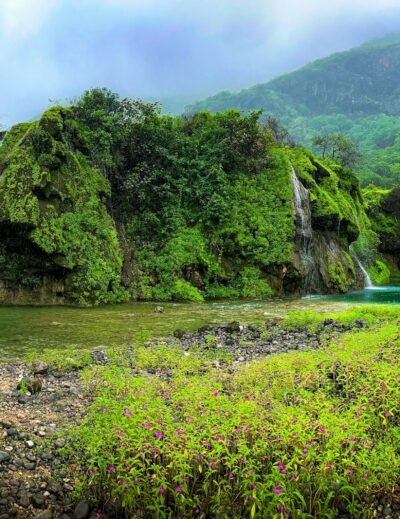
During Khareef, the contrast becomes particularly interesting because southern Oman turns green and misty. You can be exploring mountains covered in vegetation while standing beside a geological formation that reaches deep into the earth.
If you’re visiting Salalah during Khareef, Tawi Attair can be combined with other attractions east of Salalah rather than treated as a separate full-day journey.
It is another reminder that Salalah isn’t only about coconut trees, waterfalls and green mountains.
Dhofar has a fascinating geological side as well.
7. Teeq Sinkhole – One of Dhofar’s Geological Wonders
Close to the Tawi Attair region, Teeq adds another dimension to the underground landscapes of southern Oman.
This is where I would recommend slowing down and looking at the wider terrain rather than simply arriving, photographing the sinkhole and leaving.
The Dhofar mountains contain caves, sinkholes and limestone formations shaped by water and erosion. During Khareef, mist and vegetation can make the surrounding landscape look completely different from the dry mountains of northern Oman.
Teeq and Tawi Attair therefore work particularly well together on an eastern Salalah road trip.
If your Salalah itinerary already includes places such as Wadi Darbat, Mirbat or Jebel Samhan, these geological attractions can be incorporated into the same broader journey.
8. Mughsail Blowholes – When the Underground Meets the Sea
Mughsail is different from the caves and sinkholes above, but it belongs in the story of Oman beneath the surface.
Here, the power of the Arabian Sea interacts with openings and channels in the coastal rock. Under suitable sea conditions, waves force air and water through these openings, creating the famous Mughsail blowholes.
It is a simple demonstration of how water can exploit weaknesses and passages within rock.
The blowholes are also one of the easiest geological attractions to experience around Salalah because Mughsail is already on most Dhofar itineraries.
Conditions matter enormously. The experience can look very different depending on the sea and season, so don’t judge the place entirely from dramatic social-media videos.
And don’t underestimate the ocean while trying to get closer for a photograph.
Nature doesn’t know you’re making a reel.
The Hidden Geology You Notice While Exploring Oman
Not every cave or geological wonder in Oman has a famous name. Drive through the Hajar Mountains and you constantly notice openings in cliffs, rock shelters, exposed layers, deep wadis, limestone formations and strange shapes created by water and erosion.
This is part of what makes an Oman road trip so interesting. Once you understand a little about Oman’s geology, you start looking at the landscape differently. A wadi shows what water can do to rock, a sinkhole reveals what may be happening beneath the surface, and a small opening in a mountain can sometimes lead to a much larger underground world.
But curiosity needs common sense. An unknown cave isn’t the same as an unknown road. Underground, GPS and mobile reception can disappear, natural light quickly vanishes and even a small navigation mistake can become serious. If a cave requires ropes, specialist equipment or experience you don’t have, explore it only with a qualified guide.
You don’t need to understand all the geology to appreciate it. Sometimes just knowing how much is hidden beneath Oman’s mountains makes the landscape above even more fascinating.
Road Trip Tips and Best Way To Explore Oman Caves and Sinkholes
The best way to experience caves and sinkholes in Oman is to make them part of your road trip rather than planning the entire journey around them. If you’re heading towards Nizwa or Jebel Shams, visit Al Hoota Cave.
On a Muscat to Sur road trip, stop at Bimmah Sinkhole. Combine Muqal Cave with Wadi Bani Khalid and Wahiba Sands, while Tawi Attair and Teeq fit naturally into a Salalah road trip through eastern Dhofar.
Majlis Al Jinn and the caves of the Salmah Plateau are different, they are serious caving adventures requiring proper experience, equipment and guidance.
For me, October to April is the best time for an Oman road trip and outdoor exploration, while Khareef from June to September gives the caves and sinkholes around Salalah a completely different atmosphere.
Whatever the season, always check the weather and current access before entering remote areas. Never depend only on a phone torch, don’t attempt technical caves without experience and remember that rain far away can affect underground systems. Most importantly, don’t damage formations or disturb wildlife; some of what you are looking at took thousands of years to form.
This is what, I love about exploring Oman. You can leave Muscat looking for a wadi, discover a beautiful sinkhole along the way, drive towards Jebel Shams and find an ancient cave nearby, or visit green Salalah during Khareef and discover another world beneath the mountains. You don’t need to enter every cave or conquer every place. Sometimes simply knowing what lies beneath your feet changes the way you look at the landscape.
After all my Oman road trips, I still feel there are two Omans; the spectacular country we see above the ground and another, much older world hidden underneath it. And sometimes, the greatest surprises are beneath the surface.
The Lost Mumbaikar Reflections
Years ago, whenever I found an unusual place, my first instinct was to see how far I could go. Oman has slowly taught me something different: curiosity doesn’t always mean going deeper.
A cave that took thousands or millions of years to form doesn’t need me to conquer it. Sometimes I can explore, sometimes I need a guide, and sometimes I should simply stand at the entrance and turn back.
Maybe that is one of the lessons travel gives you with time. The excitement of discovery remains, but you learn to respect the places you discover.
Oman still makes me curious. I just don’t need to prove that curiosity by going everywhere.
Frequently Asked Questions About Caves and Sinkholes in Oman
1 What are the best caves to visit in Oman?
Al Hoota Cave is one of the best caves to visit in Oman for families and regular tourists. Majlis Al Jinn and the Salmah Plateau caves are more suitable for experienced cavers with specialist equipment and guidance.
2 What are the most famous sinkholes in Oman?
Bimmah Sinkhole is the most famous Oman sinkhole and an easy stop on the Muscat to Sur coastal road. Tawi Attair and Teeq Sinkhole are among the best geological attractions near Salalah in Dhofar.
3 What are the best caves and sinkholes near Muscat?
Bimmah Sinkhole is one of the easiest natural attractions to combine with a Muscat road trip towards Wadi Shab and Sur. Al Hoota Cave is farther inland but fits perfectly into a Nizwa, Al Hamra and Jebel Shams road trip.
4 Is Al Hoota Cave suitable for children and families?
Yes. Al Hoota Cave is one of the best family-friendly caves in Oman because it has been developed for visitors and doesn’t require technical caving experience.
5 Can tourists visit Majlis Al Jinn Cave in Oman?
Majlis Al Jinn is a serious adventure-caving destination rather than a normal tourist cave. Never attempt it without checking current access requirements and arranging the necessary specialist equipment, permission and experienced guidance.
6 Can I visit Muqal Cave and Wadi Bani Khalid together?
Yes. Muqal Cave can easily be combined with Wadi Bani Khalid and Wahiba Sands, making it a good addition to an Oman road trip through the eastern interior.
7 What are the best caves and sinkholes near Salalah?
Tawi Attair and Teeq are among the most interesting sinkholes near Salalah and can be combined with an eastern Dhofar road trip. During the Khareef season, the surrounding green mountains and mist create a completely different landscape.
8 What is the best time to explore caves and sinkholes in Oman?
October to April is generally the best time for an Oman road trip involving caves, sinkholes, hiking and outdoor exploration. For Salalah and Dhofar, Khareef from June to September offers a different experience, although rain, mist and wet roads require extra caution.
9 Is cave exploration in Oman safe?
Developed tourist caves and technical cave systems are very different. For serious caving in Oman, use experienced guides, carry proper lighting and safety equipment, check weather conditions and never enter an unfamiliar cave without understanding the risks.
10 Are Oman caves and sinkholes worth adding to an Oman itinerary?
Absolutely. Combine Al Hoota Cave with Nizwa and Jebel Shams, Bimmah Sinkhole with Wadi Shab and Sur, Muqal Cave with Wadi Bani Khalid and Wahiba Sands, and Tawi Attair and Teeq with a Salalah road trip. It is one of the easiest ways to add Oman’s geological wonders and hidden places to a self-drive Oman itinerary.
See Also:




Leave a Reply