Chapter 6: The Oman of Sea Turtles: Ras Al Jinz & Ras Al Hadd
I have travelled through Omanmore times than I can count, and every region seems to reveal a completely different side of the country. There is the Oman of dramatic mountains, turquoise wadis, endless deserts, fishing villages and beautiful empty roads. But there is another Oman that many travellers don’t experience because it comes alive when most people are sleeping: the Oman of sea turtles.
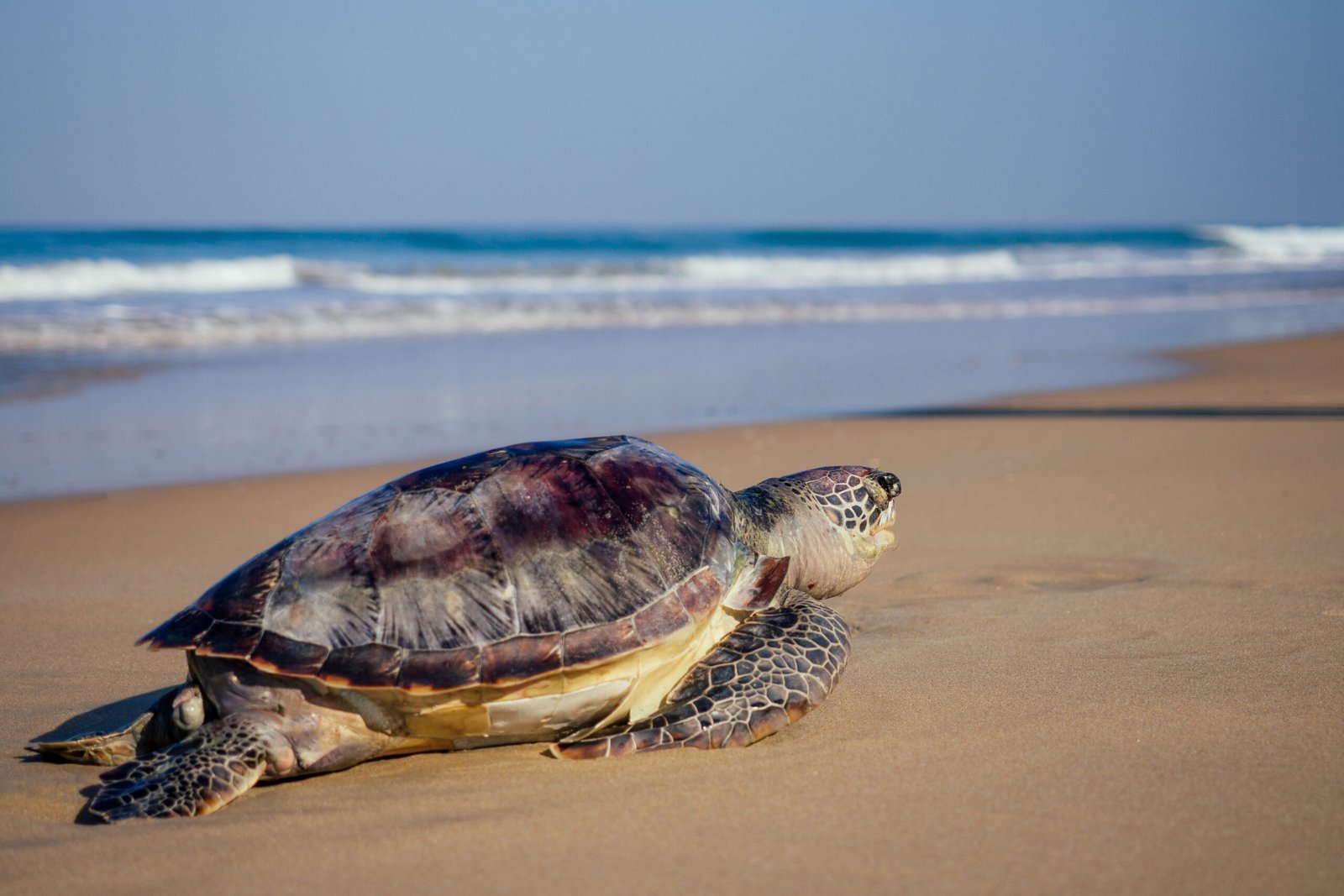
On Oman’s eastern coastline, particularly around Ras Al Jinz and Ras Al Hadd, sea turtles emerge from the Arabian Sea and slowly make their way across the beach to lay their eggs. Weeks later, tiny hatchlings emerge from beneath the sand and begin perhaps the most dangerous journey of their lives, crawling towards the sea.
I was fortunate enough to experience both sides of this incredible natural cycle. We saw adult turtles nesting, and we also watched baby turtles beginning their journey towards the Arabian Sea.
If you are looking for must-do experiences in Oman, I would put turtle watching at Ras Al Jinz and Ras Al Hadd very high on the list.
Why Do Sea Turtles Come to Oman?
Oman has thousands of kilometres of coastline facing the Arabian Sea and Indian Ocean, and several species of sea turtles use its beaches for nesting. The country is particularly important for green turtles, while loggerhead, hawksbill and olive ridley turtles are also associated with Oman.
What makes the story fascinating is the extraordinary navigational ability of sea turtles. Female turtles can migrate enormous distances between feeding and nesting grounds and later return to the same general region where they themselves originated to reproduce.
Scientists believe several mechanisms may help turtles navigate, including their ability to detect Earth’s magnetic field. Effectively, the young turtle can acquire information about the magnetic characteristics of its home region and use these natural signals during later migrations.
Think about what that means.
A tiny hatchling leaves a beach in Oman and disappears into an enormous ocean. If she survives predators, changing currents, fishing activity and decades of life at sea, she may eventually navigate back towards the region connected with the beginning of her own life.
Suddenly, turtle nesting in Oman isn’t simply something interesting to photograph. You are witnessing one stage of an extraordinary natural cycle that may stretch across decades and thousands of kilometres.
What Actually Happens When a Turtle Comes Ashore?
Watching a large sea turtle swim looks effortless. Watching one move on land is completely different.
After reaching the shoreline, a female turtle slowly pulls her heavy body across the sand. She must move far enough from the water to find a suitable nesting location. Once satisfied, she begins preparing the nest and digging an egg chamber using her flippers.
She then deposits her eggs before carefully covering the nest with sand. Afterwards, she makes the exhausting journey back towards the Arabian Sea.
Watching this happen made me understand why visitors need to keep their distance. This isn’t a performance being conducted for tourists. The turtle has come ashore for one specific biological purpose, and unnecessary noise, movement, lights or people crowding around her can become a disturbance.
At Ras Al Jinz Turtle Reserve, this is why guided turtle viewing makes sense. Guides control how visitors approach the nesting areas and help people understand what they are watching without unnecessarily interfering with the animals.
From an Egg to the Arabian Sea
The next part of the story is even more extraordinary.
Depending on species and environmental conditions, sea turtle eggs generally remain buried for several weeks before hatching. A nest can contain around a hundred eggs, although numbers vary considerably.
When the hatchlings are ready, they begin emerging from beneath the sand, often together. Their instinct tells them to head towards the brighter natural horizon over the sea.
From our perspective, the distance between the nest and the water may look tiny.For a baby turtle, it is enormous.
The hatchlings crawl across the beach using energy they desperately need for their first hours at sea. Birds and crabs can prey upon them on land. Once they reach the water, fish and other marine predators create another set of dangers.
Only a small proportion will survive long enough to become adults.
When we saw these tiny turtles heading towards the Arabian Sea, it changed the experience completely. Earlier we had watched enormous adult turtles nesting. Now we were seeing the beginning of that same journey.
It was difficult not to wonder which of these tiny creatures might survive and, decades later, return to this coastline.
Why You Should Never Pick Up a Baby Turtle
When people see a hatchling struggling across the sand, the natural human reaction can be to help it.
Don’t.
Unless an authorised conservation worker or guide specifically intervenes, visitors should allow the hatchlings to make their journey naturally.
Artificial lighting is another serious issue. Hatchlings naturally orient themselves towards the brighter horizon associated with the open sea. Strong artificial lights, mobile-phone torches and flashes can confuse or disorient them.
Visitors should therefore avoid flash photography and bright lights, remain quiet, follow instructions from guides and never surround a turtle.
Even something as innocent as leaving rubbish, beach furniture, deep holes or large sand structures behind can create obstacles for turtles.
The best turtle-watching experience is one where the turtles barely know you were there.
Ras Al Jinz vs Ras Al Hadd: Which Should You Visit?
People planning a turtle-watching trip in Oman often get confused between Ras Al Jinz and Ras Al Hadd.
The good news is that you don’t really have to choose, they are close enough to experience during the same trip.
Ras Al Jinz Turtle Reserve is the more organised choice for visitors specifically interested in seeing turtles. Guided night and early-morning viewing experiences are offered, and the controlled approach is important because this is a sensitive nesting environment.
Ras Al Hadd is nearby and forms part of the wider turtle coastline. It also gives you an opportunity to explore another beautiful coastal area rather than simply arriving for the organised turtle tour and immediately leaving.
I experienced both locations, and that’s what I would recommend.
Stay one night in the area, experience Ras Al Jinz properly, explore Ras Al Hadd and allow enough time for the coastline rather than treating the turtles as another item to tick off your Oman itinerary.
Best Time to See Turtles in Oman
One of the most searched questions is understandably when is the best time to see turtles in Oman?
Turtle activity occurs at different times of the year, but the warmer period is particularly important. May to September is generally considered an excellent period for turtle nesting and hatching activity around Ras Al Jinz, with summer offering significant activity.
This creates an interesting contradiction for Oman travellers.
For a general Oman road trip, I usually prefer October to April because temperatures are far more comfortable for driving, hiking, wadis and spending long periods outdoors.
But if seeing turtles in Oman is one of the main purposes of your journey, don’t automatically dismiss summer. Your best travel season depends on what you want to see.
And remember that these are wild animals. Nature doesn’t issue appointment confirmations. No responsible wildlife experience should promise exactly what you will see on a particular night.
How to Reach Ras Al Jinz and Ras Al Hadd & Where to Stay
From Muscat to Ras Al Jinz, the distance is roughly 250 km and the drive takes around 3–3.5 hours. Instead of driving directly, make it part of a beautiful Oman coastal road trip:
Muscat → Bimmah Sinkhole → Wadi Shab → Sur → Ras Al Hadd → Ras Al Jinz.
Leave Muscat early, explore the coast along the way and reach Ras Al Jinz by evening for the turtle-watching experience. Stay overnight and, if you have more time, continue the next day towards Wadi Bani Khalid and Wahiba Sands.
If you’re driving from Dubai to Ras Al Jinz, don’t make it a rushed return journey. Allow at least 3–4 days and combine it with a wider Dubai to Oman road trip. A great circuit is:
Dubai → Muscat → Bimmah Sinkhole → Wadi Shab → Sur → Ras Al Hadd → Ras Al Jinz → Wadi Bani Khalid → Wahiba Sands → Muscat → Dubai.
UAE residents should check the latest Oman visa, border-crossing, vehicle insurance and car-document requirements before travelling.
For accommodation, I recommend staying at Ras Al Jinz Turtle Reserve or around Ras Al Hadd, especially if turtle watching is your main purpose. Sur has more hotel choices, but staying close is much more convenient because turtle-viewing tours can take place late at night or around dawn. Spend one night here, experience both Ras Al Jinz and Ras Al Hadd, and continue your Oman road trip the following morning.
Sea Turtle Conservation in Oman and Around the World
Oman takes sea turtle conservation seriously, particularly around protected nesting areas such as Ras Al Jinz Turtle Reserve. Turtle watching is controlled to reduce disturbance to nesting females and hatchlings, which can be affected by artificial lights, flash photography, plastic pollution, coastal development and irresponsible tourism.
When turtle watching in Oman, always follow your guide, stay within permitted areas, keep noise and lights low, never touch turtles, hatchlings or eggs, and leave the beach exactly as you found it. The experience is incredible, but protecting the turtles must always come before getting the perfect photograph.
Oman isn’t the only place to witness this natural phenomenon. Famous sea turtle nesting destinations can also be found in Costa Rica, Mexico, Australia, Sri Lanka and India. For Indian travellers, Odisha’s Gahirmatha and Rushikulya beaches are particularly famous for the mass nesting of Olive Ridley turtles, known as arribada, while other important nesting areas exist along India’s coastline and in the Andaman and Nicobar Islands. Wherever you watch sea turtles, the rule should remain the same, “Observe quietly, respect local conservation regulations and allow nature to continue without interference”.
The Lost Mumbaikar Reflections
Julius and Jordan have travelled to Oman with me nearly 50 times, yet surprisingly, turtle watching at Ras Al Jinz and Ras Al Hadd is one experience we never did together. The main reason is simple: the best turtle activity happens during the hotter months, while most of our family Oman road trips were planned around the cooler season.
My turtle experience happened differently. I was travelling with an Omani friend who was also my customer, and our trips were never just about business. We would drive, talk business, explore the outdoors, stop wherever something looked interesting and sometimes visit his home and spend time with his family. It was through journeys like these that I discovered a more personal side of Oman.
Seeing the turtles nesting and the tiny hatchlings making their way towards the Arabian Sea became one of those unexpected experiences. It also reminded me of an important rule of wildlife travel: we are the visitors, not the turtles. Keep your distance, avoid flash and bright lights, never touch the turtles or hatchlings, and respect the instructions of the guides.
After countless Oman road trips, I still discover reasons to return. Ras Al Jinz showed me that even after visiting a country again and again, there can always be another Oman waiting for you.
Frequently Asked Questions About Turtle Watching in Oman
1 Where is the best place to see sea turtles in Oman?
Ras Al Jinz Turtle Reserve is one of the best-known places for turtle watching in Oman, particularly for green turtles. Nearby Ras Al Hadd is also an important nesting area, and both can easily be included in the same trip.
2 What is the best time to see turtles in Oman?
Turtles can be seen at different times of the year, but May to September is an important period for nesting and hatching activity. Wildlife sightings are never guaranteed, so check current conditions and tour timings before travelling.
3 Can you see baby turtles at Ras Al Jinz?
Yes, it is possible to see baby turtles hatching in Oman, particularly during periods of higher nesting and hatching activity. However, this is a completely natural process and cannot be guaranteed on a particular visit.
4 Is Ras Al Jinz or Ras Al Hadd better for turtle watching?
For first-time visitors, Ras Al Jinz is generally the better choice because turtle viewing is organised and guided. Ras Al Hadd is nearby, so I recommend visiting both rather than choosing only one.
5 How far is Ras Al Jinz from Muscat?
Muscat to Ras Al Jinz is approximately 250 km, taking roughly 3–3.5 hours by car. A great road-trip route combines Bimmah Sinkhole, Wadi Shab, Sur, Ras Al Hadd and Ras Al Jinz.
6 Can I drive from Dubai to Ras Al Jinz?
Yes. A Dubai to Ras Al Jinz road trip is possible, but I recommend allowing at least 3–4 days and combining it with Muscat, Wadi Shab, Sur, Wadi Bani Khalid and Wahiba Sands rather than making it a rushed return journey.
7 Where should I stay for Ras Al Jinz turtle watching?
Staying at Ras Al Jinz Turtle Reserve or around Ras Al Hadd is the most convenient option, especially for night or early-morning turtle viewing. Sur has more accommodation choices but requires additional driving.
8 Can children visit Ras Al Jinz Turtle Reserve?
Yes. Turtle watching can be an excellent family wildlife experience in Oman, provided children can remain quiet, follow the guides and respect the protected nesting environment.
9 Can I photograph turtles at Ras Al Jinz?
Photography must follow the reserve’s current rules. Avoid flash, bright lights and anything that could disturb nesting turtles or disorient hatchlings. Always follow your guide’s instructions.
10 Can you touch baby turtles in Oman?
No. Visitors should never touch, pick up or interfere with hatchlings, nesting turtles or eggs unless specifically instructed by authorised conservation personnel. The best way to experience turtle nesting is simply to observe it responsibly.
11 Is Ras Al Jinz worth visiting?
Absolutely. If you enjoy wildlife and nature, turtle watching at Ras Al Jinz is one of the must-do experiences in Oman and something completely different from the country’s better-known wadis, mountains and deserts.



Leave a Reply