Chapter 9: Salalah During Khareef: Discovering The Oman of Authentic Villages Beyond the Tourist Trail
Why Omani Villages Stayed With Me
Some of my best memories of Oman haven’t come from famous wadis, luxury resorts or places I found on a list of things to do. They have come from taking a smaller road, stopping in a village or being invited into an Omani home.
One experience with my Omani friend Mubarik changed the way I looked at Oman’s mountain villages. We first went to his home in Rustaq, where I parked my Porsche. Mubarik already knew about my earlier adventure damaging the suspension while exploring rough roads, so this time there was no argument, we shifted into his 4WD. My family and my friend Bala’s family were travelling together, and from there we headed towards Mubarik’s village in the Jebel Akhdar mountains.
I don’t remember the name of the village now, but I remember the night.
We spent time with local people, enjoyed the mountain surroundings and experienced Omani hospitality in a way that no organised tour could have created. Mubarik prepared handmade shisha, local Omani music continued through the night, conversations kept going and somehow it was around 4 a.m. before we realised how late it had become. Even the kids enjoyed it. There was no major tourist attraction to tick off and no carefully planned itinerary, yet it became one of those Oman experiences we still remember.
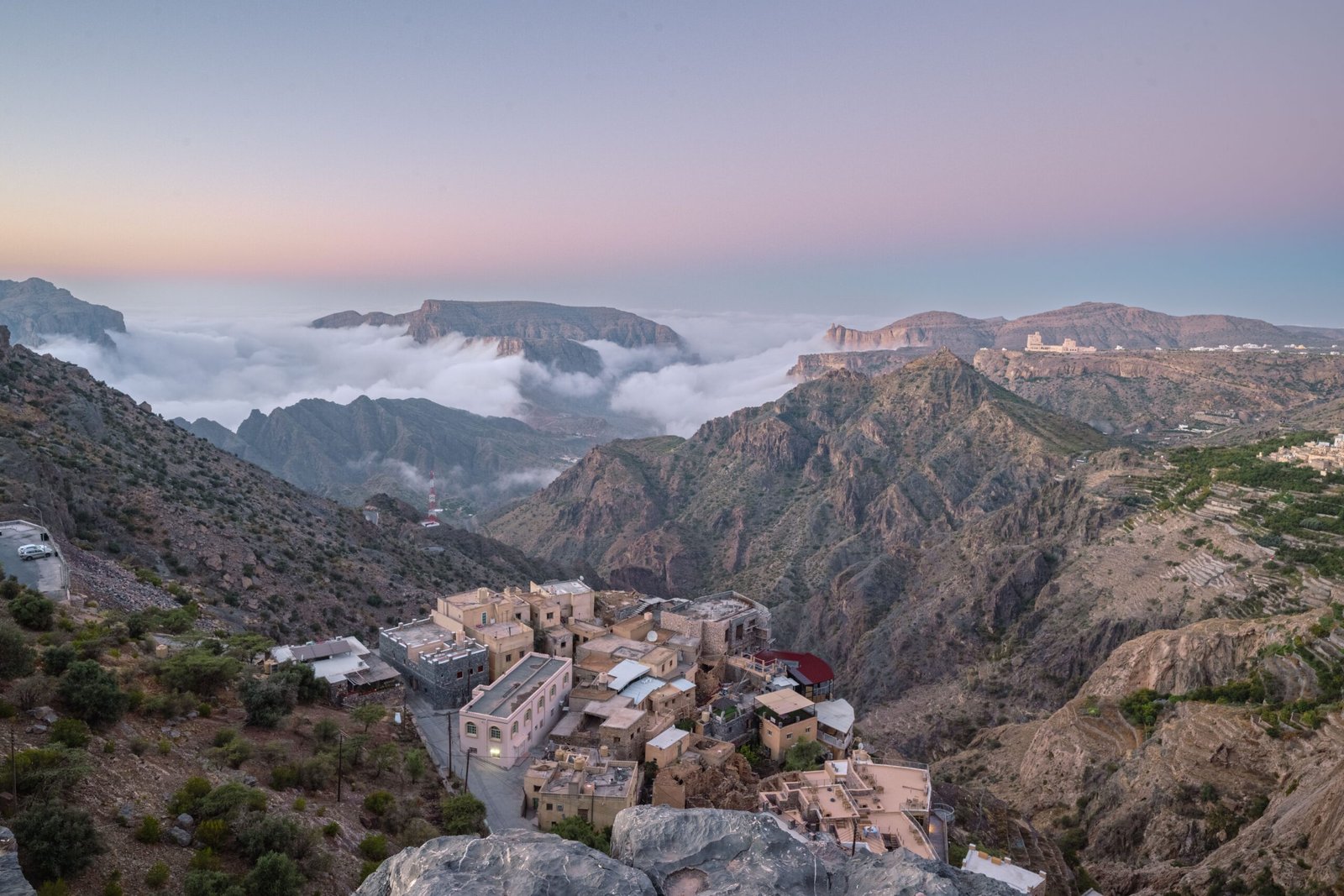
That night reminded me that there is another side of Oman beyond Muscat, Salalah and the famous attractions. Hidden among the Al Hajar Mountains, date plantations and wadis are traditional villages where old houses, falaj irrigation channels, terraced farms and generations of Omani life tell a different story of the country.
The Lost Mumbaikar Says:
“The smaller the village, the bigger the story you may bring home.”
10 Best Villages In Oman Can Be Explored.
Based on my own Oman road trips, research and recommendations from my Omani friends, these are 10 traditional villages and old settlements I have visited and would recommend exploring. Most don’t need a separate holiday, you can easily add them while visiting Jebel Shams, Jebel Akhdar, Nizwa, Wadi Bani Awf or other famous Oman attractions.
1. Misfat Al Abriyeen – Combine with Jebel Shams
Around 200 km from Muscat, Misfat Al Abriyeen is one of the most beautiful traditional villages in Oman. Its old houses, narrow lanes, date plantations and falaj irrigation channels sit beautifully against the Al Hajar Mountains. If you’re driving from Nizwa towards Al Hamra or Jebel Shams, add Misfat to the same Oman road trip. Park outside and explore it on foot rather than rushing through.
2. Al Hamra – Old Oman on the Way to Jebel Shams
Around 200 km from Muscat and only a short drive from Misfat Al Abriyeen, Al Hamra is an easy stop on a Nizwa–Jebel Shams road trip. The old quarter is known for traditional mud-brick houses and gives you a glimpse of how Omani settlements once looked. You don’t need a full day here; combine Al Hamra, Misfat and Jebel Shams in the same journey.
3. Bilad Sayt – One of My Favourite Oman Mountain Villages
Hidden deep in the Western Hajar Mountains, Bilad Sayt is roughly 150–170 km from Muscat depending on the route, but here distance doesn’t tell the whole story. The journey through Wadi Bani Awf is part of the experience, with mountains, rough tracks and spectacular scenery. Combine Bilad Sayt with Wadi Bani Awf and Snake Canyon, and use a capable 4WD for the mountain crossing.
4. Wakan Village – An Easy Mountain Escape from Muscat
Around 150 km from Muscat, Wakan Village is one of the easier Oman mountain villages to add to a short road trip. Terraced farms, mountain views and walking trails make it particularly attractive during the cooler months. It can be combined with Nakhal and Rustaq, making this a good day trip from Muscat without travelling all the way to Nizwa or Jebel Shams.
5. Birkat Al Mouz – Stop Before Jebel Akhdar
Around 150 km from Muscat and close to Nizwa, Birkat Al Mouz is the natural gateway to Jebel Akhdar. Many travellers drive straight through, but the old settlement, date plantations and traditional falaj system are worth stopping for. If you’re planning a Jebel Akhdar road trip, allow some extra time here before beginning the mountain climb.
6. Saiq and the Villages of Jebel Akhdar
Roughly 160–170 km from Muscat, Jebel Akhdar is home to several traditional mountain settlements surrounded by terraced farms. Saiq and the surrounding villages show a completely different side of Oman, with cooler temperatures, roses, pomegranates and agriculture high above the plains. A 4WD is required for the Jebel Akhdar climb, so make the villages part of your wider Jebel Akhdar experience rather than visiting only the viewpoints.
This region is also special to me because somewhere in these mountains is the village of my Omani friend Mubarik. I may have forgotten its name, but I certainly haven’t forgotten the night we spent there.
7. Rustaq – A Great Stop from the UAE or Sohar
Rustaq is more of a historic town than a small village, but it deserves a place in this journey. It is around 125 km from Muscat and roughly 130 km from Sohar, making it an excellent stop for anyone driving from the UAE towards the Western Hajar Mountains. Rustaq Fort, date plantations, hot springs and the surrounding mountains can easily be combined with Nakhal or Wadi Bani Awf.
Rustaq is also personal for me. This was where we visited Mubarik’s home, parked my Porsche and transferred into his 4WD before heading deeper into the mountains with my family and Bala’s family to his ancestor’s village.
8. Al Ayn and Al Aqr – Walk Through Jebel Akhdar
Al Ayn and Al Aqr are among the traditional villages you can explore once you’re already on Jebel Akhdar, around 160–170 km from Muscat. There is no reason to make a separate journey just for them. Combine them with the famous Jebel Akhdar viewpoints and walk between the villages, terraced farms and falaj channels. This is one of the best ways to experience Jebel Akhdar beyond simply driving from one viewpoint to another.
9. Tanuf – An Easy Stop Near Nizwa
Around 150 km from Muscat, Tanuf is an easy addition to a Nizwa road trip. The area is known for its old village ruins, mountains and nearby wadi landscape. If you’re travelling between Nizwa, Bahla, Al Hamra and Jebel Shams, Tanuf requires very little diversion and gives you another glimpse of old Oman away from the major forts and tourist attractions.
10. Manah – Traditional Oman Near Nizwa
Around 160 km from Muscat and close to Nizwa, Manah is another place worth adding if you’re exploring Oman’s interior by car. Its old quarter and traditional architecture make it an interesting cultural stop, and its location means you can combine it with Nizwa, Birkat Al Mouz and Jebel Akhdar rather than planning a separate trip.
What I like about these traditional villages in Oman is that you don’t need to build your entire itinerary around them. Misfat and Al Hamra fit naturally with Jebel Shams; Bilad Sayt with Wadi Bani Awf; Birkat Al Mouz, Al Ayn and Al Aqr with Jebel Akhdar; Wakan and Rustaq with a Western Hajar Mountains road trip; and Tanuf and Manah with Nizwa.
That’s how I prefer exploring Oman anyway. Go for the famous attraction, but keep some time for the villages, old settlements and smaller roads around it. Very often, that’s where you discover the Oman you weren’t originally looking for.
How to Plan an Oman Village Road Trip
If you’re travelling from Muscat, you can combine several of these places into a two or three-day Oman road trip. One excellent route is Muscat → Wakan Village → Rustaq → Wadi Bani Awf → Bilad Sayt → Al Hamra → Misfat Al Abriyeen → Nizwa → Birkat Al Mouz → Jebel Akhdar → Muscat.
Don’t attempt the entire route without checking road conditions and vehicle requirements. The Wadi Bani Awf and Bilad Sayt section can require a capable 4WD, while Jebel Akhdar has controlled 4WD access. If you’re uncomfortable with serious mountain driving, split the itinerary and approach the easier villages using paved roads.
For a shorter trip, Nizwa → Al Hamra → Misfat Al Abriyeen works beautifully. Another easy combination is Nizwa → Birkat Al Mouz → Jebel Akhdar, where you can explore several mountain settlements once you reach the plateau.
October to April is generally the most comfortable period for exploring traditional villages in Oman because you’ll spend a lot of time outside the car. Jebel Akhdar can be considerably cooler because of the altitude, particularly during winter evenings.
How to Behave When Visiting Traditional Villages in Oman
The most important thing to remember is simple: these are communities, not tourist sets.
Dress respectfully, particularly when walking through conservative rural settlements. Don’t enter houses, farms or private courtyards without permission. Ask before photographing people, keep noise down and respect signs restricting access.
Falaj channels also need respect. These are functioning irrigation systems rather than decorative water features.
If somebody invites you for coffee or food, you may discover that Omani hospitality becomes one of the highlights of your trip. But don’t travel into villages expecting hospitality as though it were part of the admission price.
The best encounters happen naturally.
The Lost Mumbaikar Reflections
When I think about that night with Mubarik, I don’t remember it because we visited a famous attraction. I remember it because it felt completely unplanned and personal.
We started at his home in Rustaq, left my Porsche behind and continued in his 4WD with my family and Bala’s family. Eventually we were in his village somewhere in the Jebel Akhdar mountains, listening to Omani music, talking, enjoying handmade shisha and watching the children enjoy themselves until almost four in the morning.
There was no luxury hotel and no carefully designed tourist experience.
We were simply guests.
After travelling through Oman so many times, experiences like this are why I still don’t feel that I know everything about the country. Wadis and mountains show you Oman’s landscape. Forts show you its history. But sometimes sitting with an Omani family in a mountain village shows you something equally important, the people who call this landscape home.
Mubarik once helped me discover places that Google Maps couldn’t really explain. More importantly, he took us home. And that remains one of my favourite memories of Oman.
Frequently Asked Questions About Traditional Villages in Oman
1. What are the best traditional villages in Oman?
Some of the best traditional villages in Oman include Misfat Al Abriyeen, Bilad Sayt, Wakan Village, Al Hamra, Birkat Al Mouz and the mountain villages of Jebel Akhdar. They are excellent additions to an Oman road trip focused on culture, mountains and local life.
2. Which is the most beautiful mountain village in Oman?
Bilad Sayt is one of my favourite Oman mountain villages, surrounded by the dramatic Western Hajar Mountains. Misfat Al Abriyeen is equally beautiful for its old houses, date plantations and traditional falaj irrigation system.
3. What are the best villages near Muscat for a day trip?
Wakan Village is one of the best villages near Muscat for a day trip. Rustaq and the surrounding Hajar Mountains are also easily combined with a Muscat road trip, while Bilad Sayt requires more time and a suitable 4WD route.
4. Which traditional villages can I visit near Nizwa?
For a Nizwa road trip, explore Al Hamra, Misfat Al Abriyeen, Tanuf, Manah and Birkat Al Mouz. These can easily be combined with famous Oman attractions such as Jebel Shams and Jebel Akhdar.
5. Which villages should I visit on a Jebel Akhdar road trip?
Stop at Birkat Al Mouz before climbing Jebel Akhdar, then explore mountain settlements such as Al Ayn and Al Aqr. The Jebel Akhdar villages are known for terraced farms, falaj channels, mountain walks and cooler weather.
6. Do I need a 4WD to explore traditional villages in Oman?
Many traditional villages in Oman are accessible by normal car, including Al Hamra and Misfat Al Abriyeen. A 4WD is required for Jebel Akhdar and strongly recommended for more adventurous Oman mountain routes such as Wadi Bani Awf and Bilad Sayt.
7. What is the best time for an Oman village road trip?
October to April is generally the best time for an Oman road trip exploring traditional villages, mountain trails and old settlements. Temperatures are more comfortable for walking, although Jebel Akhdar and other high-altitude areas can become cold during winter.
8. Can I combine Oman villages with Jebel Shams and Jebel Akhdar?
Yes. Combine Misfat Al Abriyeen and Al Hamra with a Jebel Shams road trip, and Birkat Al Mouz, Al Ayn and Al Aqr with Jebel Akhdar. This is one of the easiest ways to add authentic Oman cultural experiences to a normal sightseeing itinerary.
9. What should tourists know before visiting Omani villages?
Traditional Omani villages are living communities. Dress respectfully, ask permission before photographing people, avoid entering private homes or farms and respect the falaj irrigation channels. Responsible travel is especially important when exploring smaller villages away from major Oman tourist attractions.
10. Are Oman’s traditional villages worth adding to an Oman itinerary?
Definitely. If you want to experience authentic Oman beyond Muscat, forts and resorts, traditional villages offer old architecture, date plantations, mountain landscapes, falaj systems and local culture. They are some of the most rewarding hidden places to discover on an Oman self-drive road trip.
See Also:



Leave a Reply